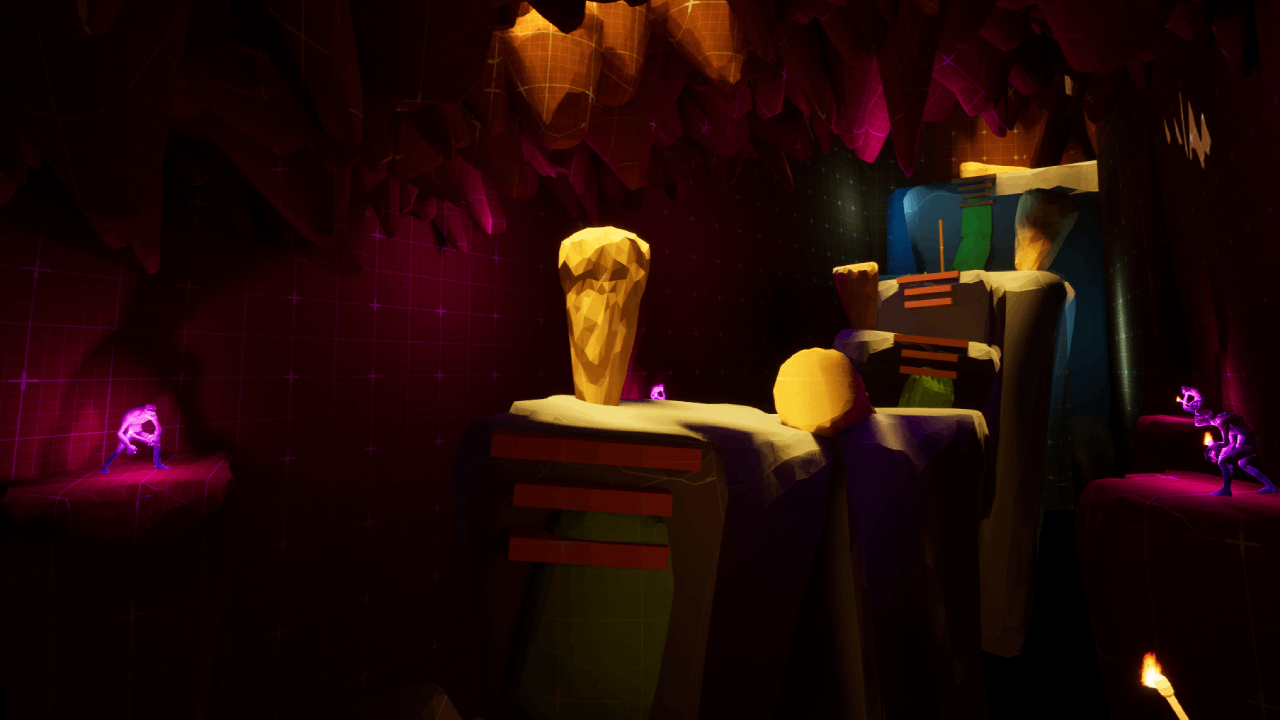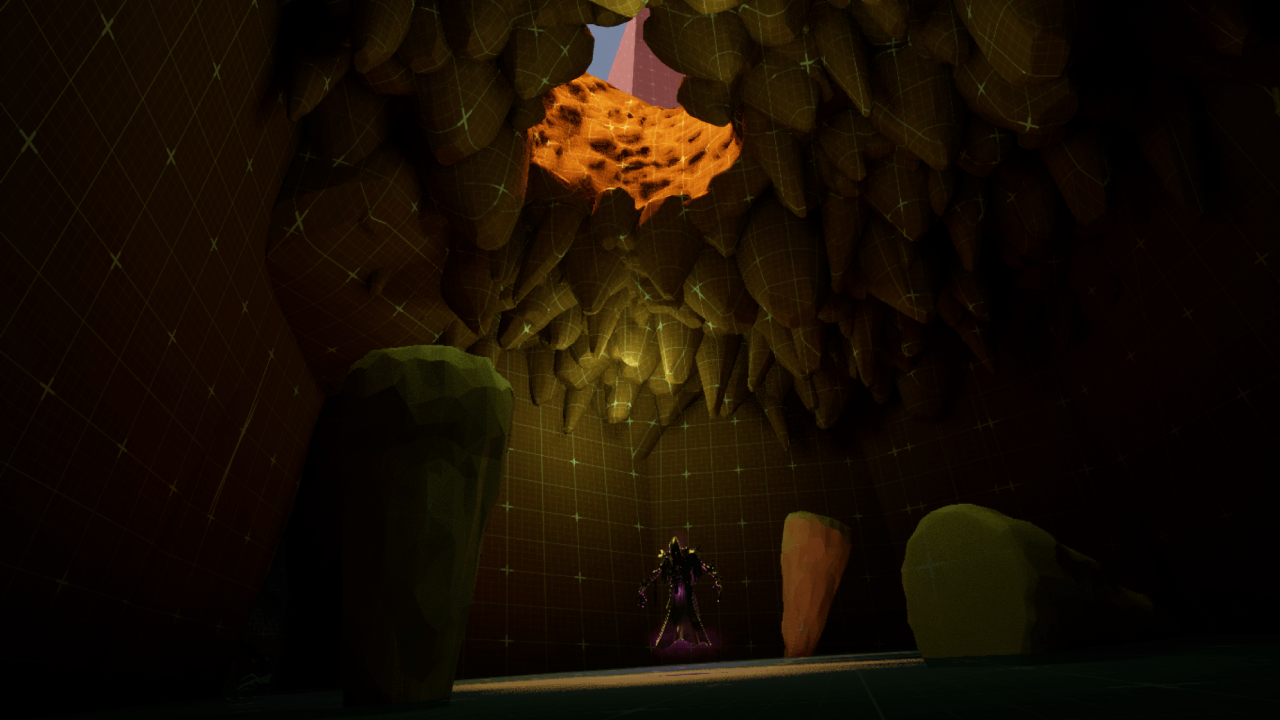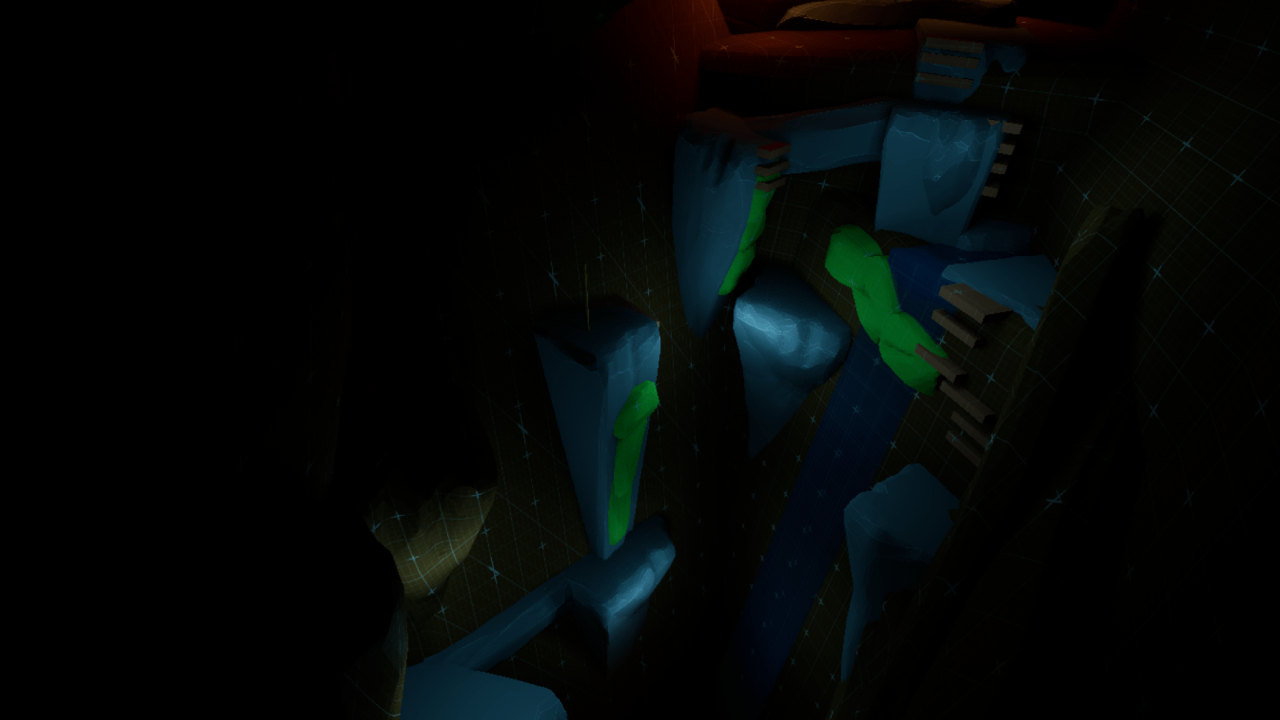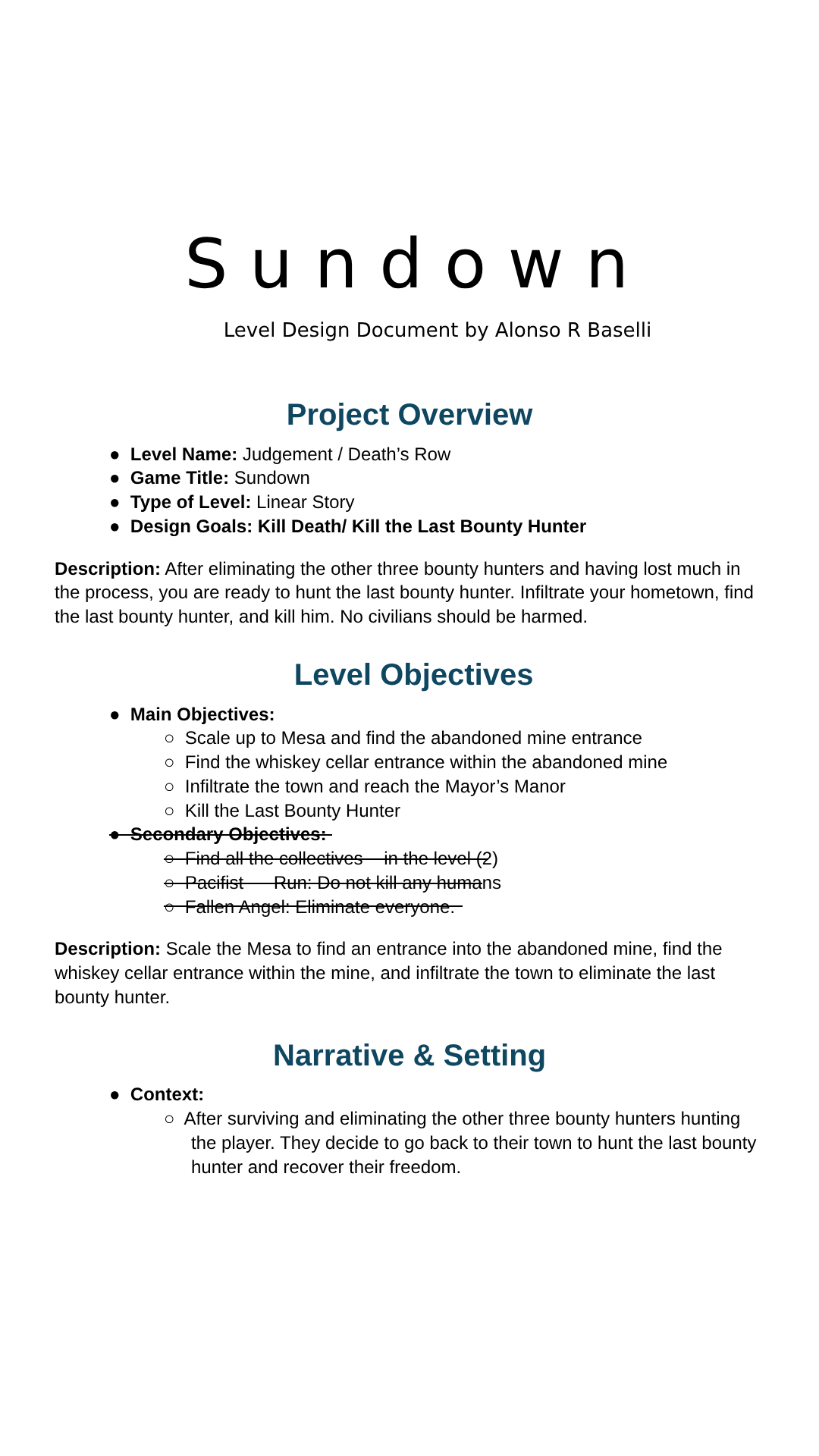
SUNDOWN
Third Person Action RPG
After eliminating the other three bounty hunters and having lost much in the process, you are ready to hunt the last bounty hunter.
You must reach the abandoned mine to infiltrate the small mining town you once called home and eliminate the last obstacle between you and your freedom.
- Developed over a prototype of a game I will develop further in12 weeks with multiple iterations
- Unreal Engine 5.5.3, AGLS v1.2 template
- Asset details
- Rock Geometry from Stylized + LowPoly Rocks by Jayant Chakradhari Assets
- Placeholder enemies from Undead Pack by Lilpupinduy
- All other assets made by me in Blender or Unreal
- Create a 15-minute third-person action RPG experience using Uncharted and Red Dead Redemption-inspired narrative, traversal, and combat design philosophies.
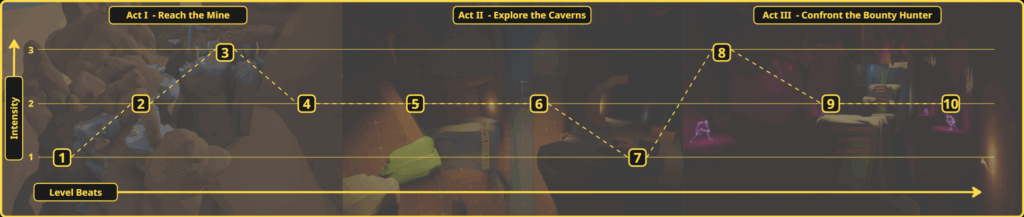
- Pace the experience on a three-act structure with multiple level beats on each act.
- Design an experience that challenges the player in both combat and traversal aspects while telling an active narrative
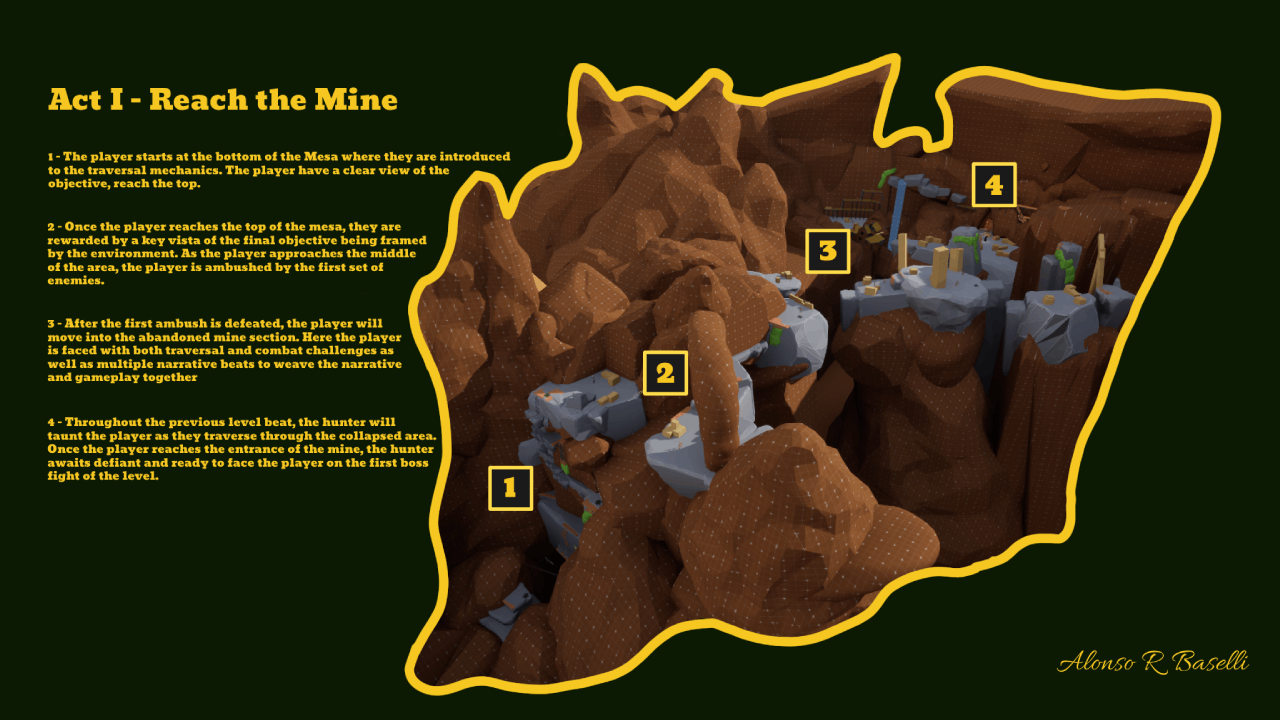
Level Breakdown
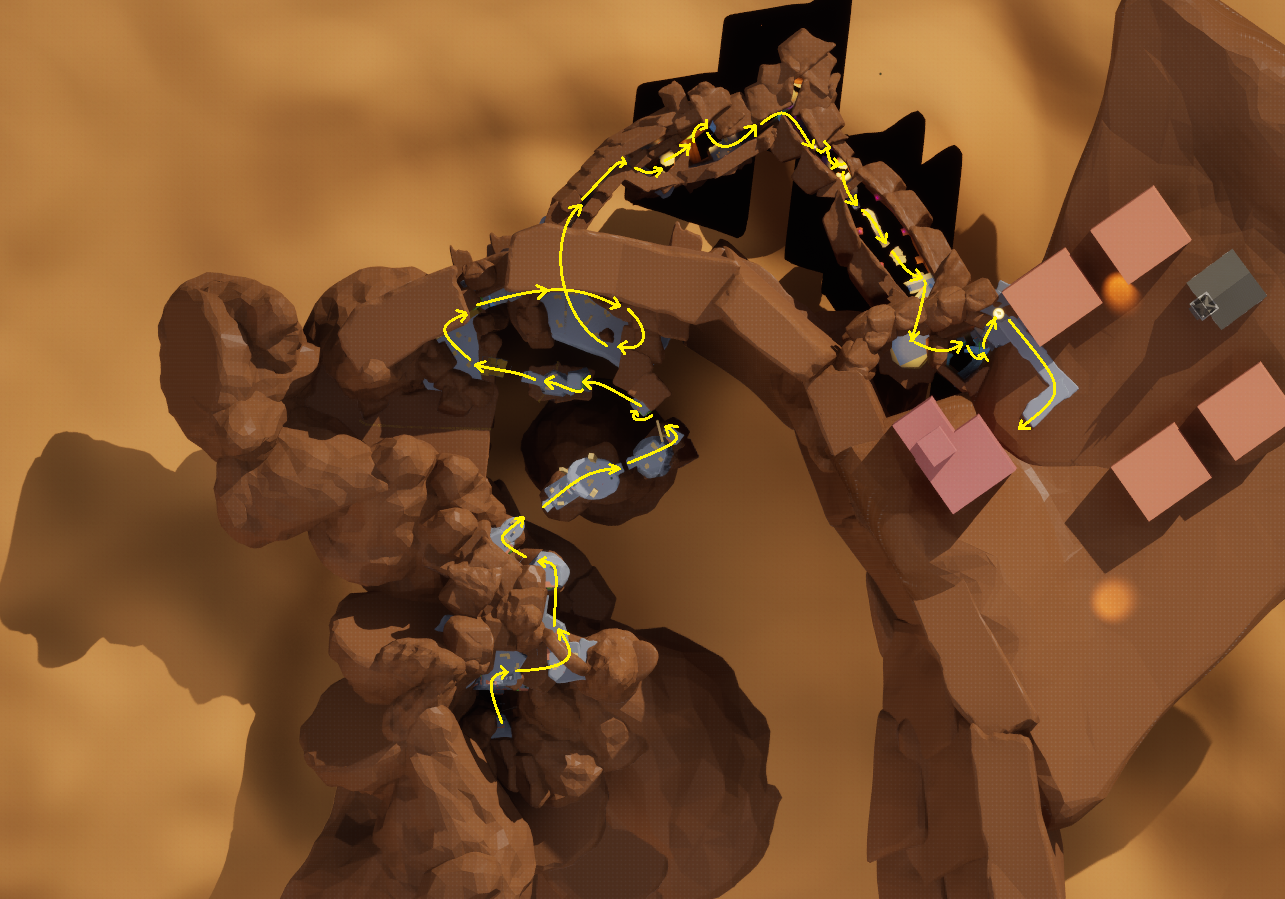
Walkthrough Per Beat
Beat 1- Climb the Mesa
Introduce the Traversal Mechanics of the level in a safe condensed environment.
Beat 2 – Enemy Ambush
First Narrative beat followed by an combat encounter in an area with safe cover areas to introduce the player to the enemy attacks.
Beat 3: Reach the Mine
First challenge where the player must apply the previously learned traversal mechanics while constantly fighting enemies in the area.
Beat 4: Face the Bounty Hunter
First Boss Encounter, the player must use the cover areas to their advantage to push the boss into the mine.
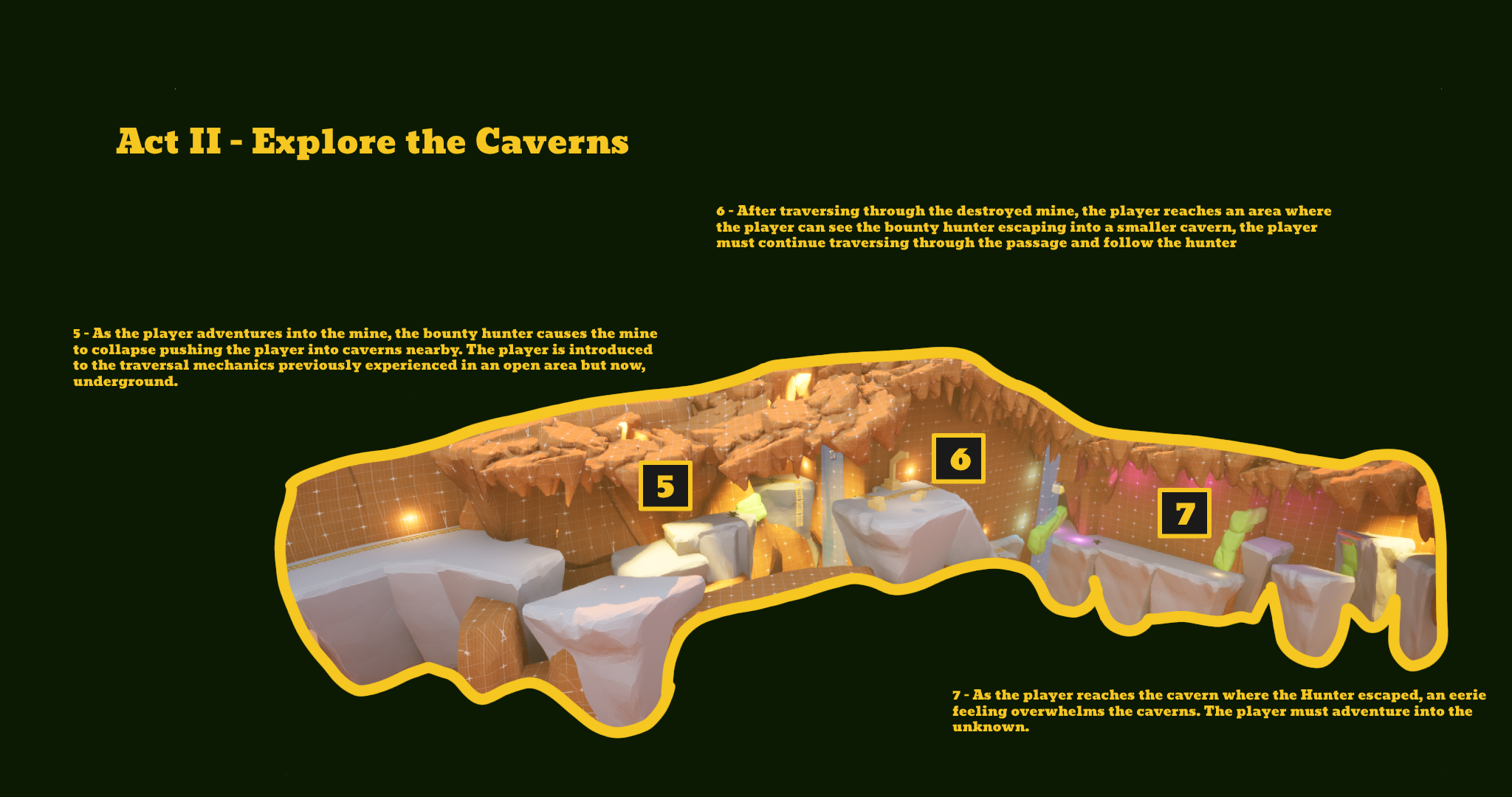
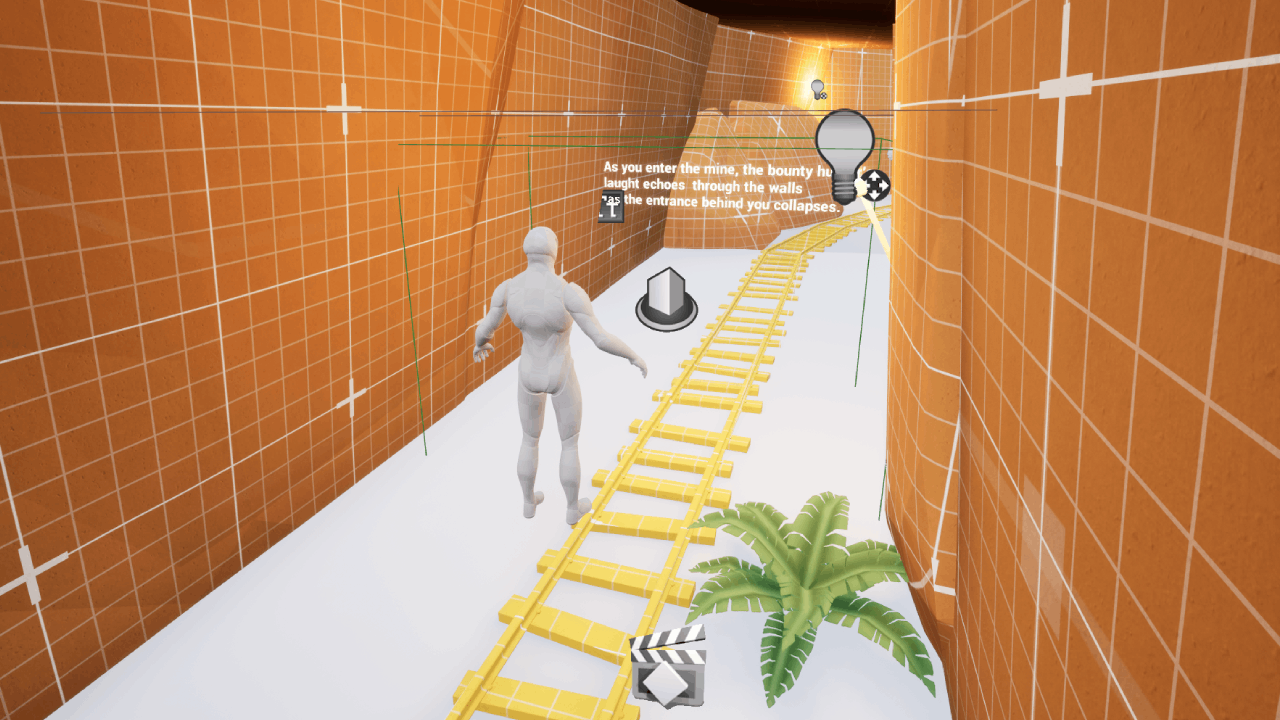
Beat 5: Explore the Caverns
Traversal Area where the player must explore a narrative driven area while reacting to the trigger events guiding the narrative.
Beat 6: Follow the Hunter
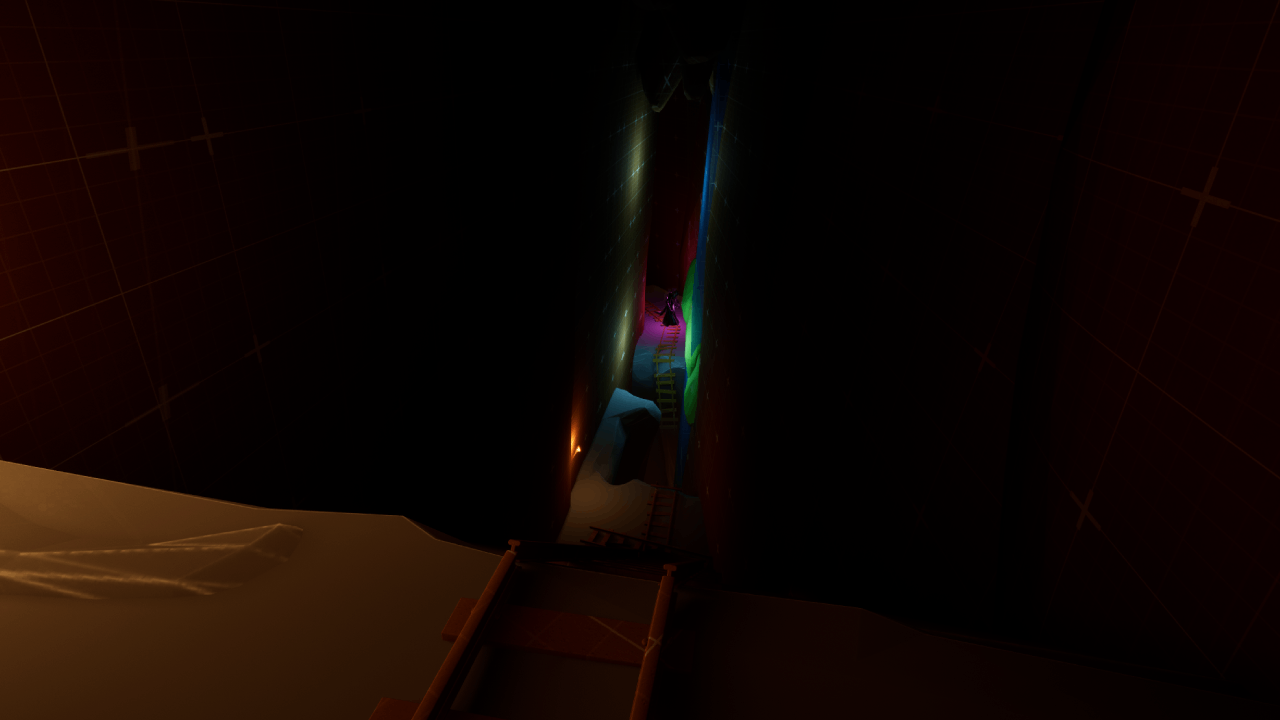
Trigger events guide the player through the mine as the player chases the bounty hunter.
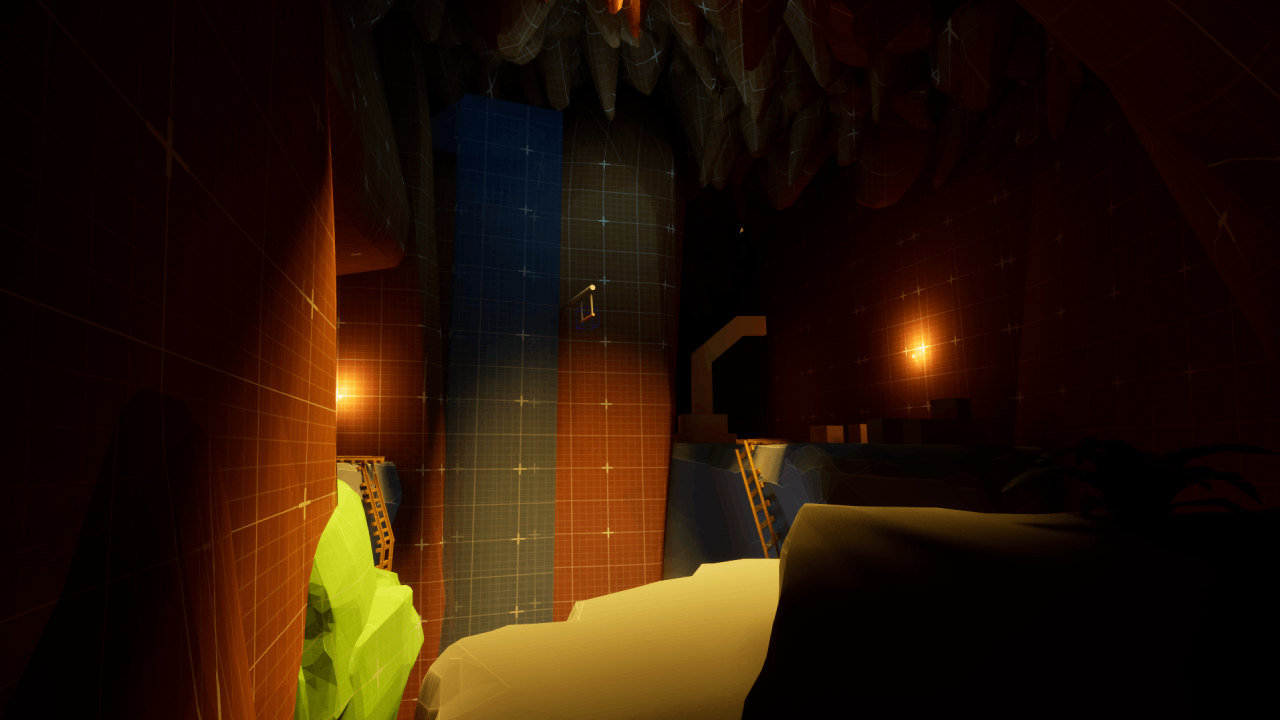
Beat 7: Explore the Haunted Caverns
As the narrative events take the player through uncharted zones, the player is introduced to a new set of traversal challenges with a clear goal to reach.
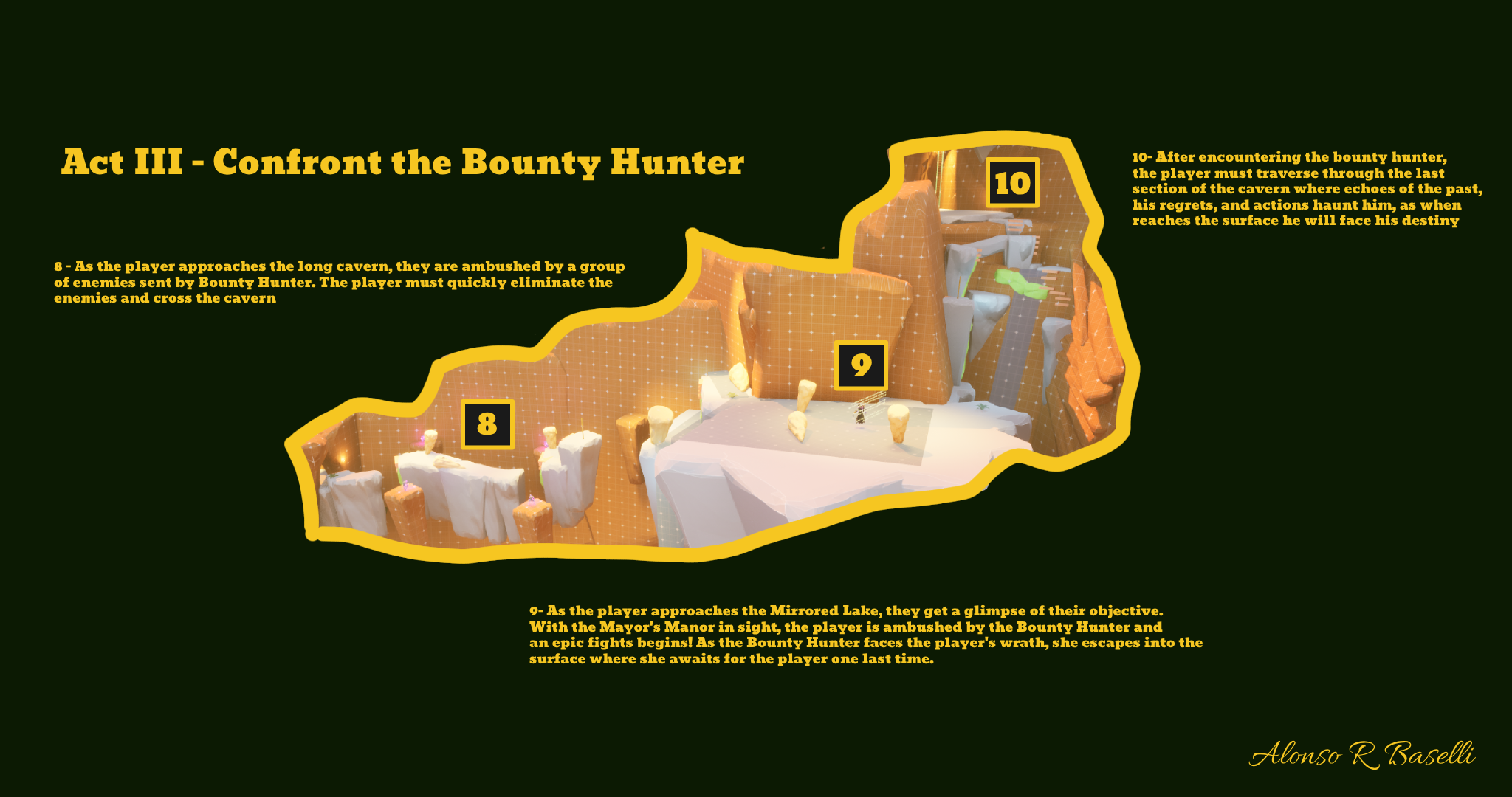
Beat 8: Fight in the Haunted Cavern
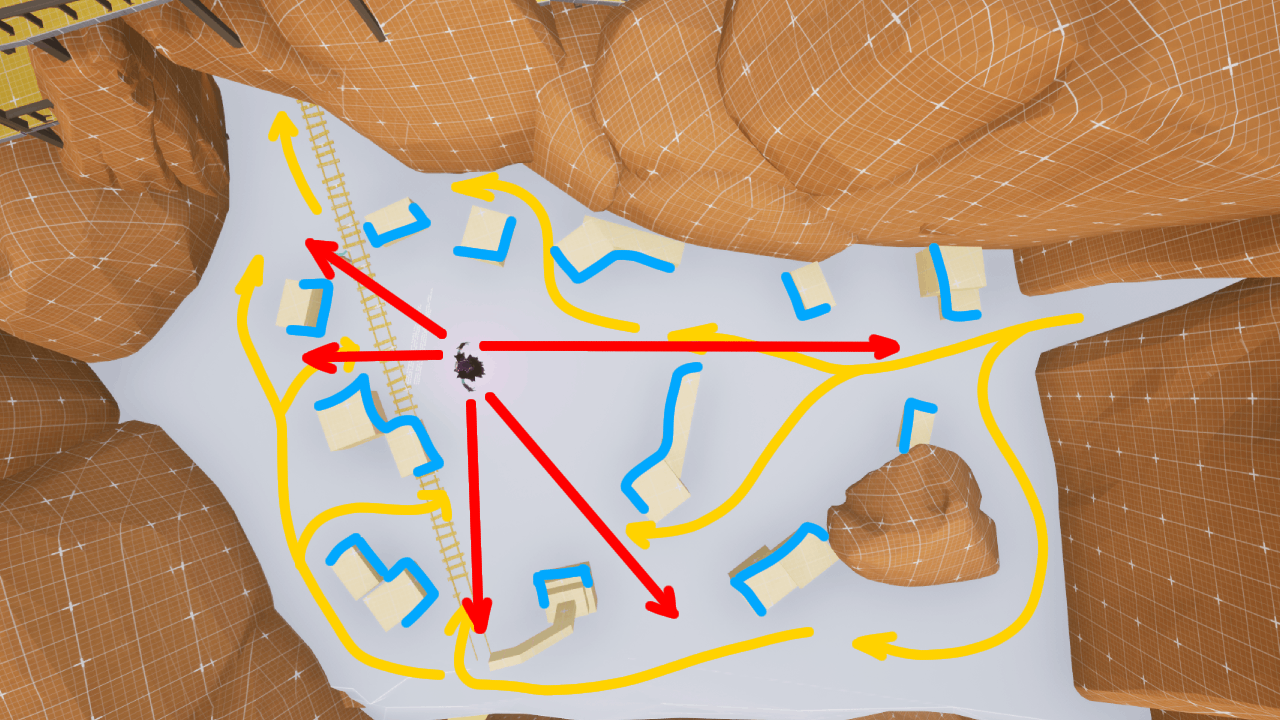
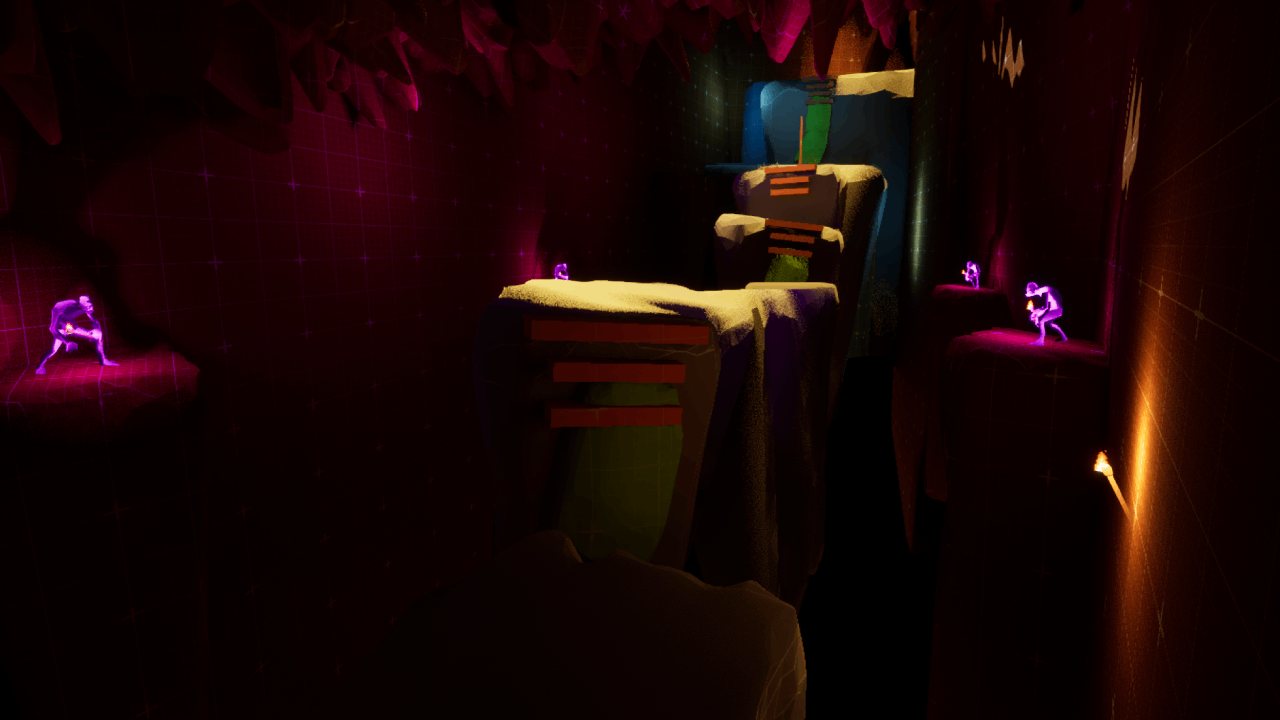
As the player reaches the center of the cavern, they are ambushed by enemies from all directions as the player must traverse the cavern.
Beat 9: Face the Bounty Hunter Pt. 2
After surviving the ambush, the player reaches a mirrored lake where they are then ambushed by the boss and must fight them until they escape.
Beat 9: Reach the Exit of the Mine
The last traversal section where the player is ambushed by a series of narrative moments remembering previous events as they reach the surface to face the bounty hunter one last time.
Level Highlights
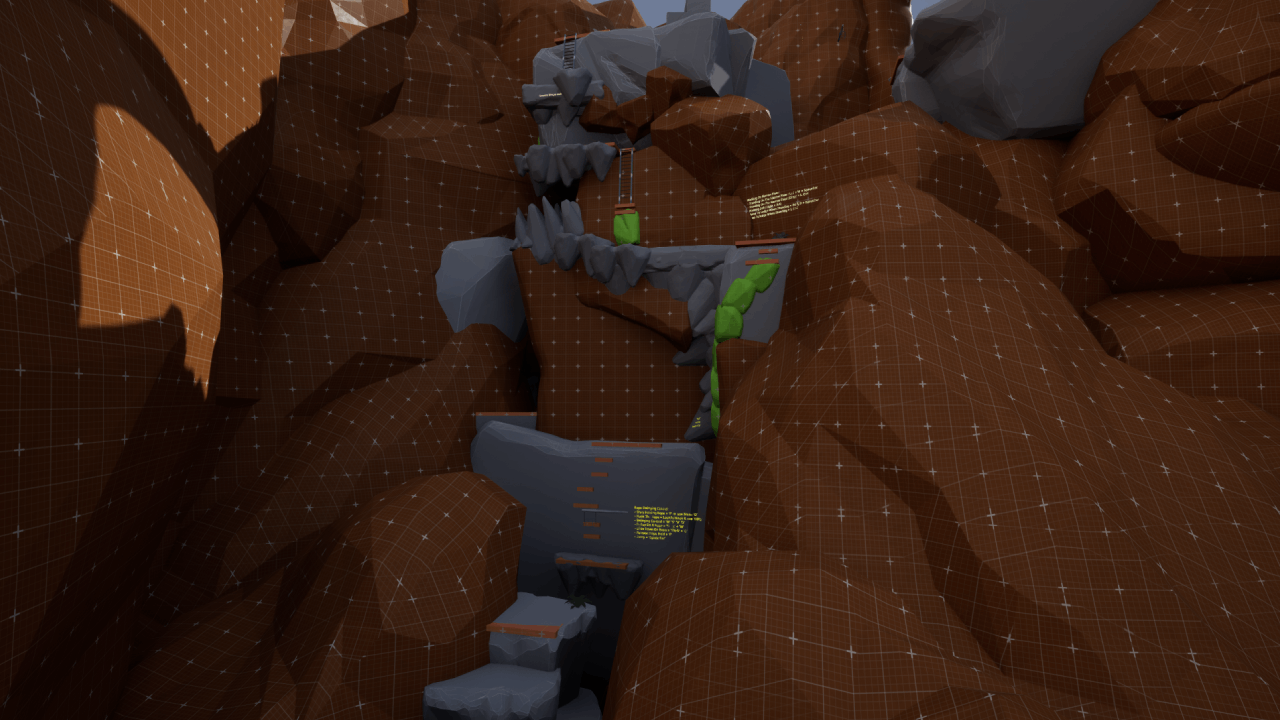
The first beat of the level helps the player adopt the traversal gameplay in a safe environment to be later challenged with a combat sequence.
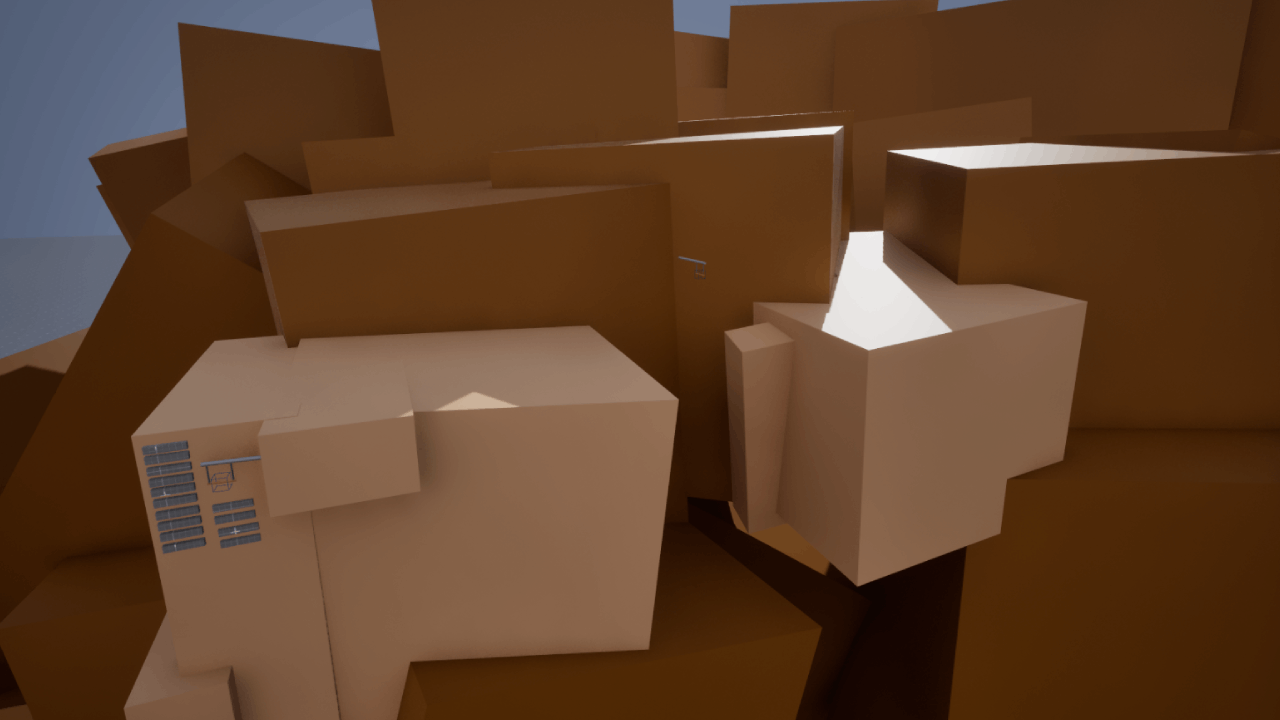
- Mesa Outskirts: Teach players traversal mechanics
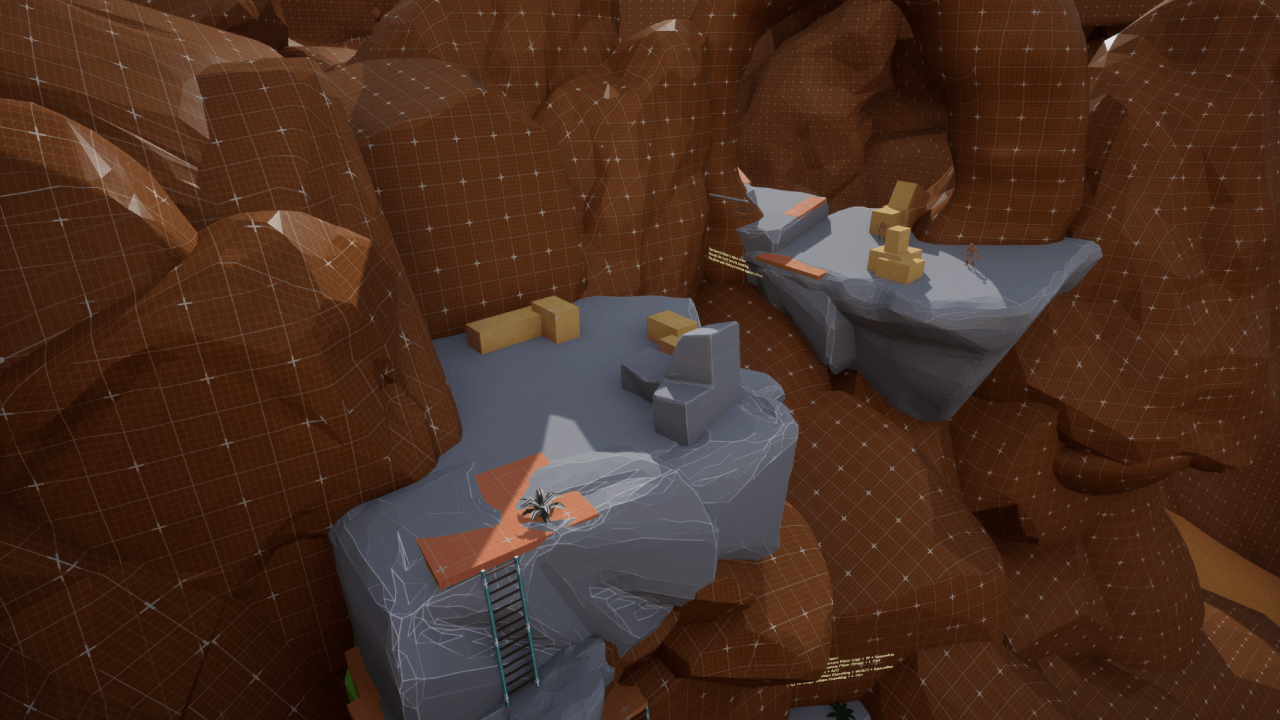
- The First Enemy Ambush: Teach players combat mechanics
The second section of Act 1 challenges the player in an area where the player must combine the traversal challenges with combat and narrative beats.
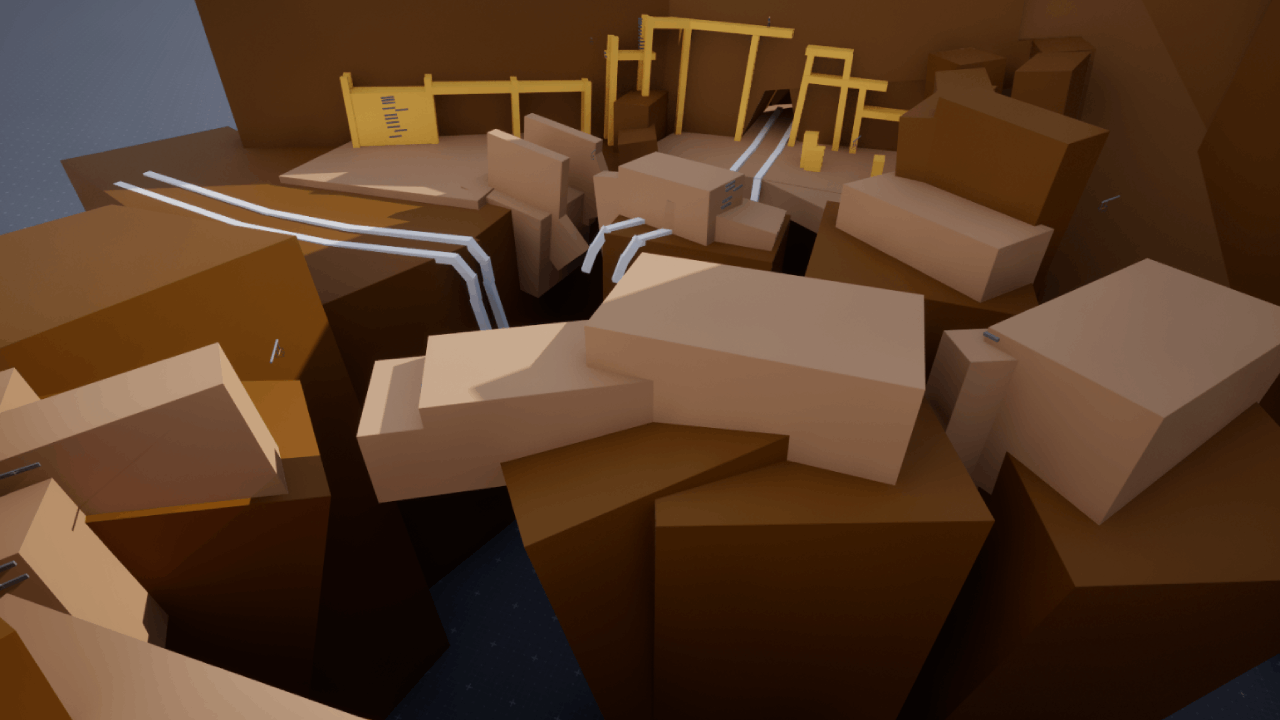
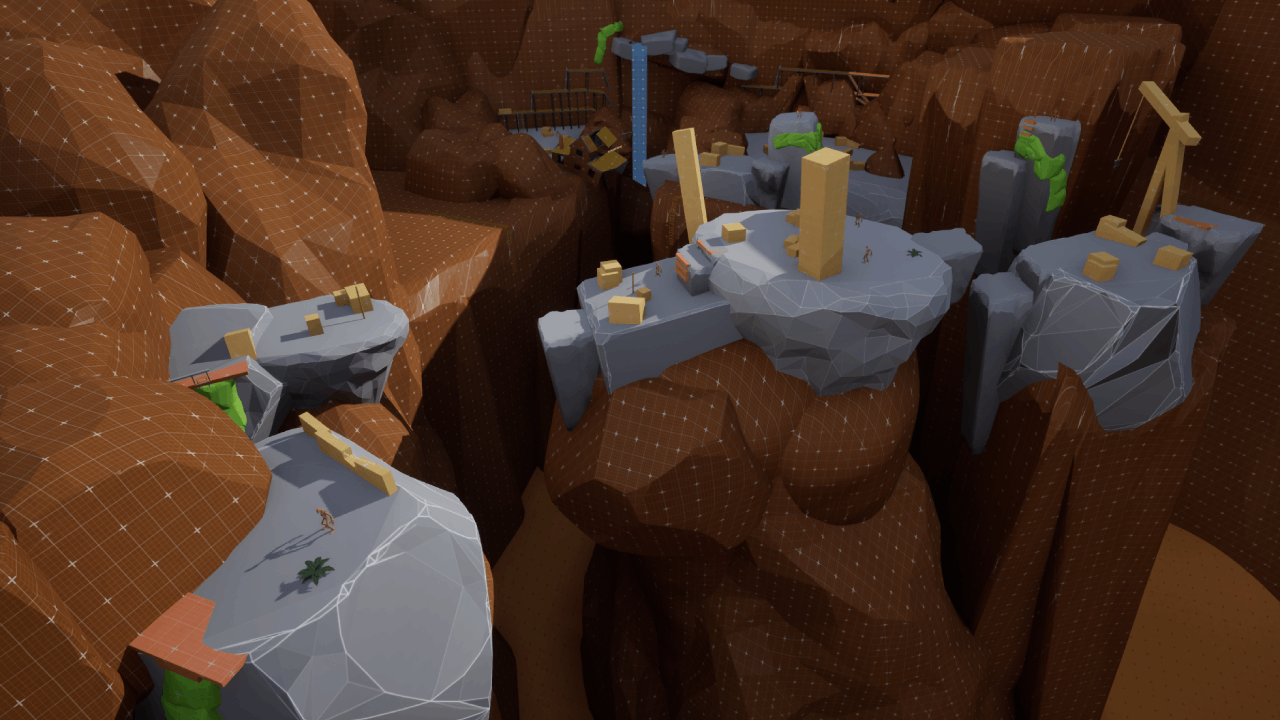
- Abandoned Mine Entrance: Challenges the player with more traversal gameplay while fighting enemies.
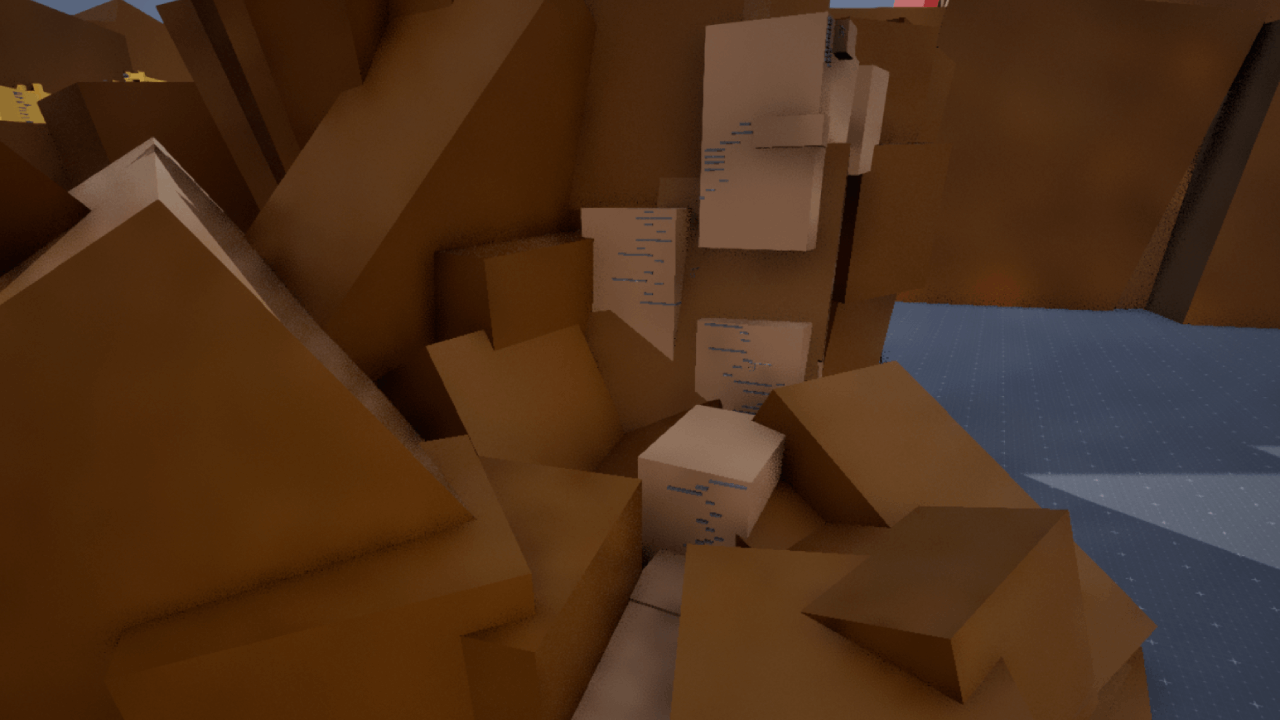
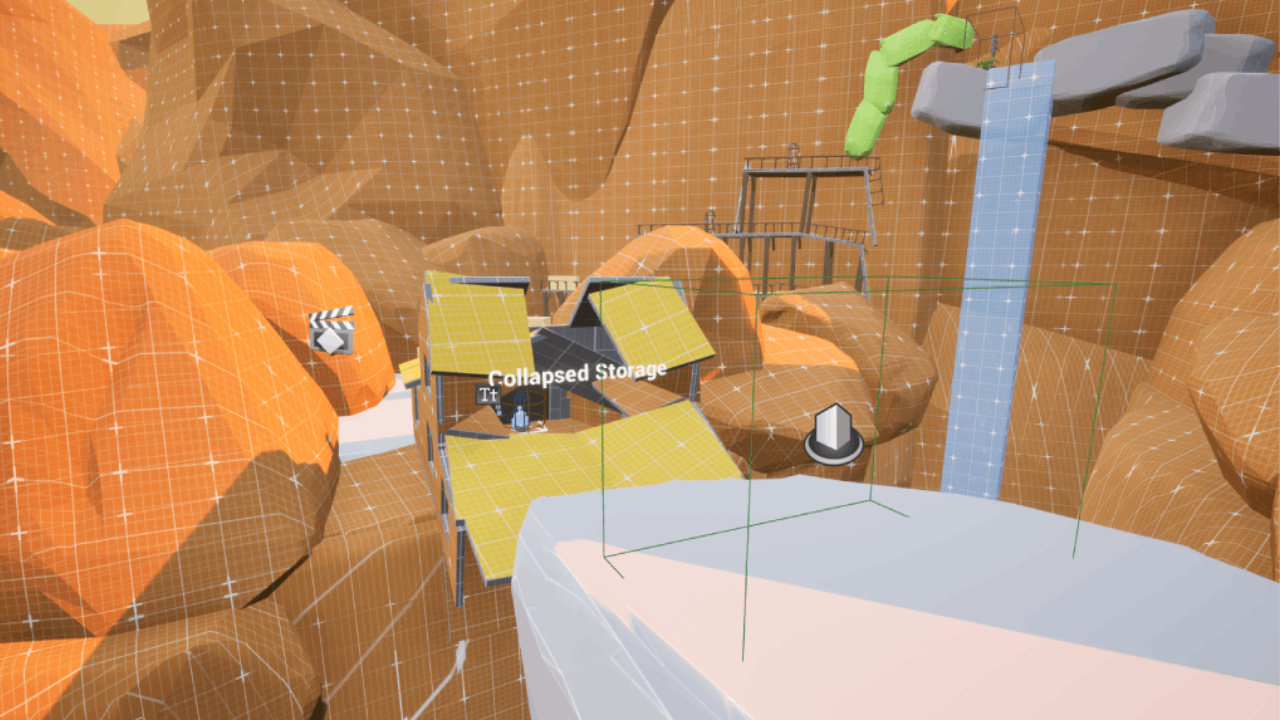
- Collapsing Scaffolding Event: Trigger Narrative event used as a combination of environmental storytelling and traversal event.
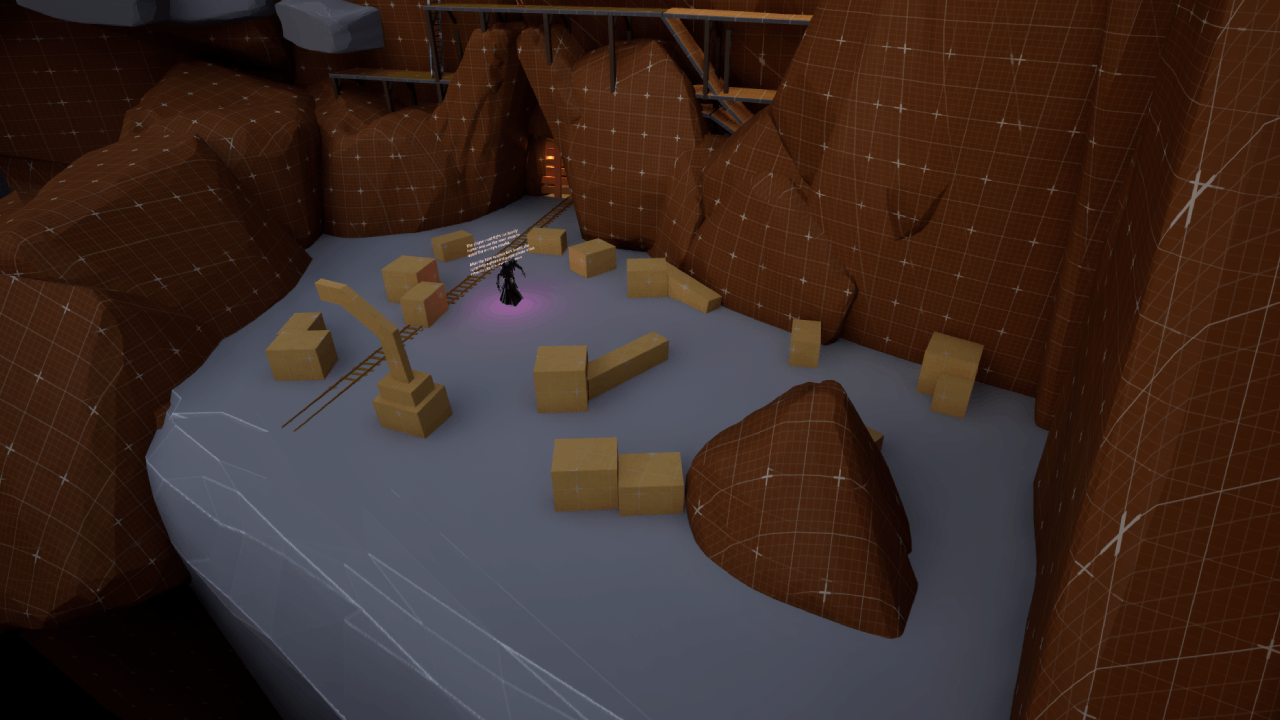
- Fight the Bounty Hunter: First Boss fight where boss attack mechanics are introduced to the player.
The underground section continues guiding the narrative and challenging the player with an increased difficulty on both traversal and combat aspects
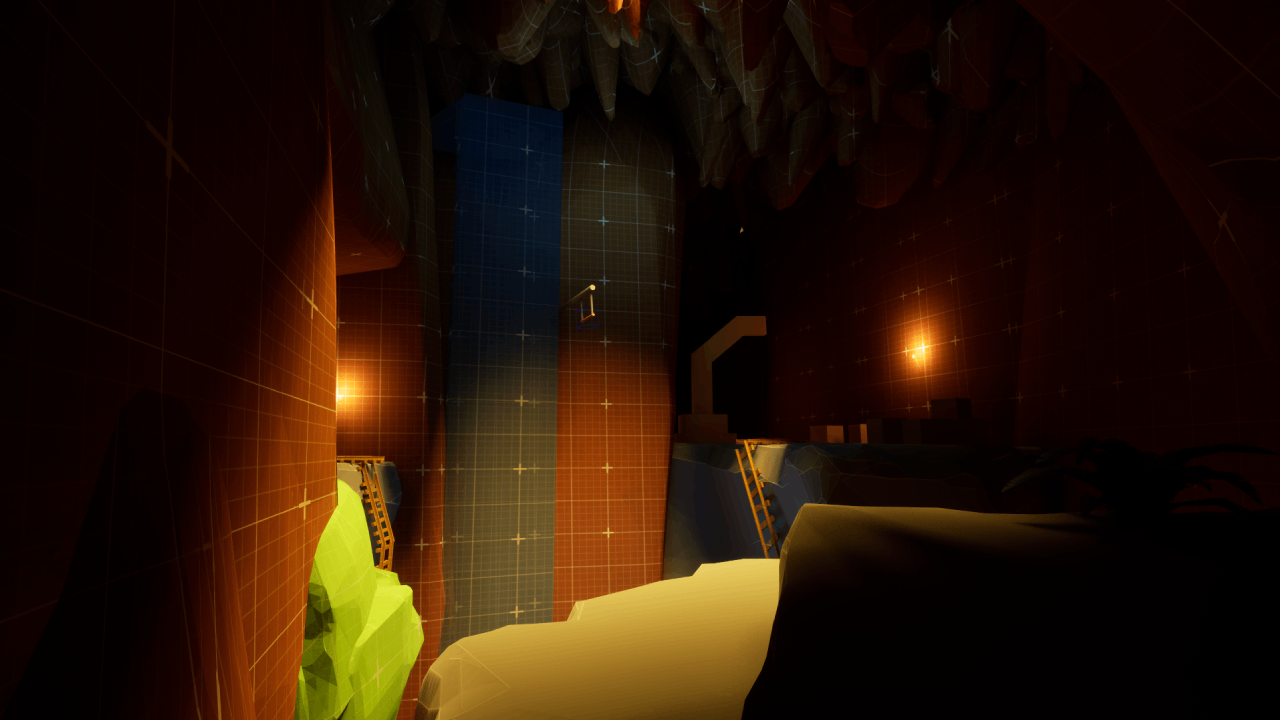
- Underground Waterfall Cavern: Challenges the player with a variation of the traversal mechanics established before.
- Trigger Events: Multiple trigger events guide the player through the underground area of the level, weaving narrative and layout together.
- Enemy Ambush: The Second enemy ambush challenges the player in a dangerous section of the map
Design Techniques
In comparison to multiplayer maps, I plan, structured, and created the initial layout by following these ideas for a Linear Design
- The beginning of the map teaches the player how the mechanics will function throughout the level
- The middle section enforces and expands on the teachings of the first section
- The last section forces the player to utilize all the prior lessons in a more challenging environment
Scripting can range from small trigger events to combat sequences, camera shakes, or quick time traversal events. All these options help polish the level and make it feel like an active map.
- Trigger events can constitute enemy combats, quick time traversal events, and camera shakes.
- Level Sequences can be used to add moving elements in the map that will support weaving together narrative and traversal sections.
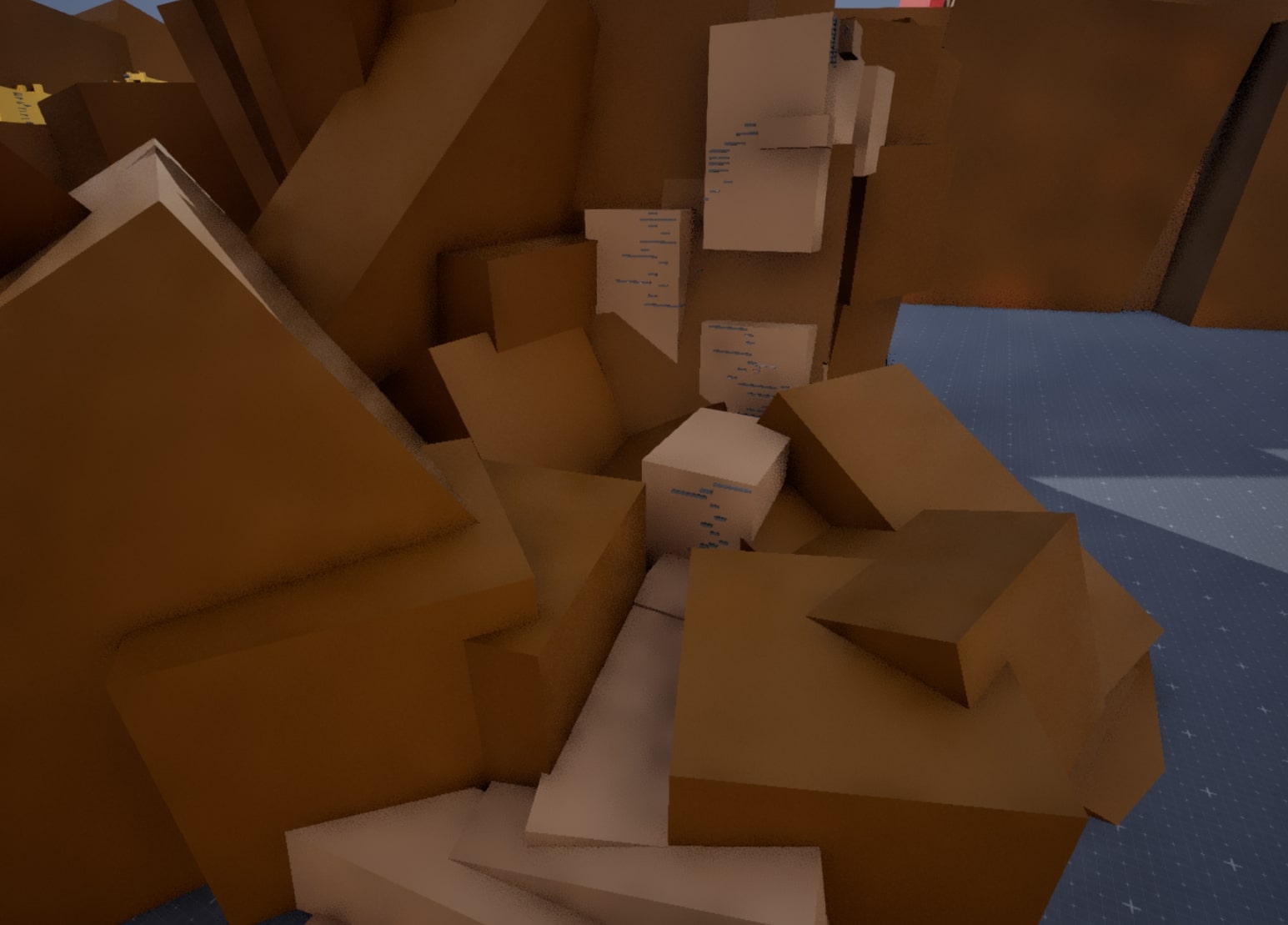
Occlusion is a positive space in the form of solid shapes that obscure the line of sight.
Occlusion is used in the following ways on my level:
- Occlusion is used as combat cover to support the combat areas of the map. Often used to avoid line of sight during range combat areas.
- It can also be used to hide narrative sections that will be revealed as the level progresses. Used together with leading lines, this can help set the flow of the level without overwhelming players with too much information.
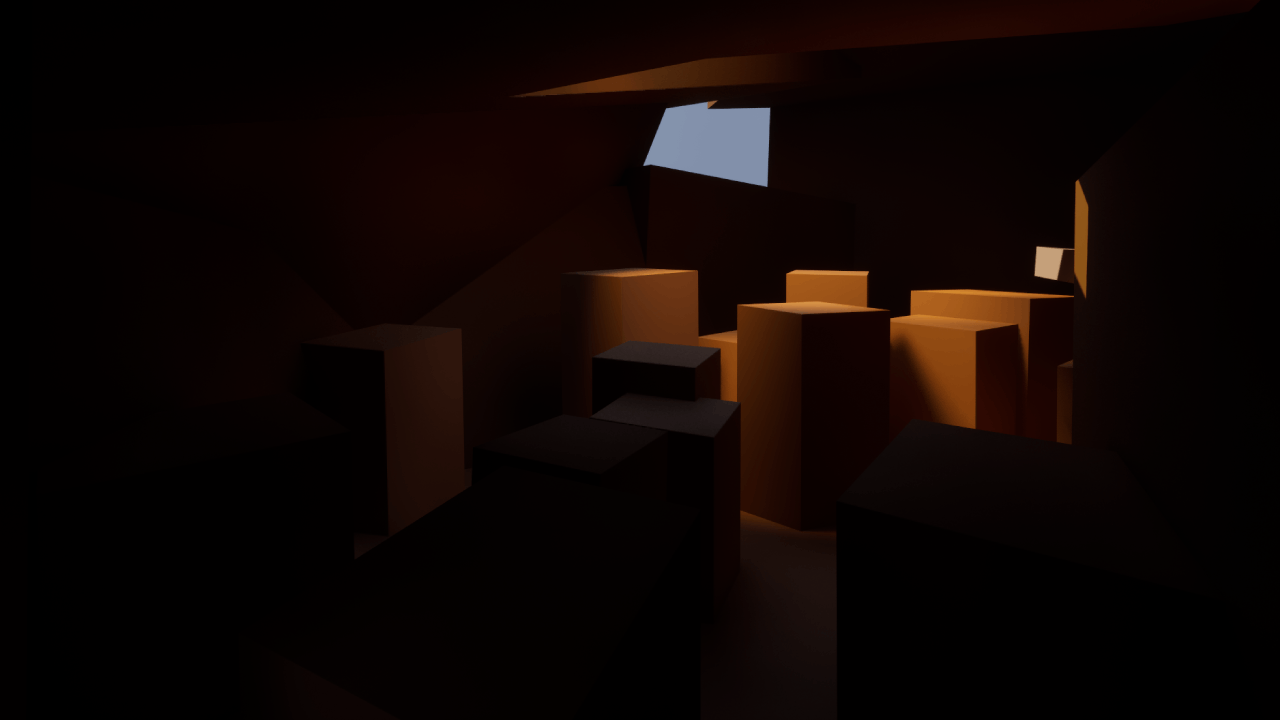
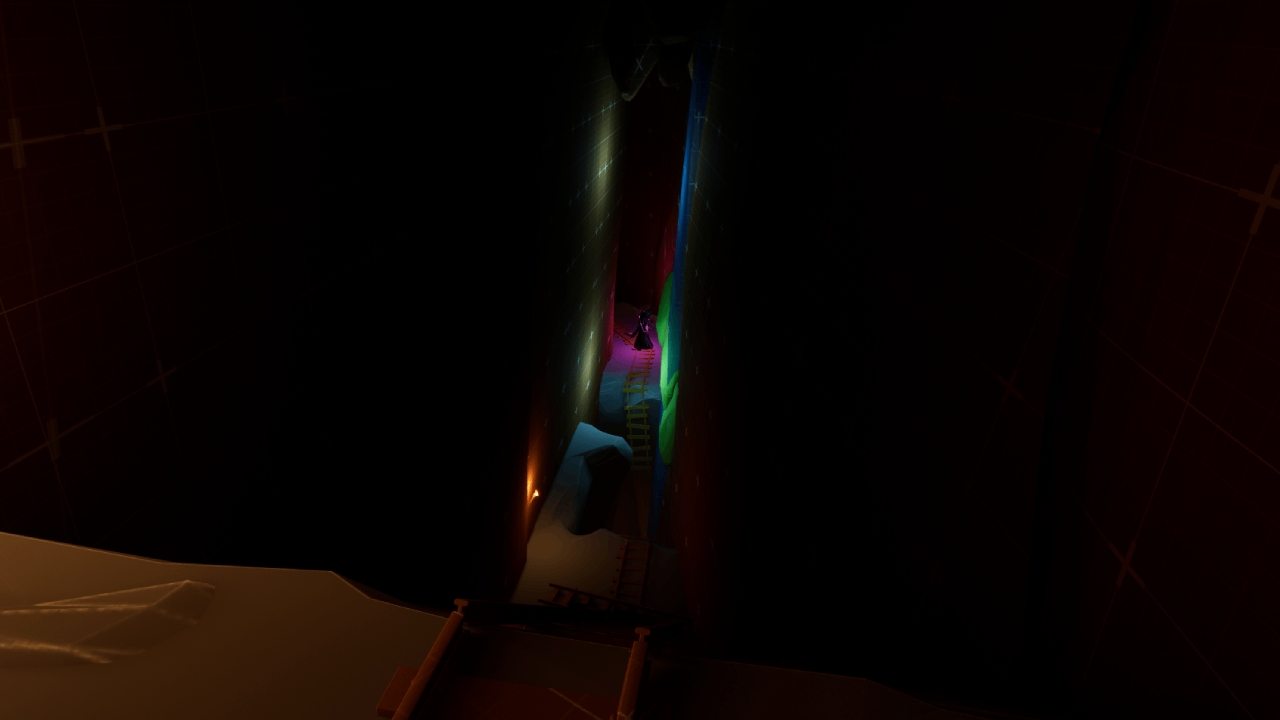
Lighting can affect how a level is perceived. Lighting can be used similarly to leading lines to guide the player and support the flow of the map, narrative, and mood.
- Lighting can be used to obstruct and guide players throughout a more-than-usual dark environment, as well as set expectations of the mood and setting of the level.
- In adventure games, lighting can be used as an alternative to yellow tape and can have more than one benefit, like guiding and creating epic vistas
Pre Production
Research, ideation, and planning
I started this study by deciding narrative, theme, mechanics, and ideas I wanted to explore and use as restrictions for my level.
I knew I wanted to build a level that resembled the combined experience of:
- Red Dead Redemption and Uncharted’s Heavy narrative-driven approach with action-packed gameplay.
- Spaghetti Western Movies such as A Fistful of Dollars
- Modern wild west-inspired tv shows like Westworld
- Comic series like East of West.
Â
Questions I asked myself during R&D:
- How will the narrative influence my level?
- Will there be any secondary paths? How will they affect the narrative?
- How long should the level be?
- What mechanics will the player have at their disposal?
- What kind of areas are common in a Wild West setting?
- How will enemies appear and how will the combat occur?
- How will cover be placed?
Level Design Document
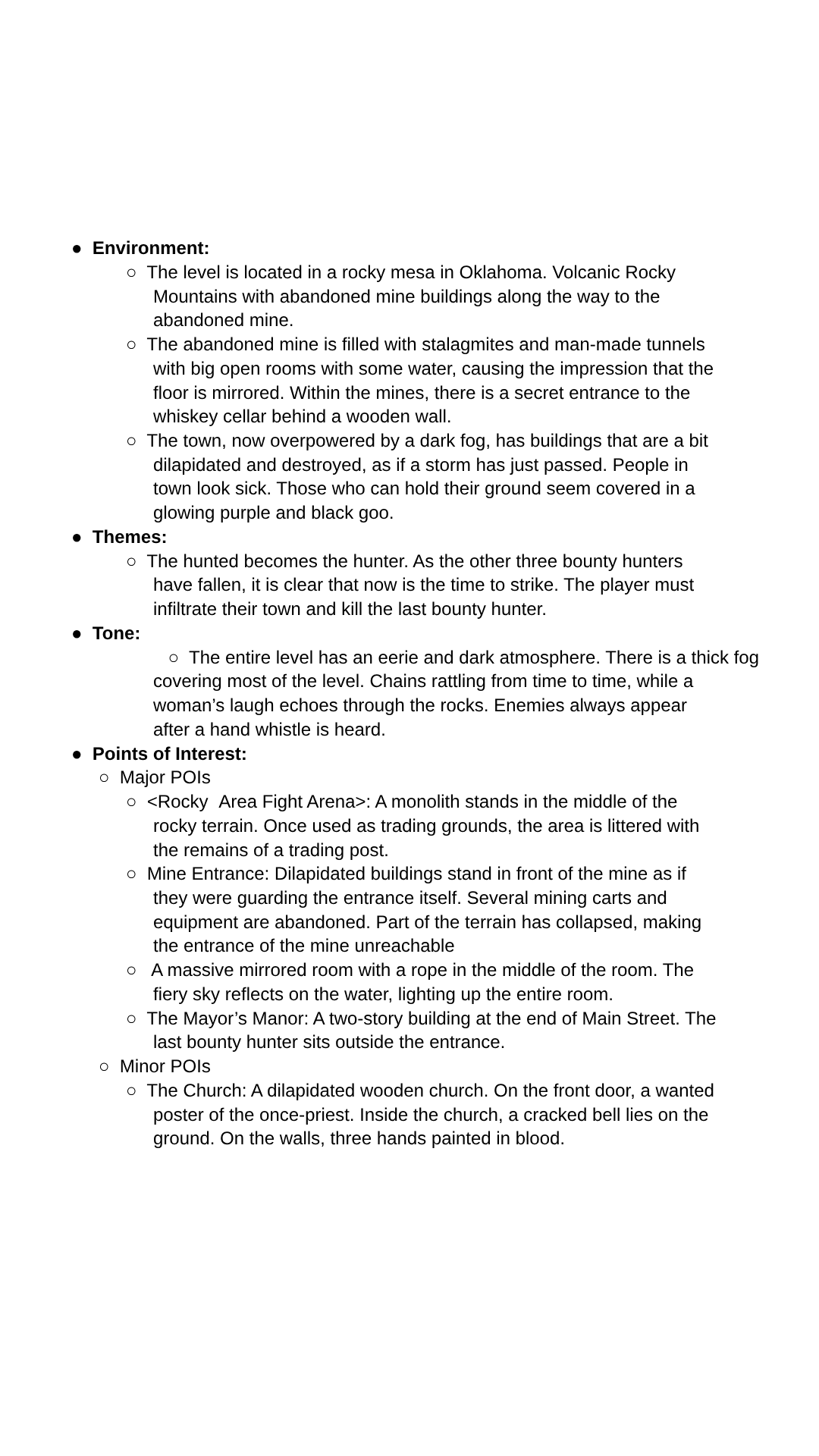
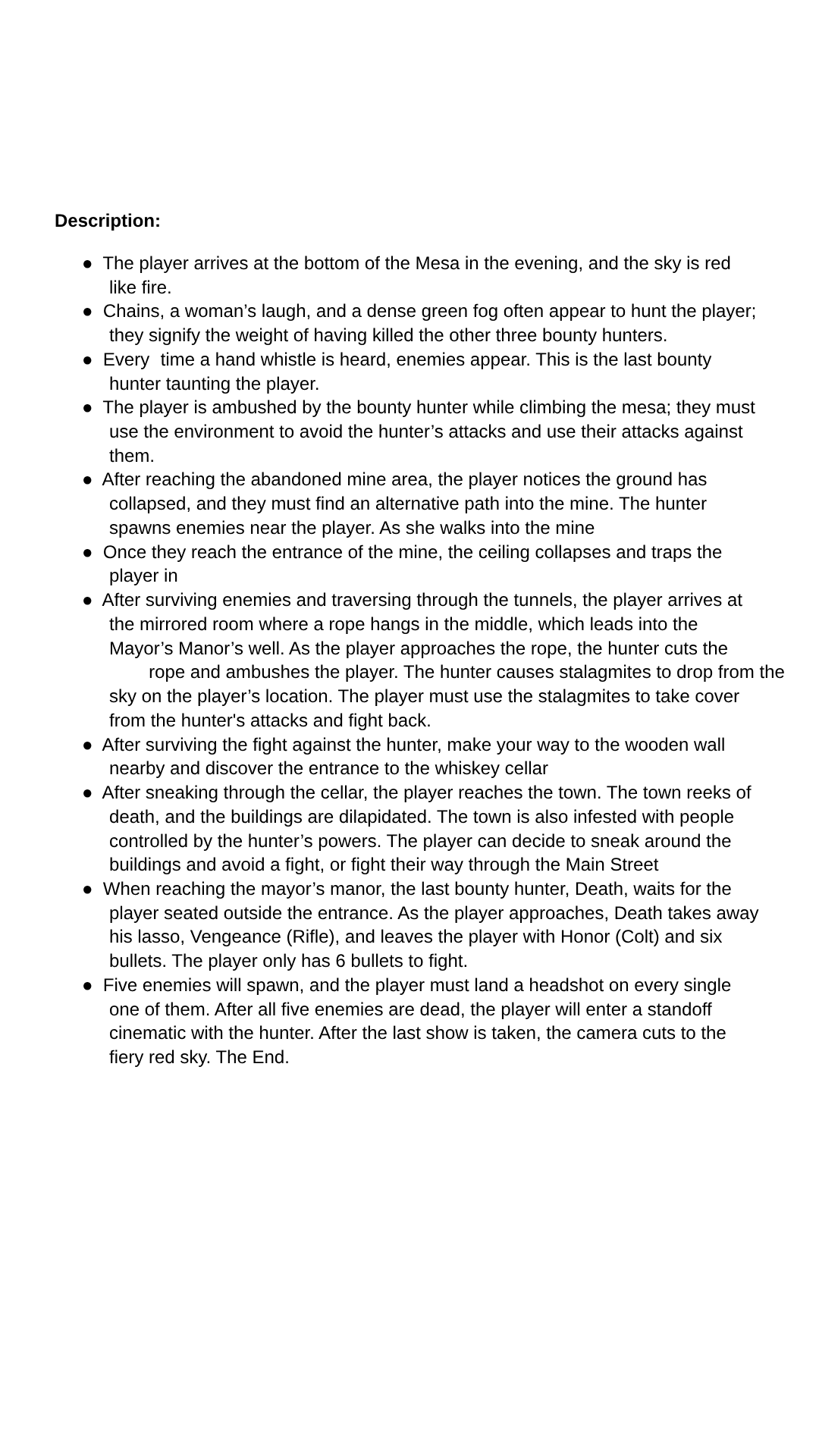
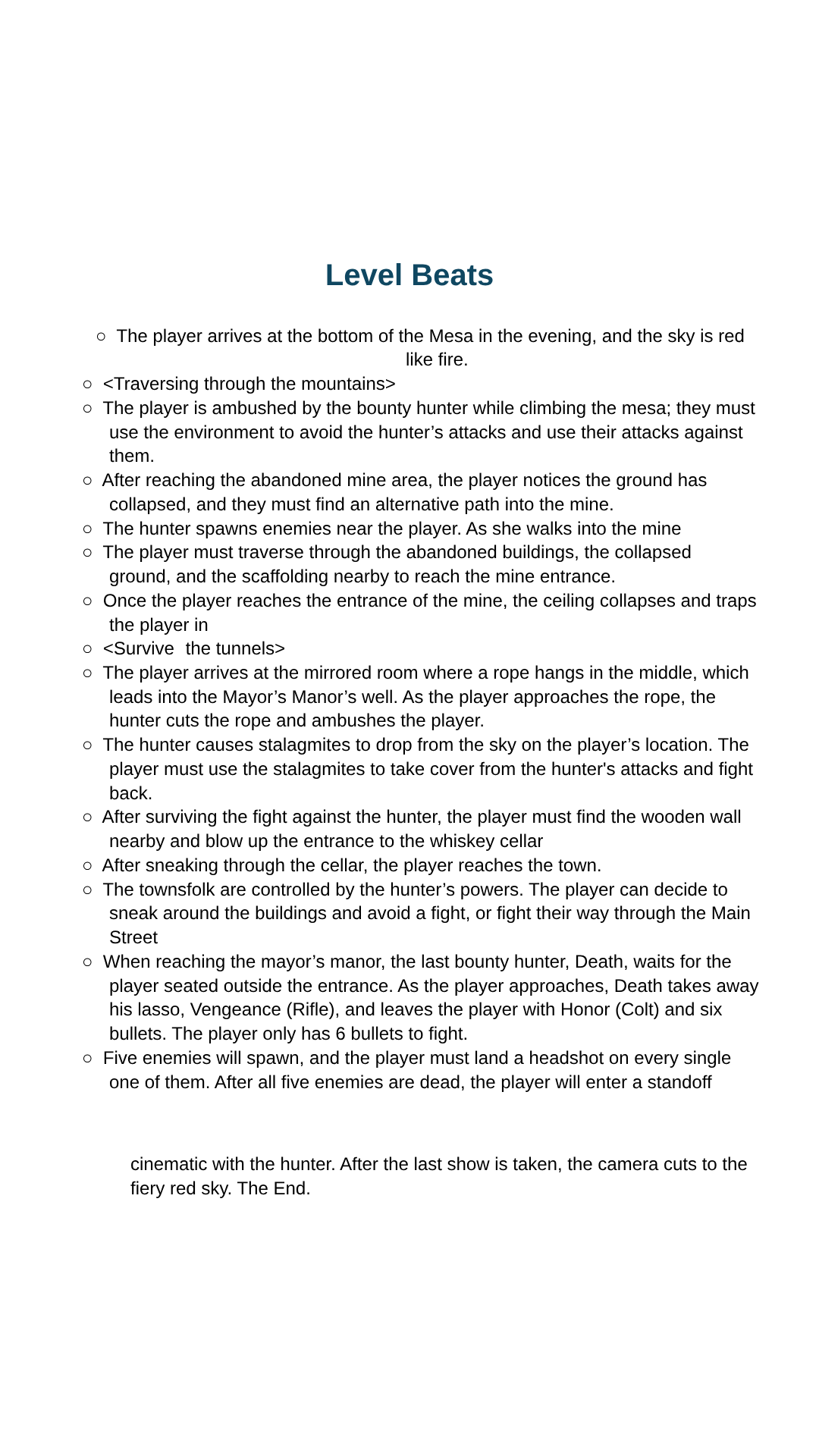
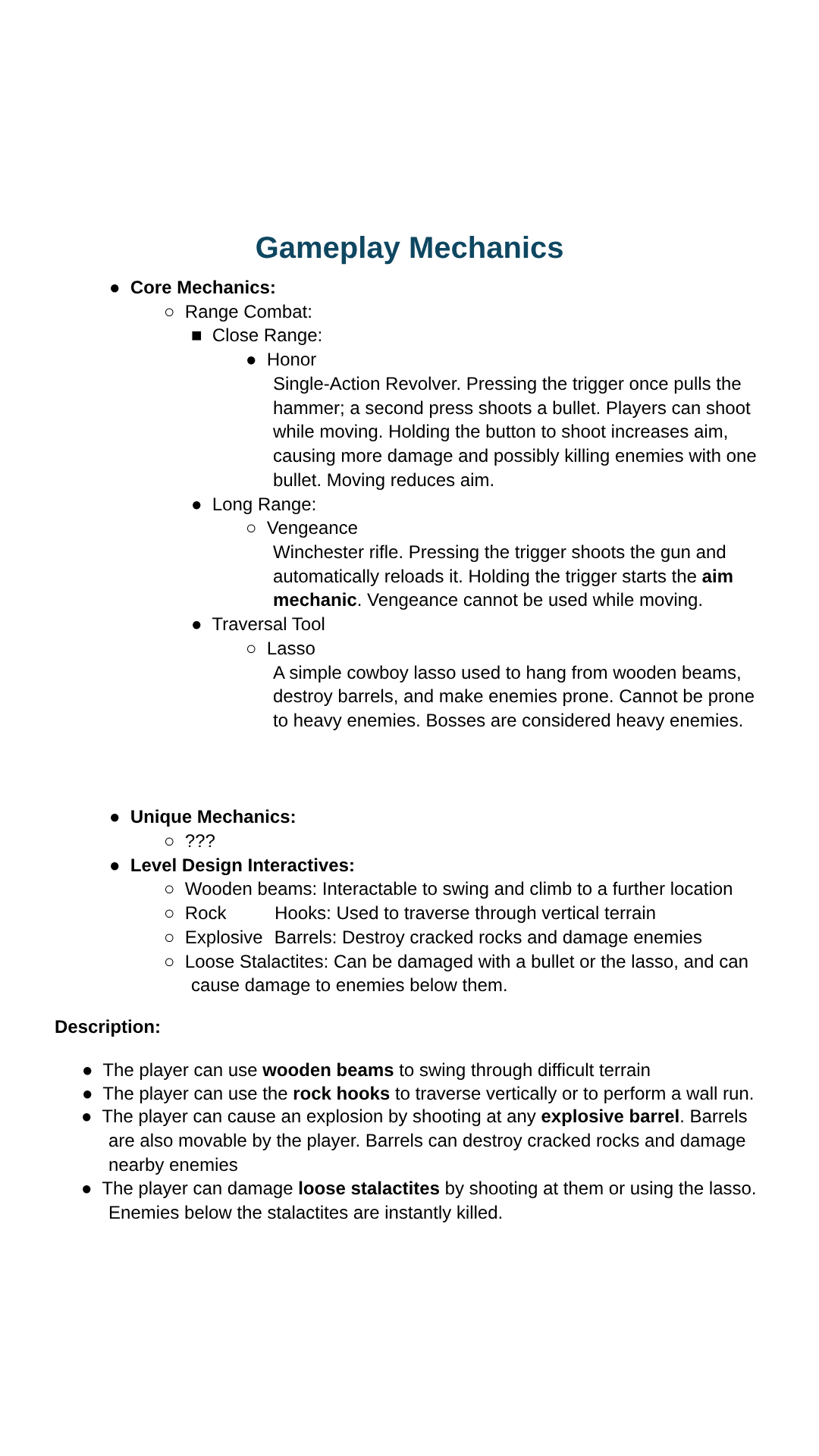
Before I moved into UE5, I decided to create an LDD to document my thought process and plan my level. I started by planning the following:
- Primary objective
- Narrative
- Setting
- Location
- Tone
- Points of interest
- Level Beats
- Gameplay mechanics
Questions I asked myself during this step
- How varied and complex should my mechanics be?
- How should I apply the mechanics I ambition to not feel repetitive?
- What are some scope restrictions I should keep an eye for?
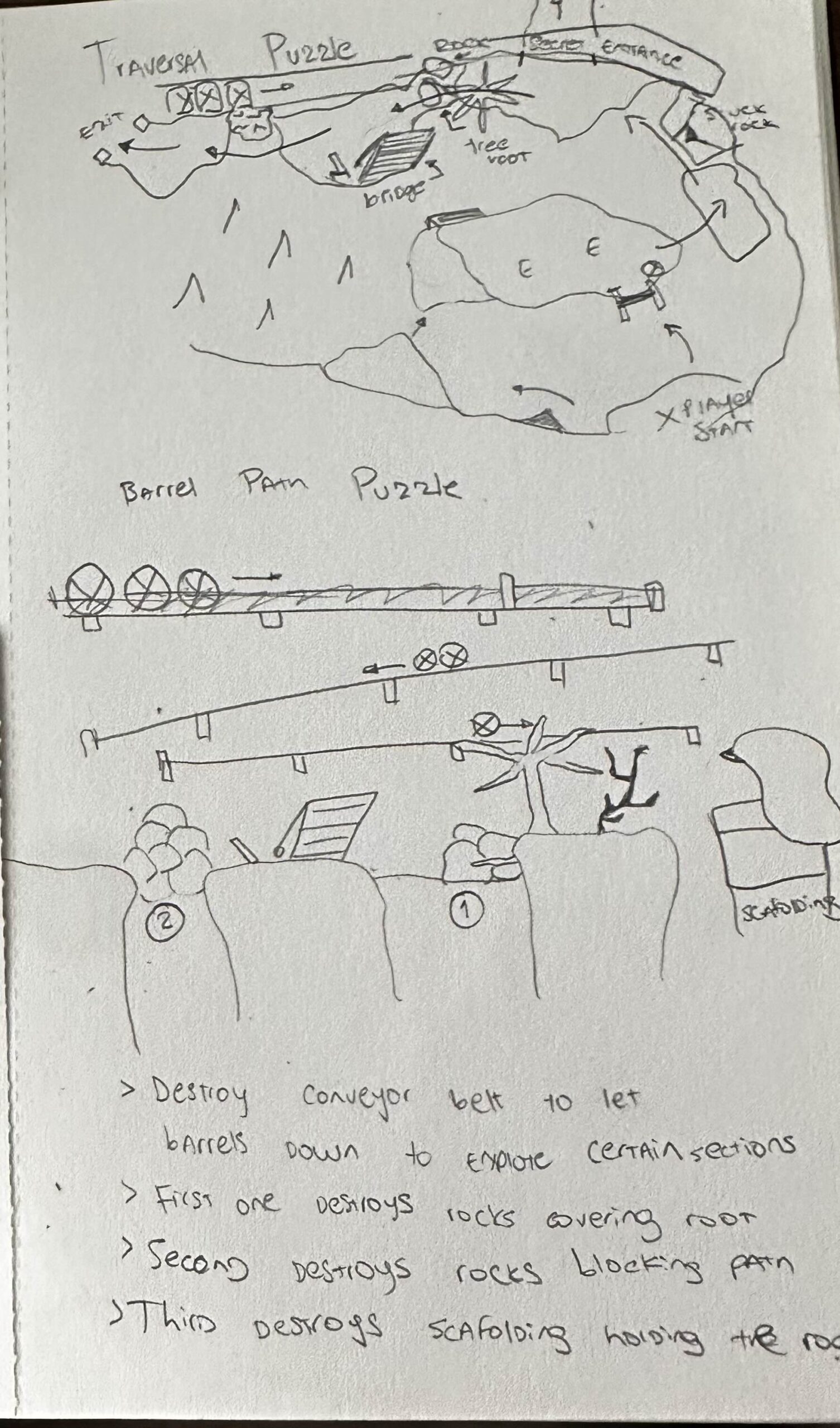
- Puzzles are cool, How do I implement those into an action packed game?
- What are my main mechanics and how do they help me create an engaging map?
2D Map
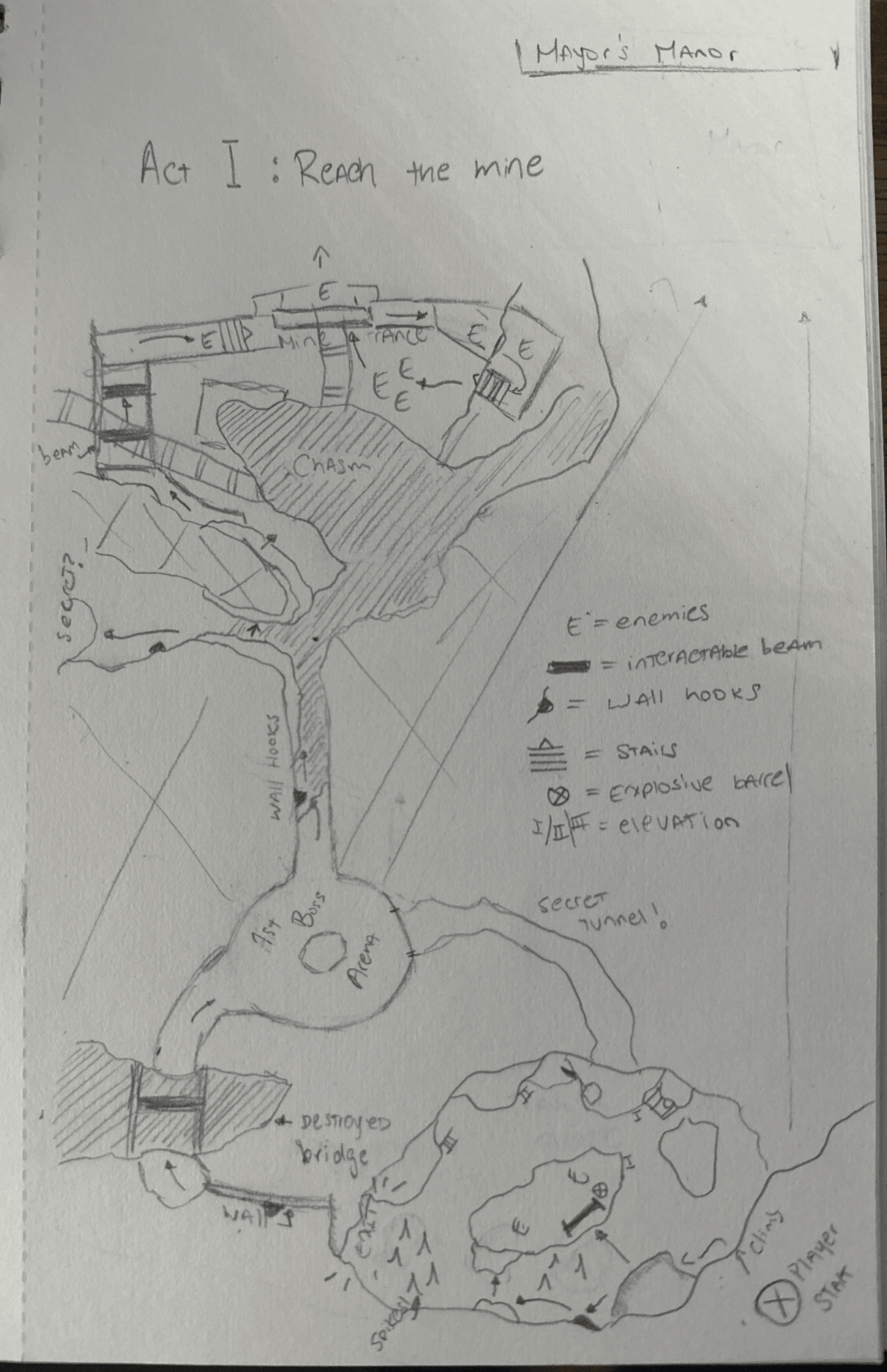
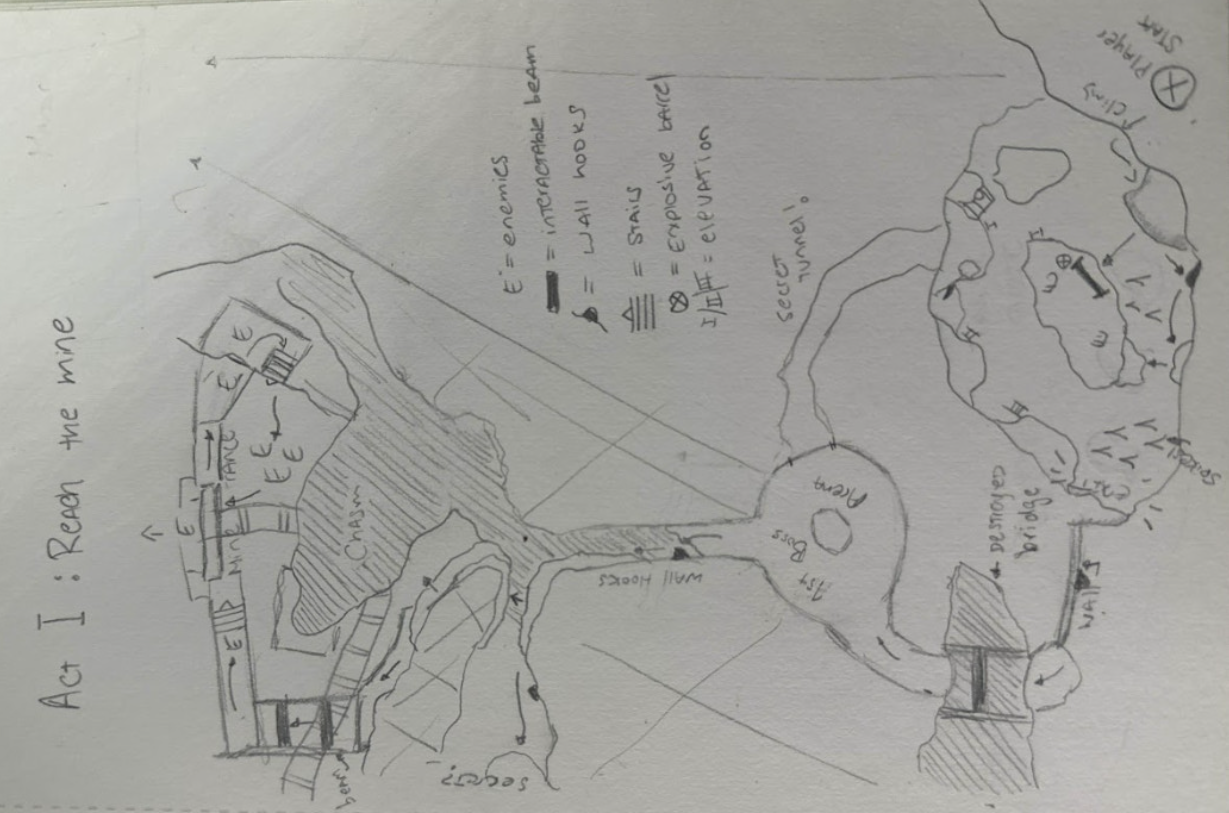
My first stop was a pen and paper prototype. I started with the First Act of the map: Reach the Mine Entrance. Here, I wanted to establish a few principles:
- Traversal mechanics will challenge the player to ensure a fast-paced level
- Multiple paths give the player the chance to decide their path
- Boss Encounters occur throughout the level, weaving the narrative of the story into the gameplay
- The first half of the level is an outdoor experience
- The second half is a claustrophobic, eerie underground experience
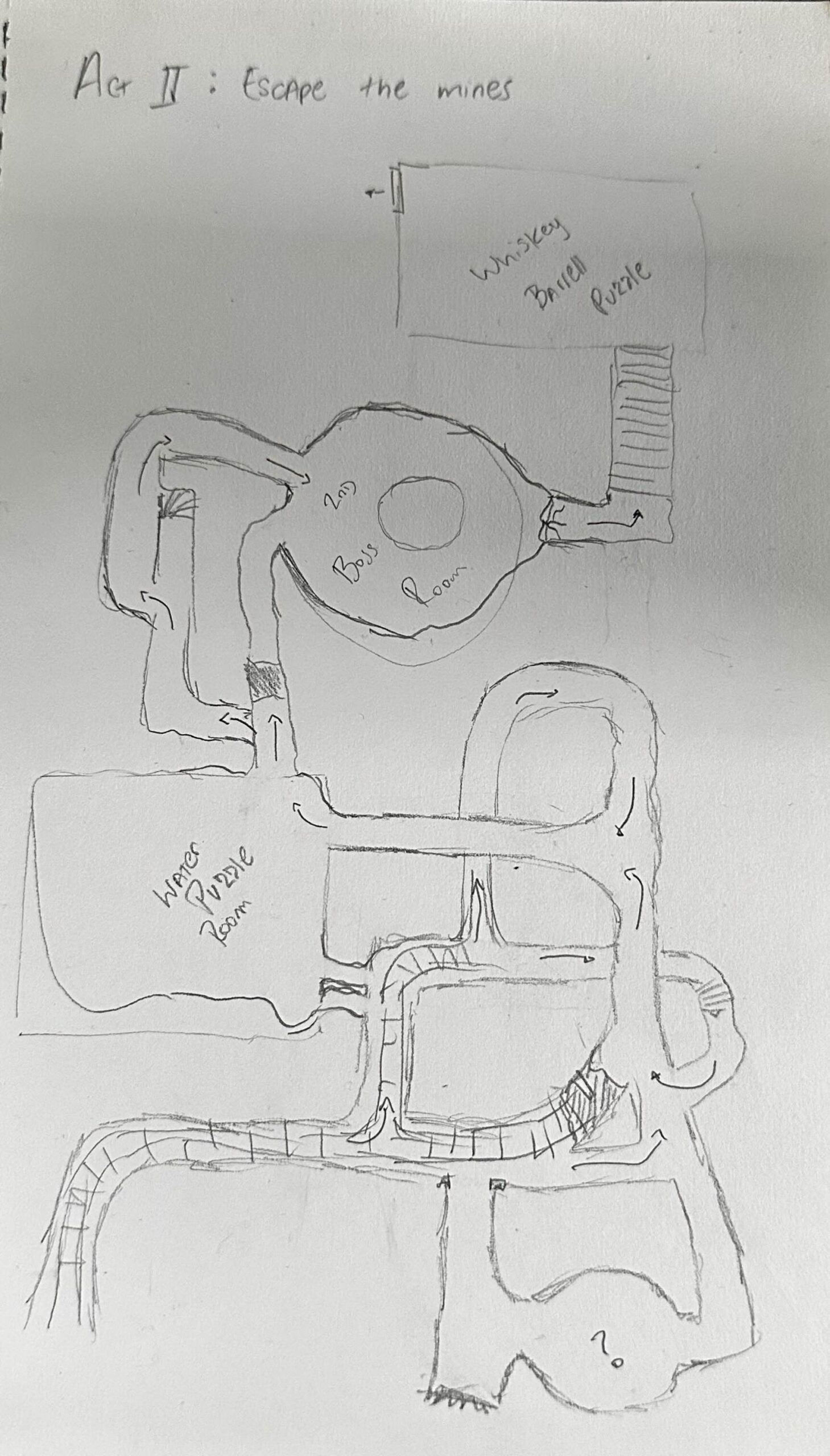
At the end of my first 2D Map Draft, I mapped:
- Act 1: Reach the Mine
- Act 2: Explore the abandoned mine
- Traversal zones
- Narrative Beats
- Combat areas and enemy locations
At this point, I reached out to a few Level Designers in my circle for feedback on my documentation and initial 2D Map, from where I gathered the following feedback:
- The mechanics I’m ambitious about are too varied, the mechanics need to be standardized for player’s readability
- The map felt like multiple rooms connected by a hallway
- The size of the map feels out of scope and some areas may benefit from condensing them together
Process & Iteration
I decided to start blocking out my first draft of the map while implementing the feedback I received from my pre-production:
- Focus on creating an interesting layout rather than focusing on puzzles or boss encounters.
- Design with the intent to make drastic and quick changes through multiple iterations of feedback
- Thought puzzle areas and accommodate traversal zones to incorporate puzzles as a seamless opportunity to create continuity between areas.
- Secondary paths could cause narrative elements to be skipped.
With all those points in mind, I focused on:
- Creating the basic layout
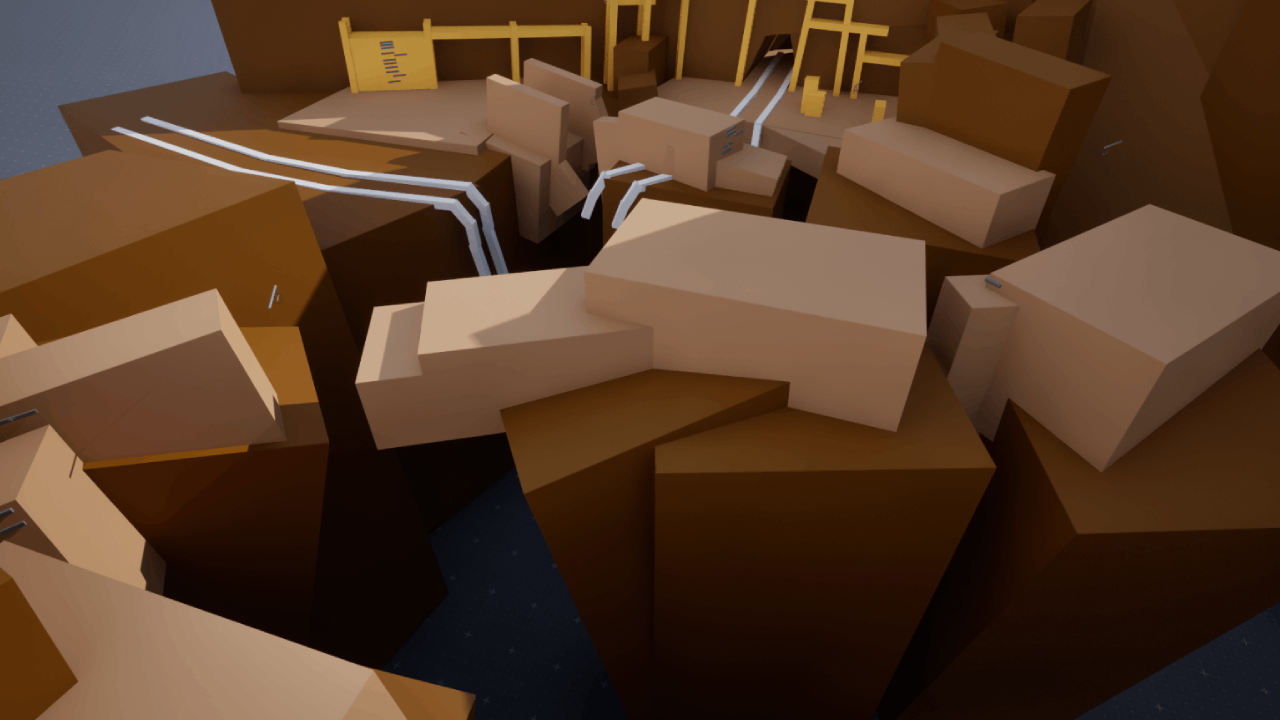
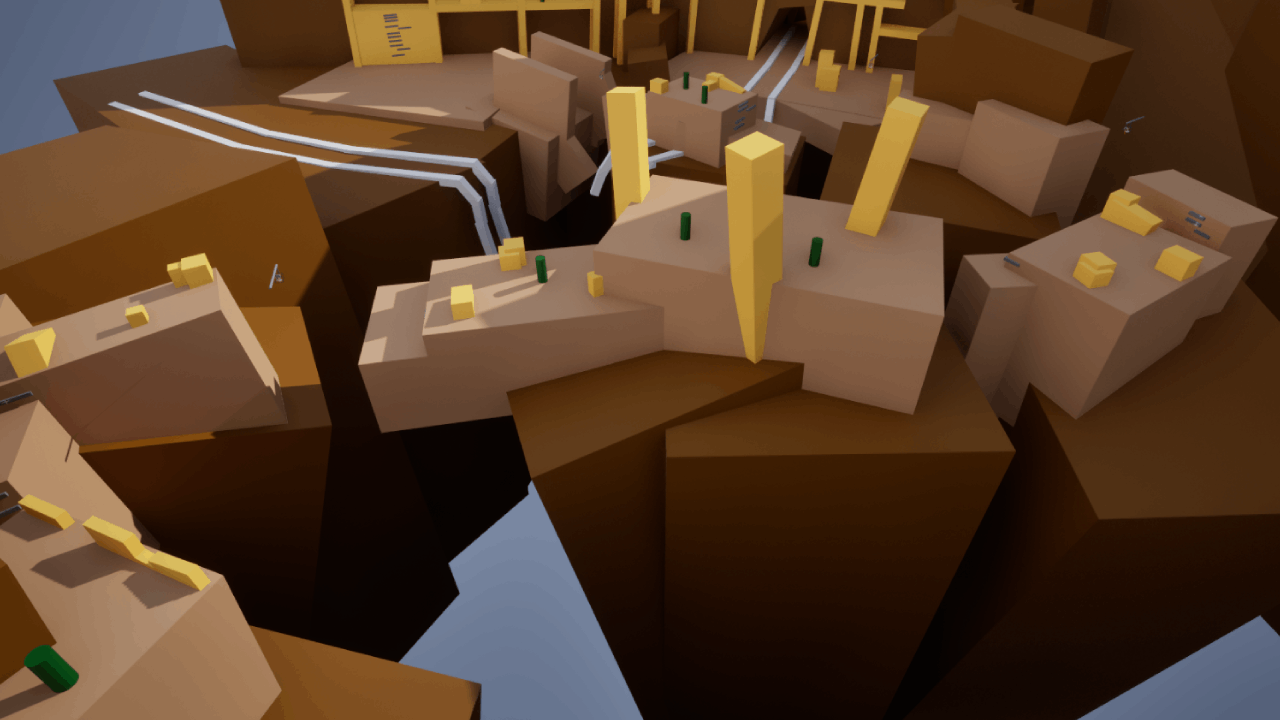
- Implementing basic shapes to guide the layout
- Prototyping primary traversal mechanics
- Mapping the combat and traversal areas
After blocking out my first layout, I was able to showcase my map to a group of designers, from whom I got the following feedback:
Feedback 1: Combat Zones
- Problem: The current layout does a good job of creating captivating yet guiding vistas. However, the combat zones aren’t well defined and feel very exposed.
Feedback 2: Traversal Mechanics
- Problem:Â Traversal mechanics are not standardized, making some traversal zones frustrating and repetitive.
Feedback 3: Layout paths
- Problem:Â The areas between bigger rooms felt empty and repetitive, while the optional paths detracted from the narrative rather than supported it.
After understanding what I needed to iterate, I went back to my level and set myself a plan of attack:
Iteration 1: Adding Cover and Placeholder Enemies
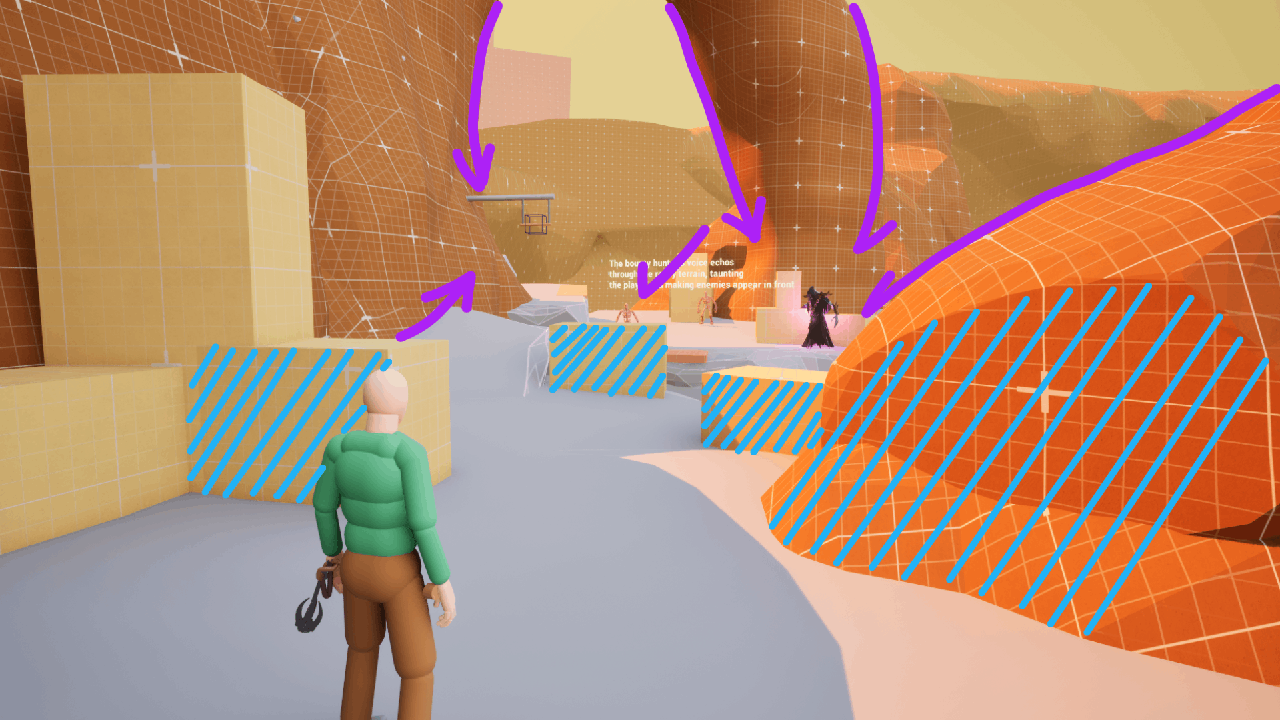
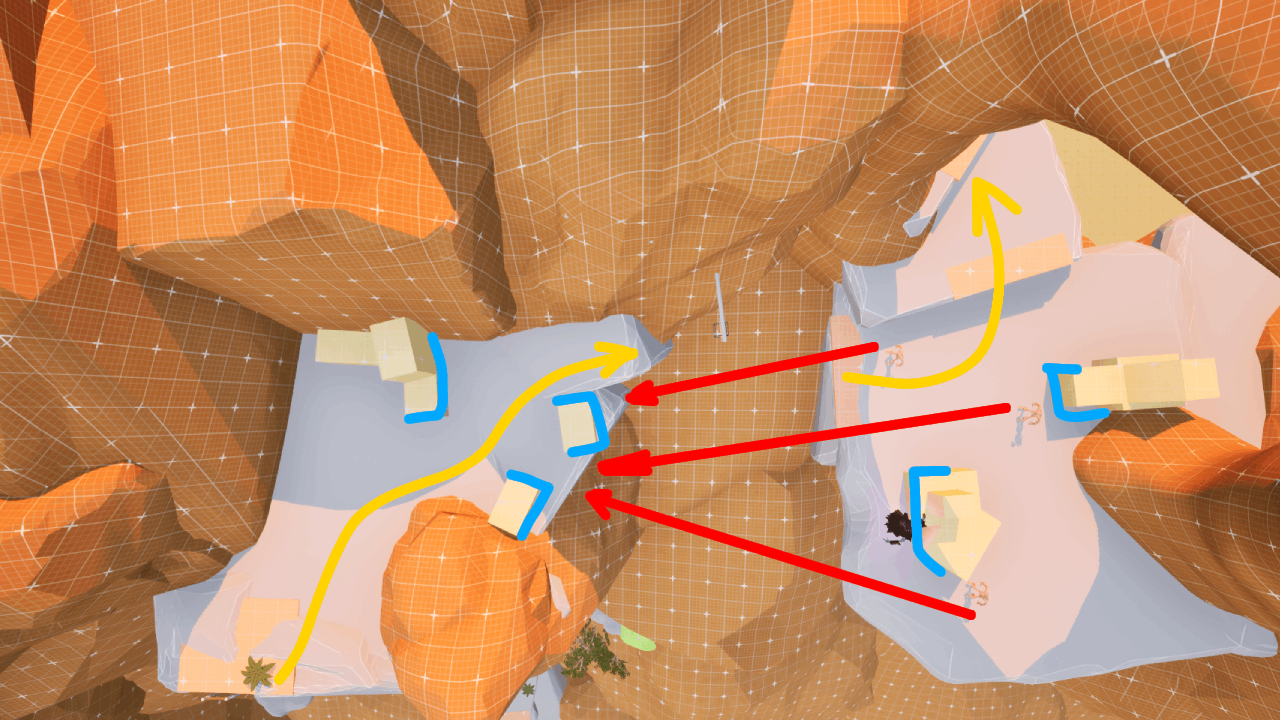
- Performed a Cover and Enemy placement pass to start iterating the location from which the player would arrive, how they would first encounter the enemies, and what would be their cover options when challenged by enemies.Â
Iteration 2:Â Standardizing Level Traversal
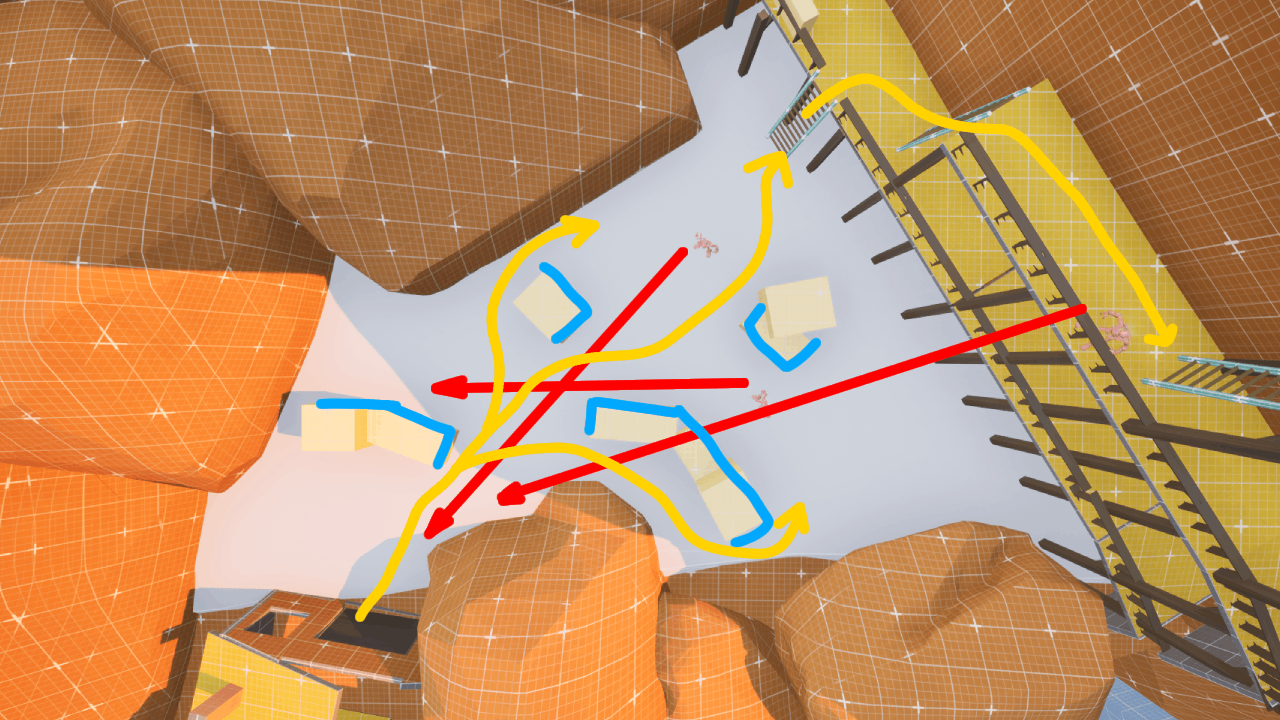
- Reshaped part of the layout to standardize the traversal mechanics throughout the level. Created basic metrics for the cover sections and placed them on both sides of the combat areas to support different fighting styles depending on the weapons used (Long and Close Range Combat)
Iteration 3: Condense Map
- Combine areas to condense the experience while also adding more detail to each beat in the level. This will lead to more complete experiences as each beat will have a combination of narrative, combat, traversal, or scripting elements.

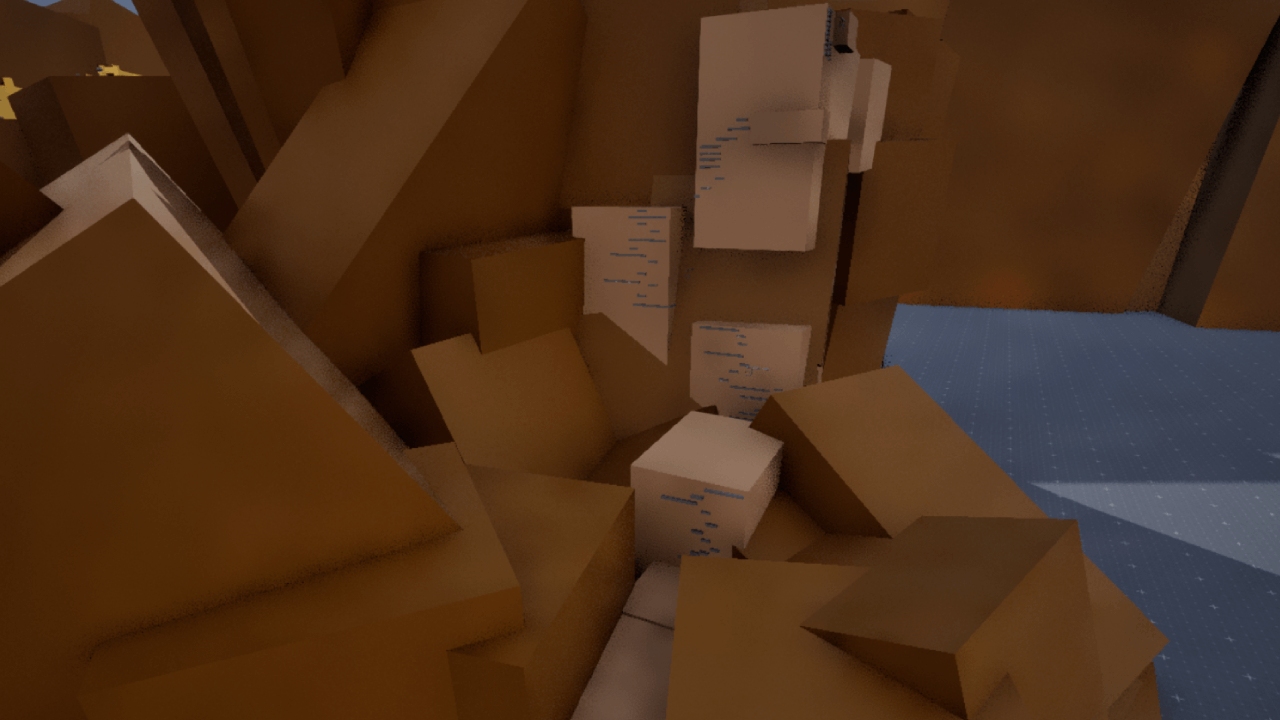
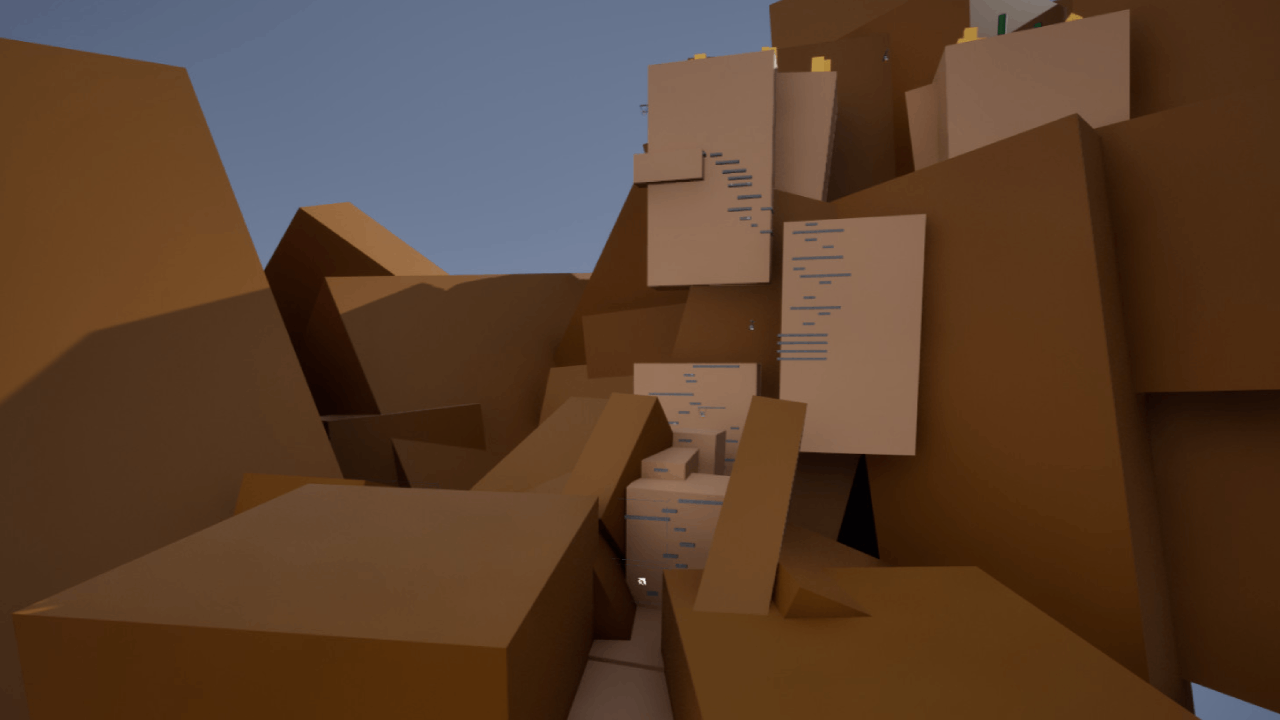
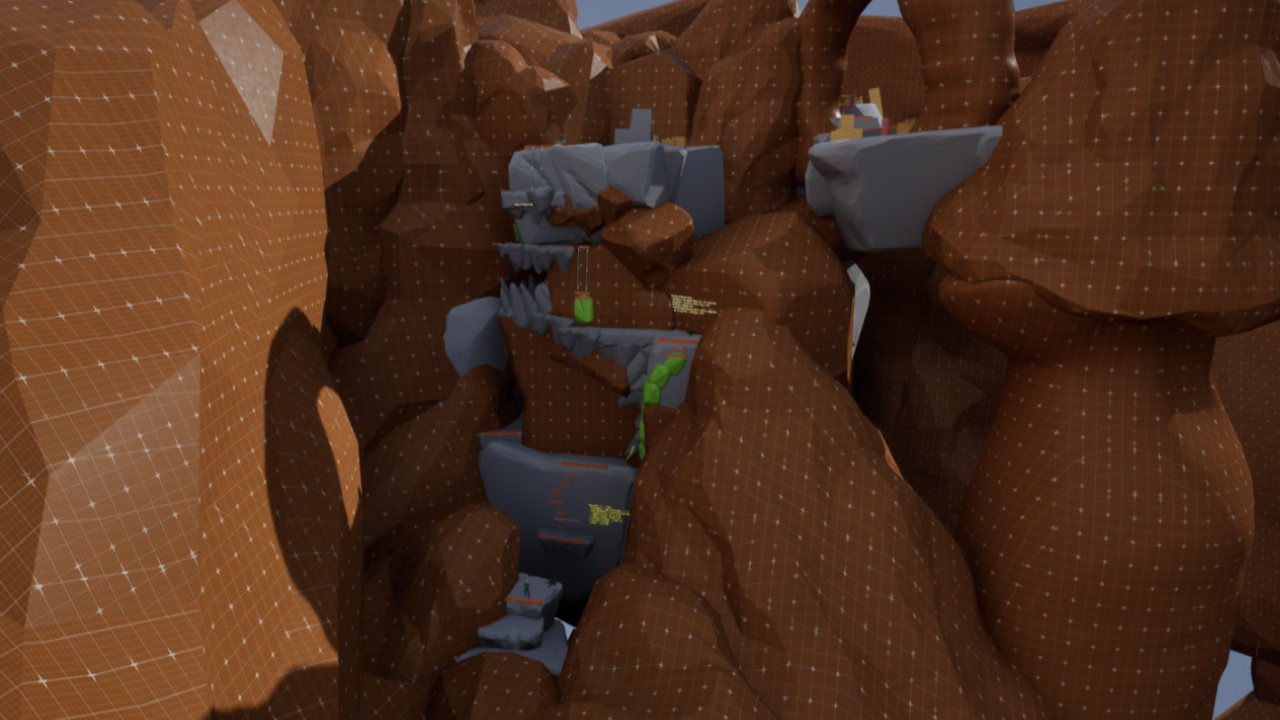
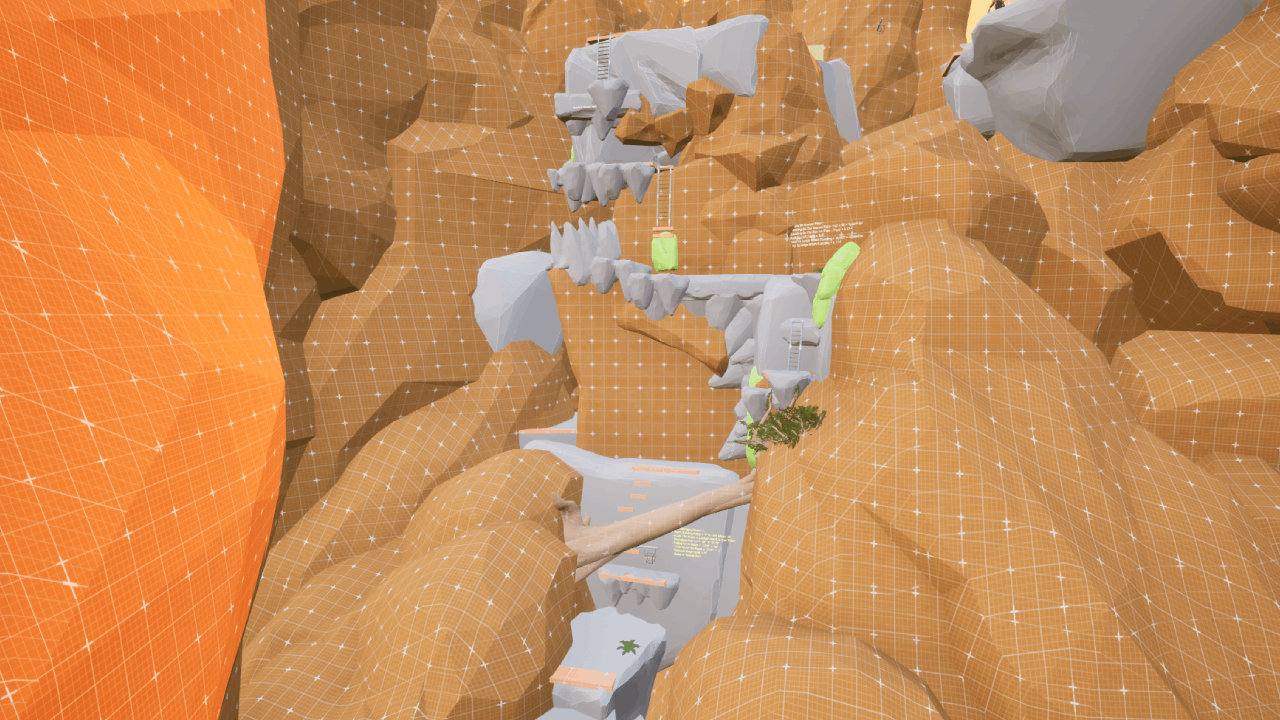
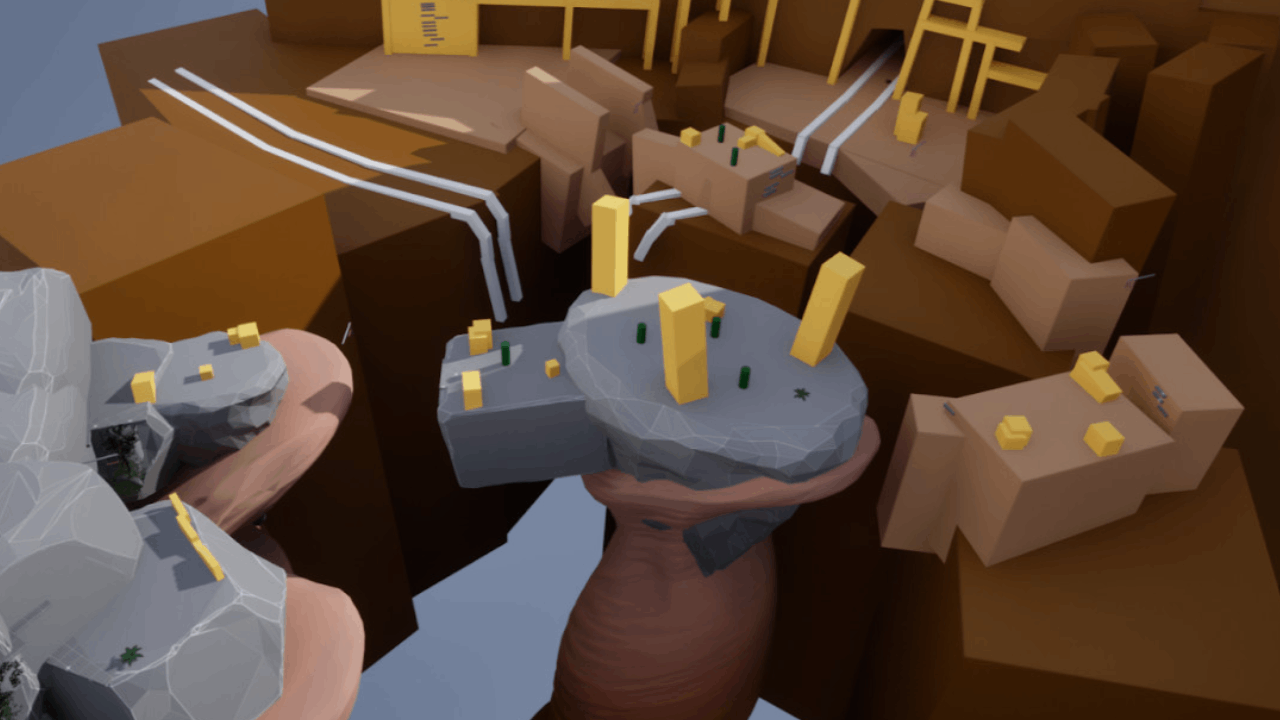
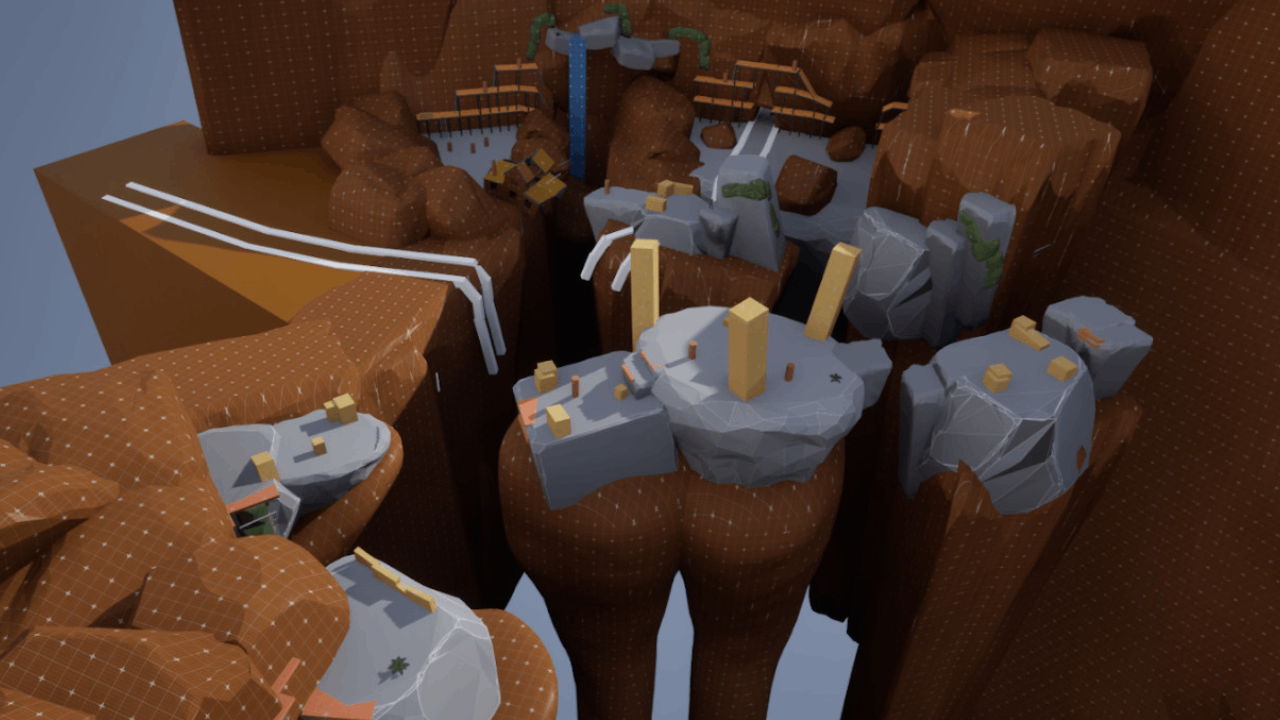
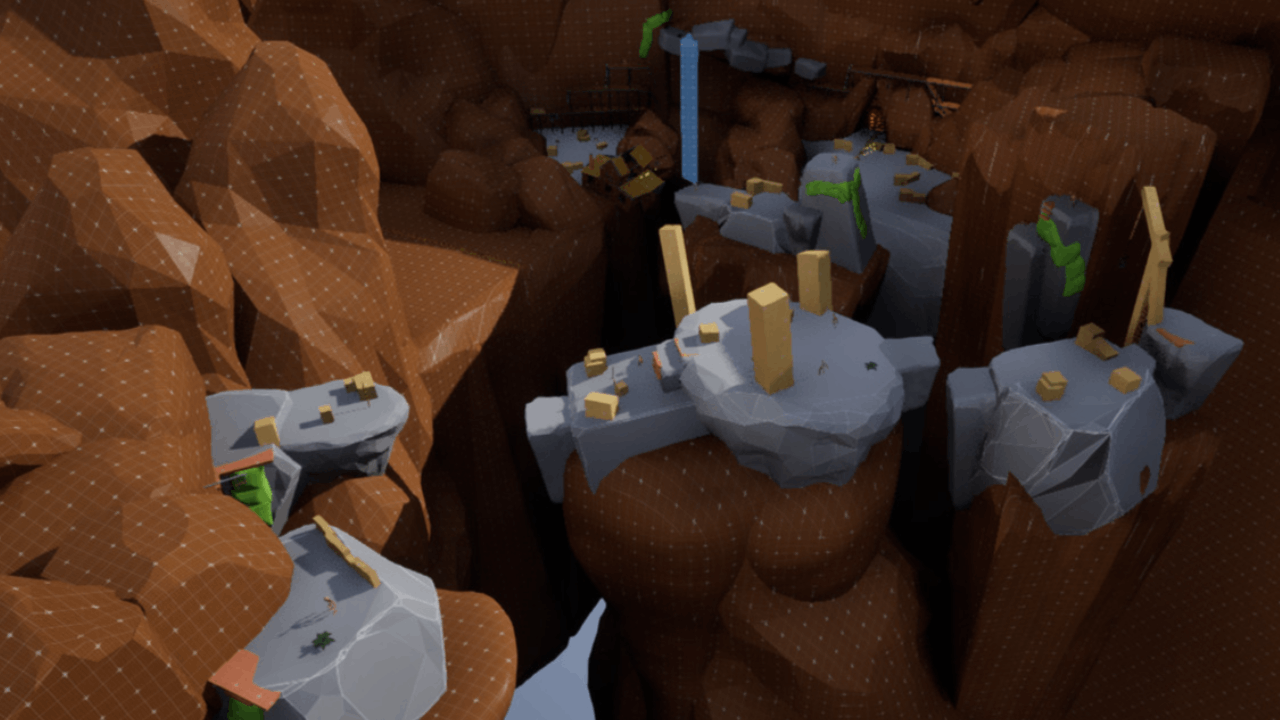
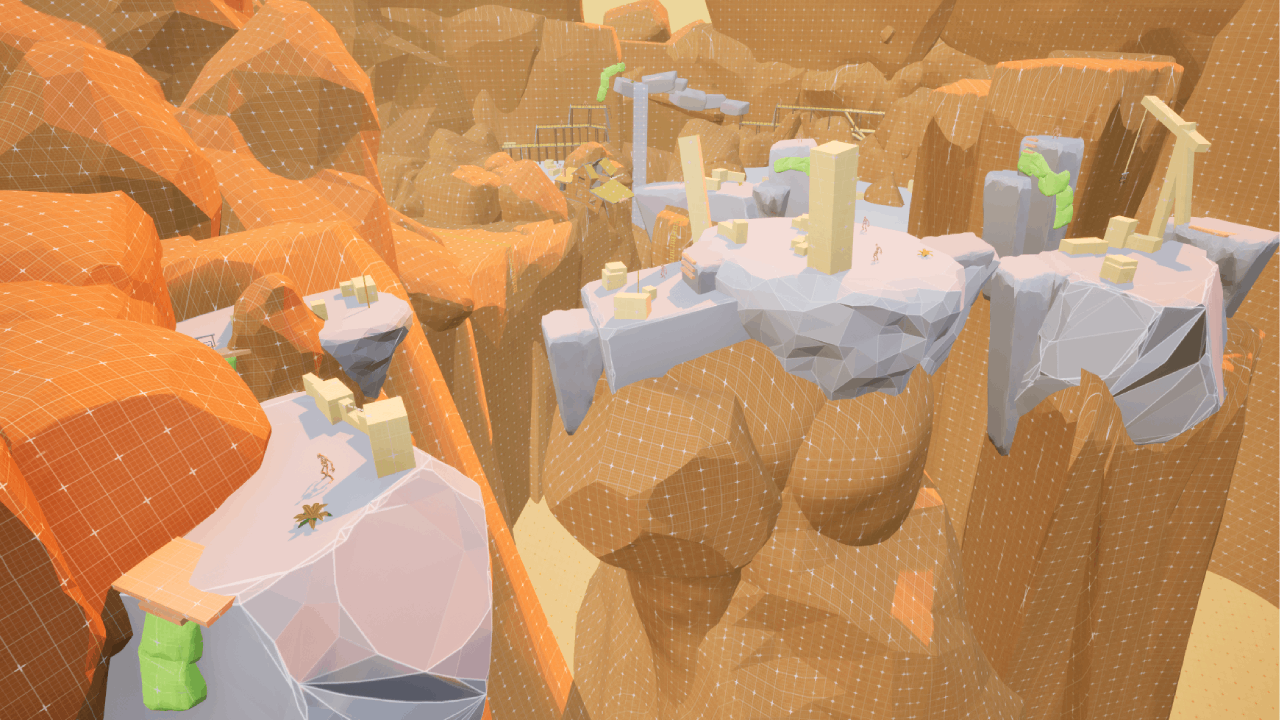
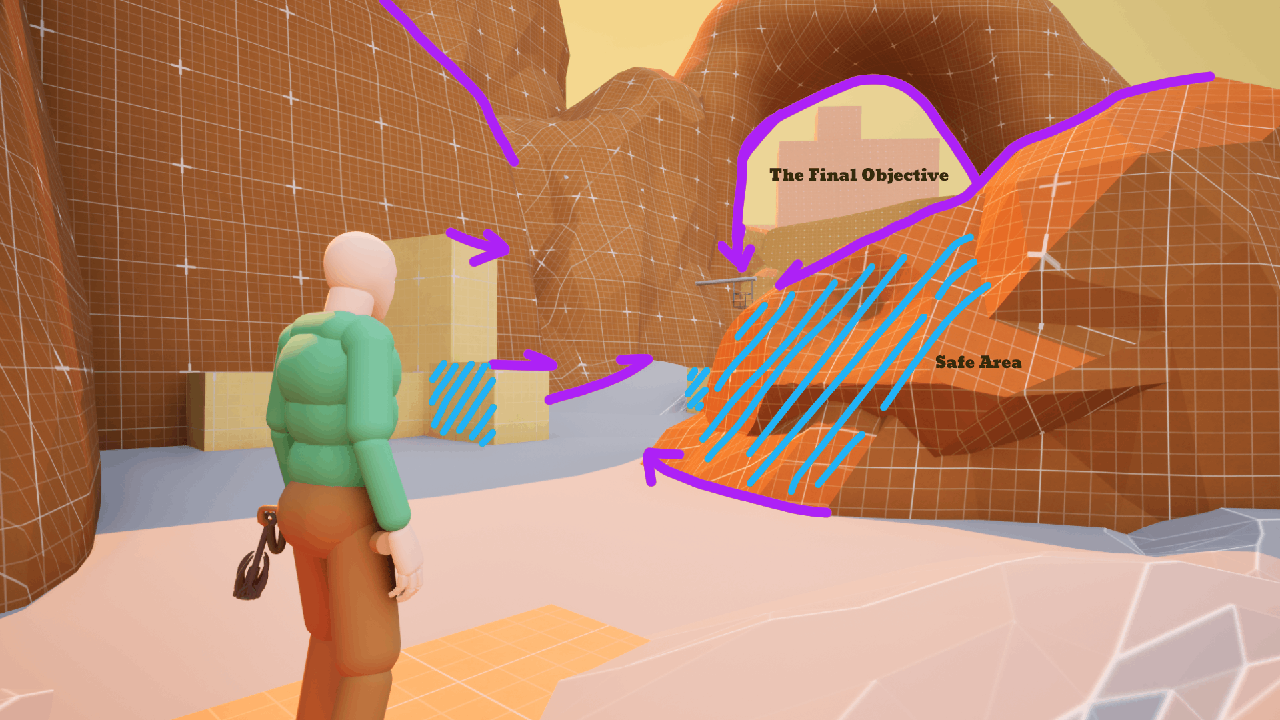
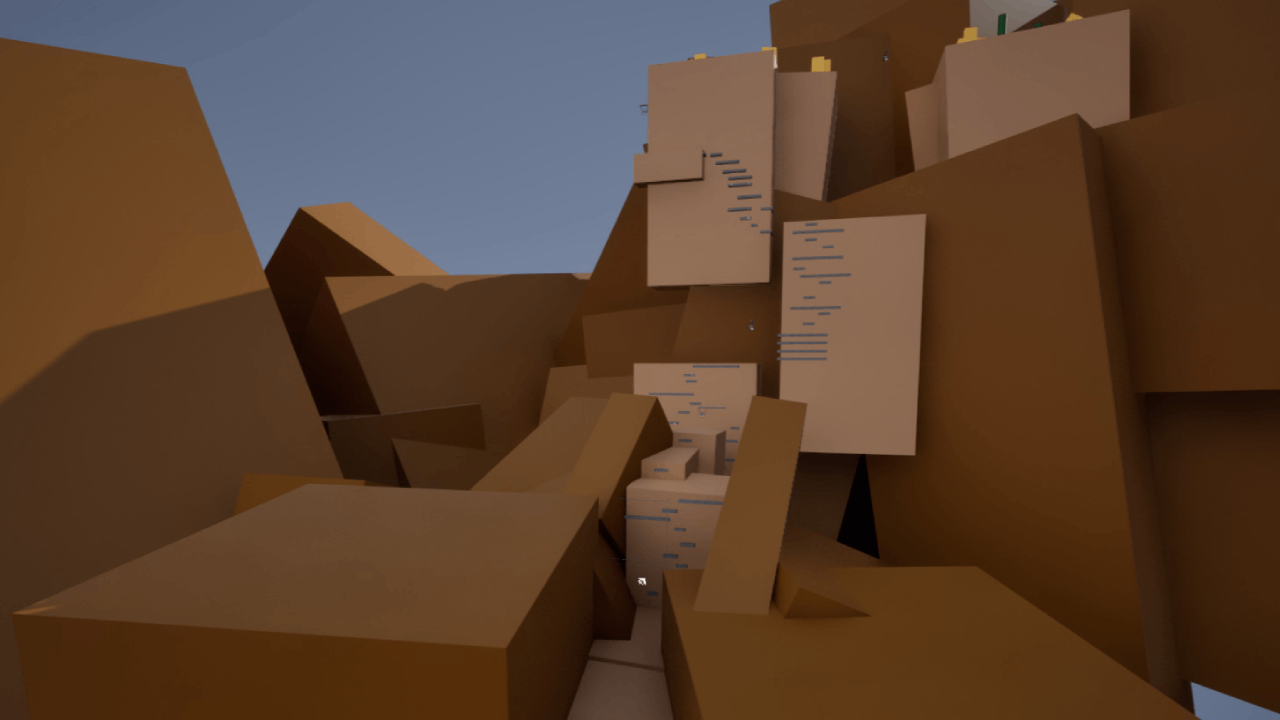
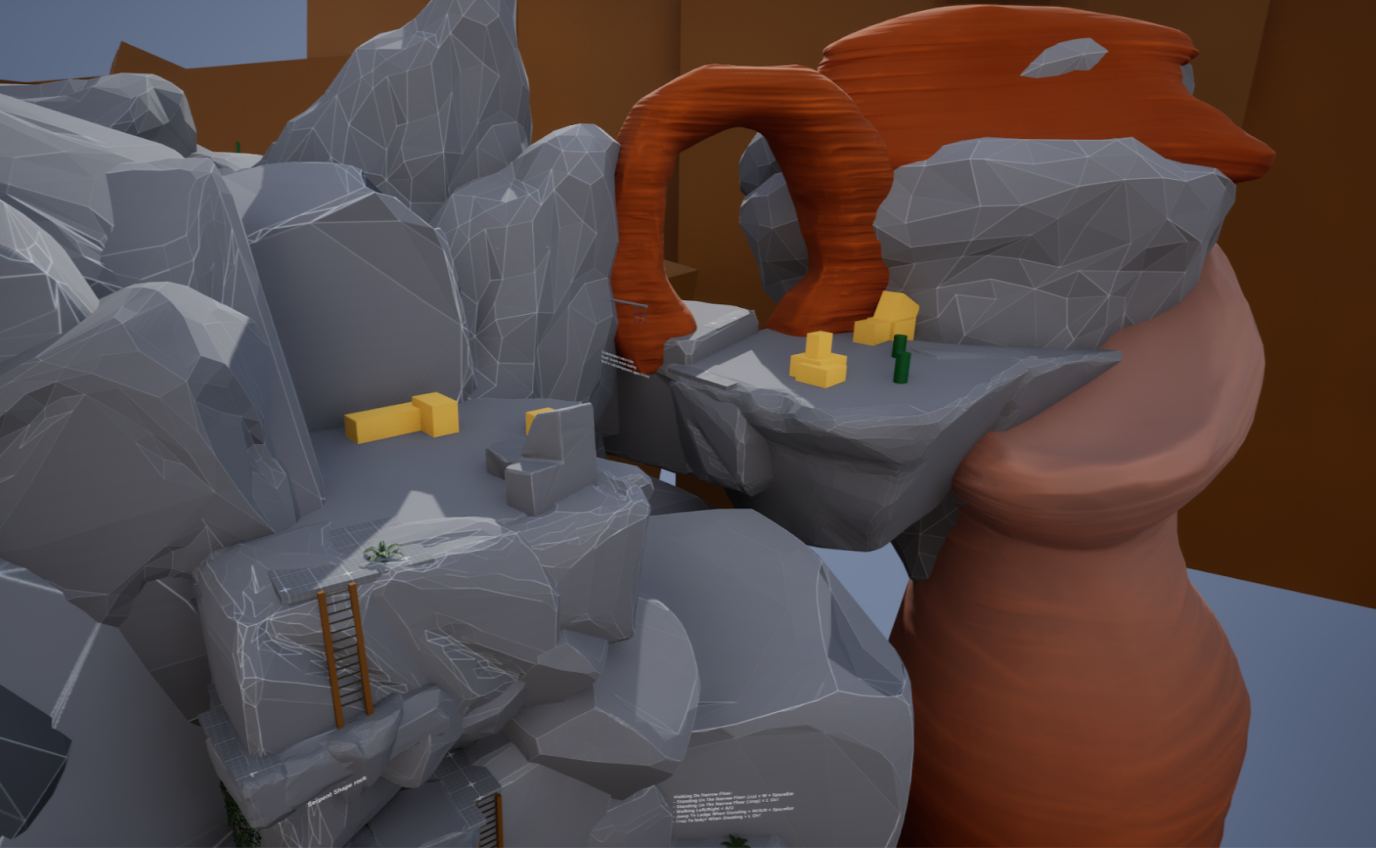
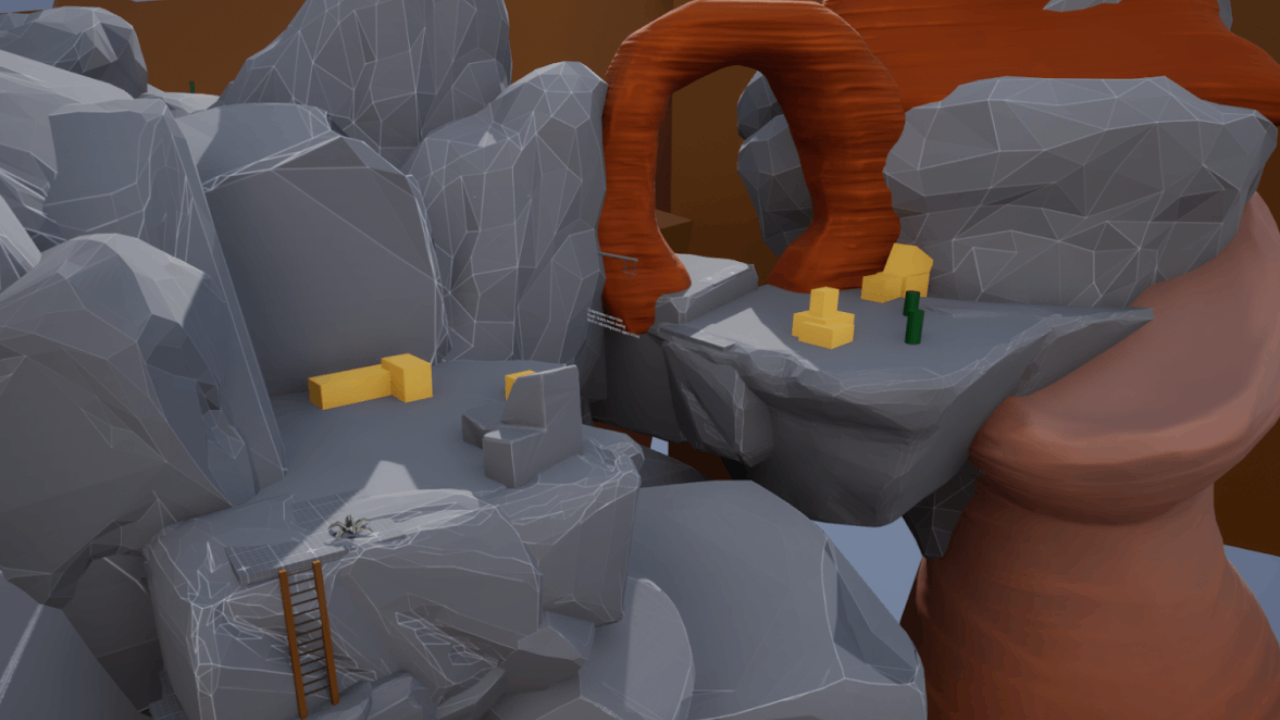
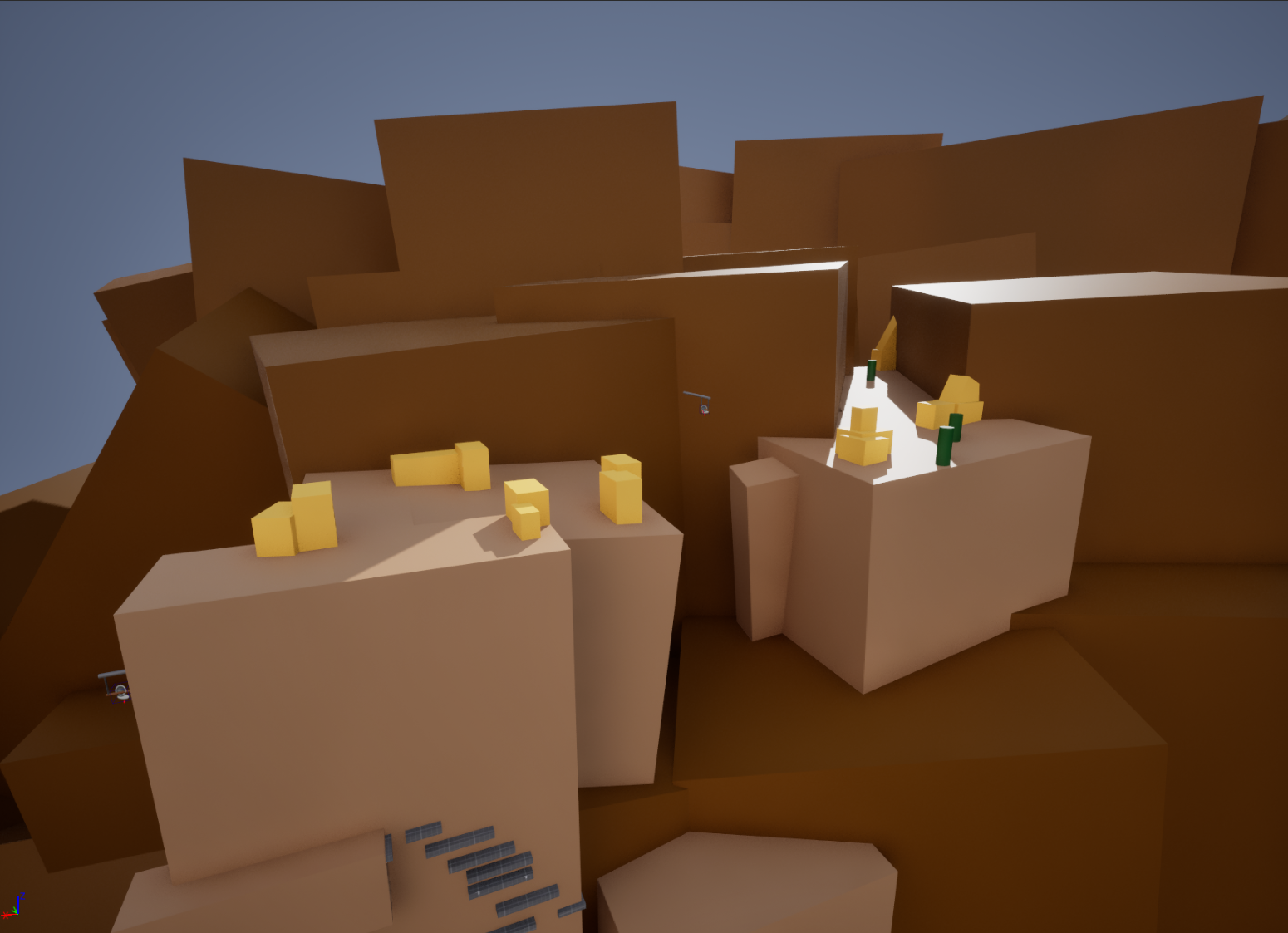
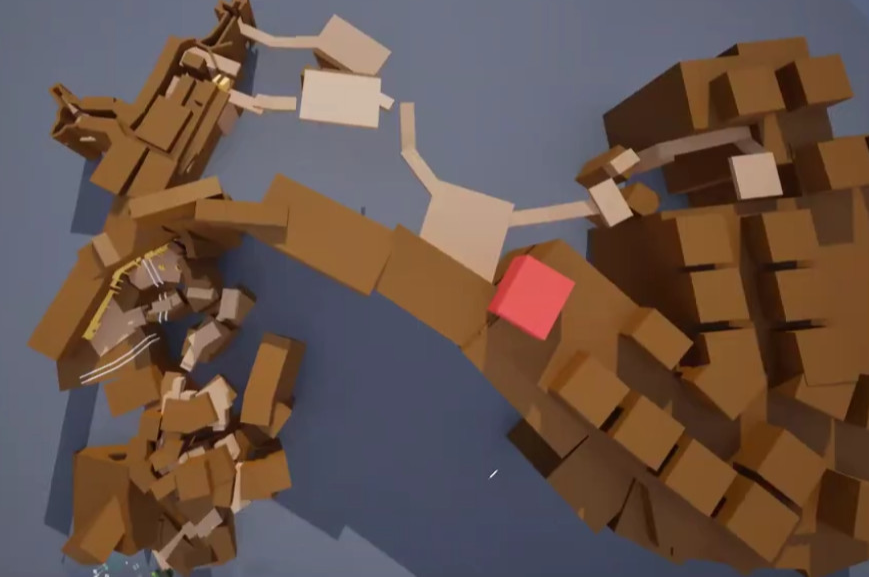
I started by iterating on the first beat of the map: Climbing the Mesa. I simplified the initial traversal area and worked on making a more engaging traversal experience by always having a clear view of the next objective.
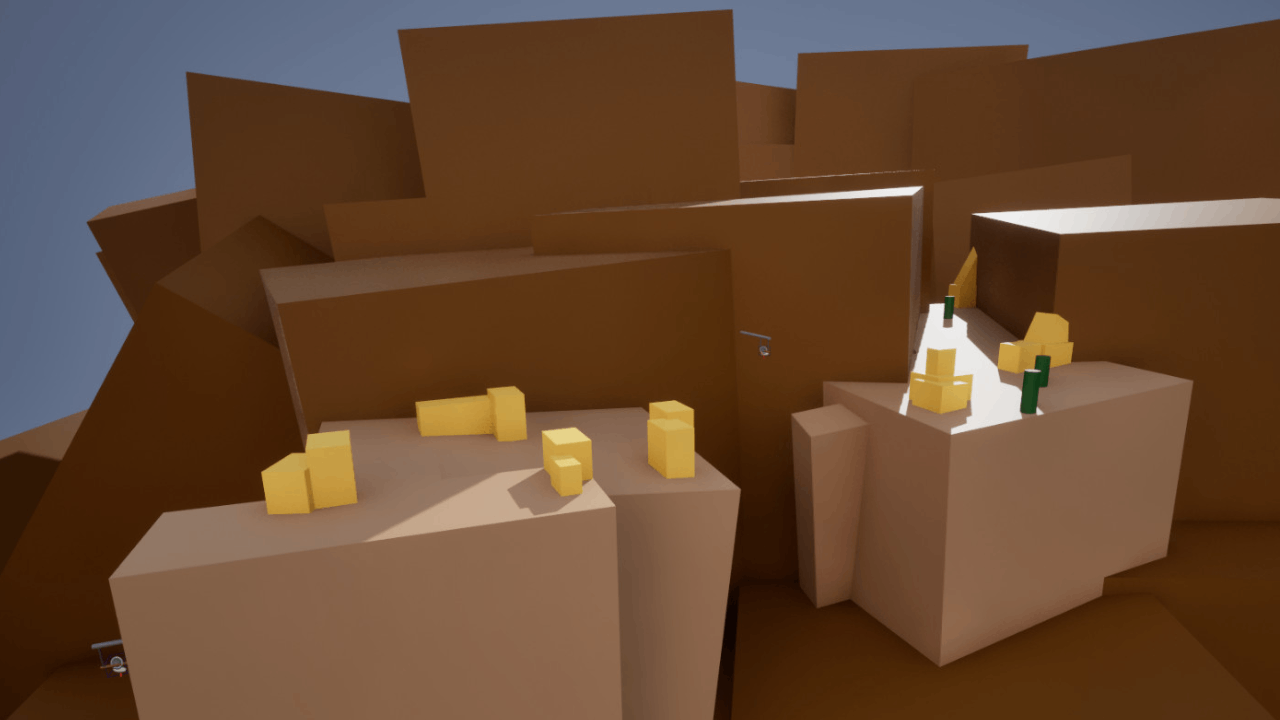
This way, the player would reach the top of the mesa from a different angle with a safe zone due to the cover placed near the top of the Mesa. As the player approaches the first combat zone, cover, and enemy location are well defined.
After changing the first Beat’s direction, I decided to change the angle from which the player reaches the second Beat. By adding coverage and changing the direction from which the player arrives at the first combat area, I was able to create a safer environment while also introducing the player to the combat area.
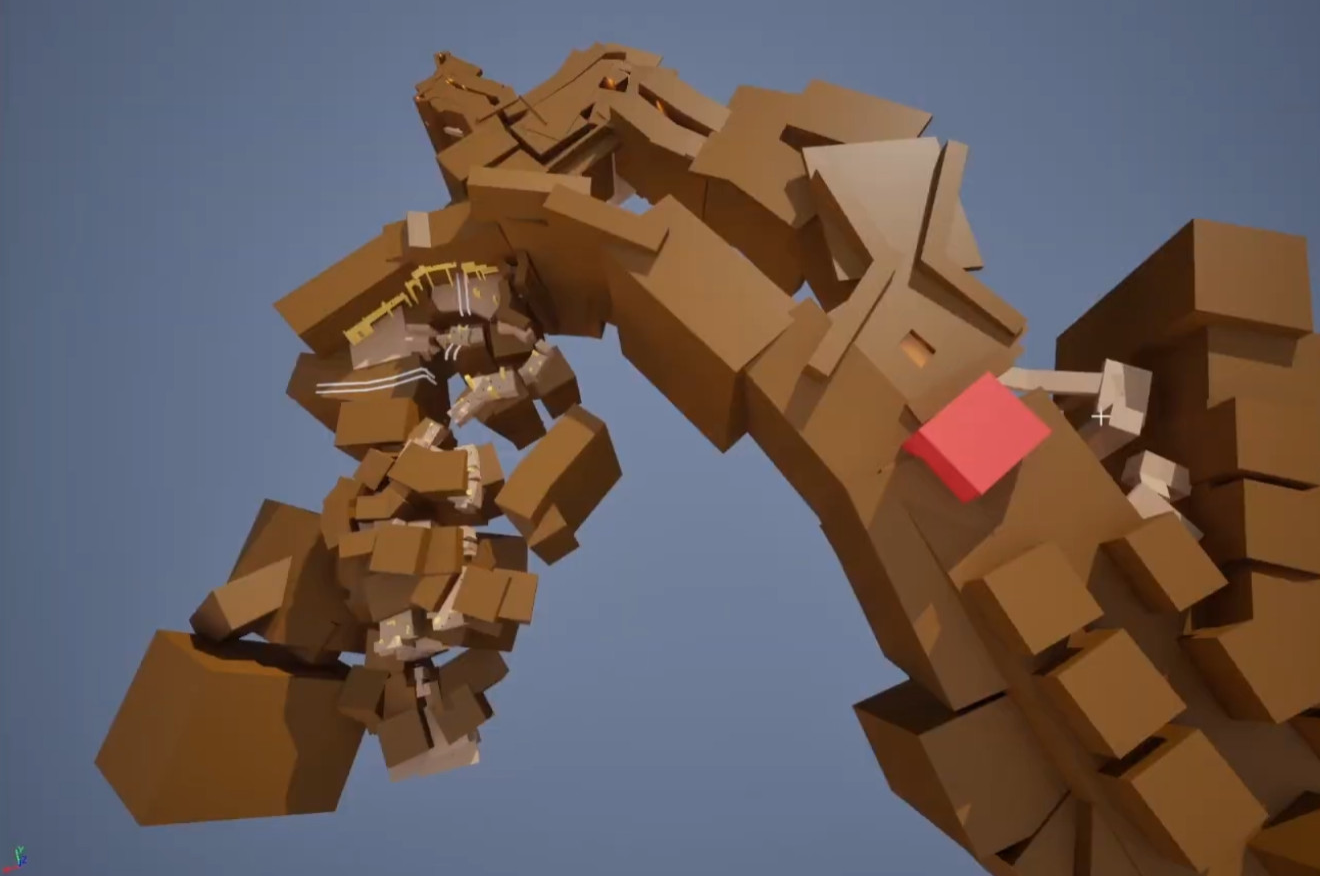
I also implemented enemy placeholders to be able to represent the combat areas more easily, to give players a better sense of enemy location and cover sections


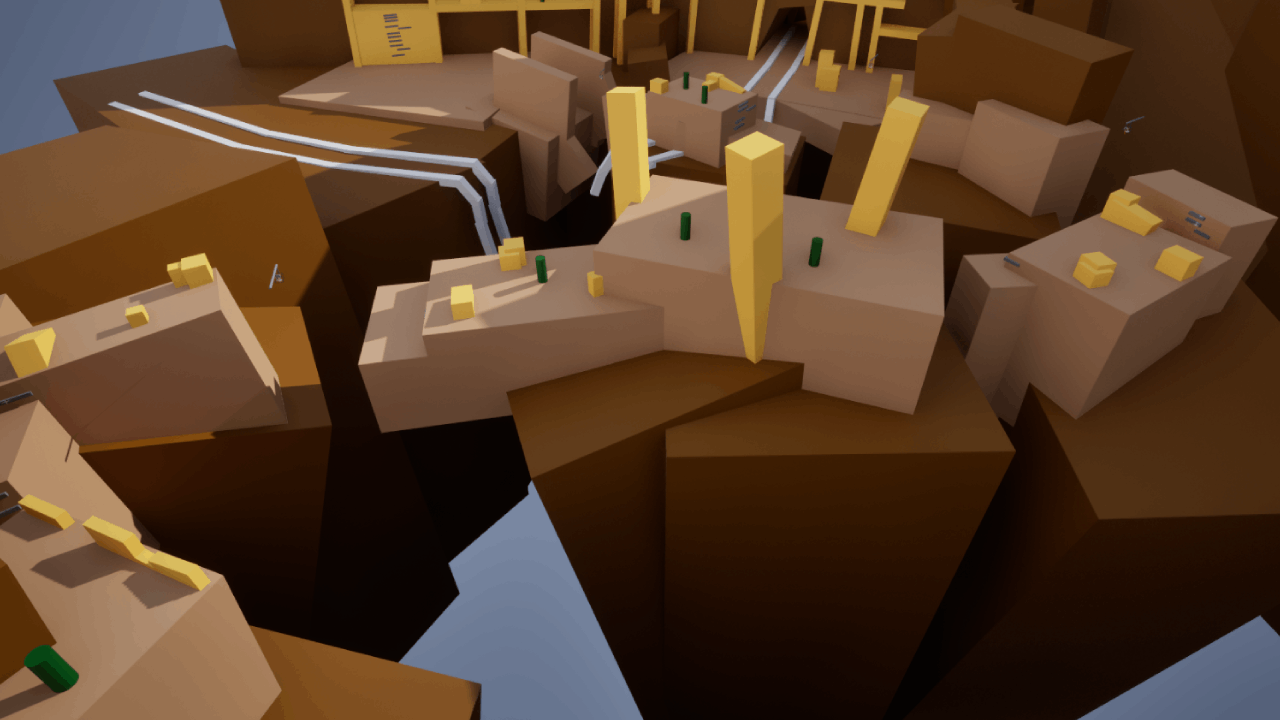
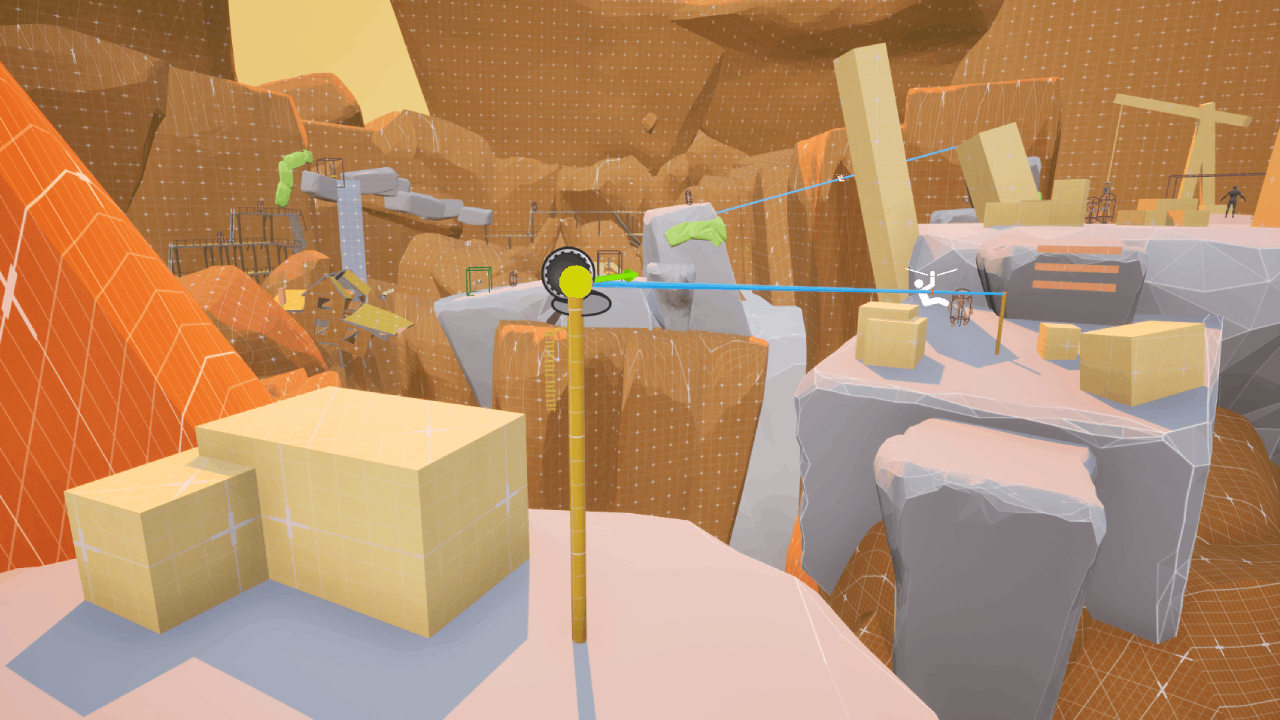
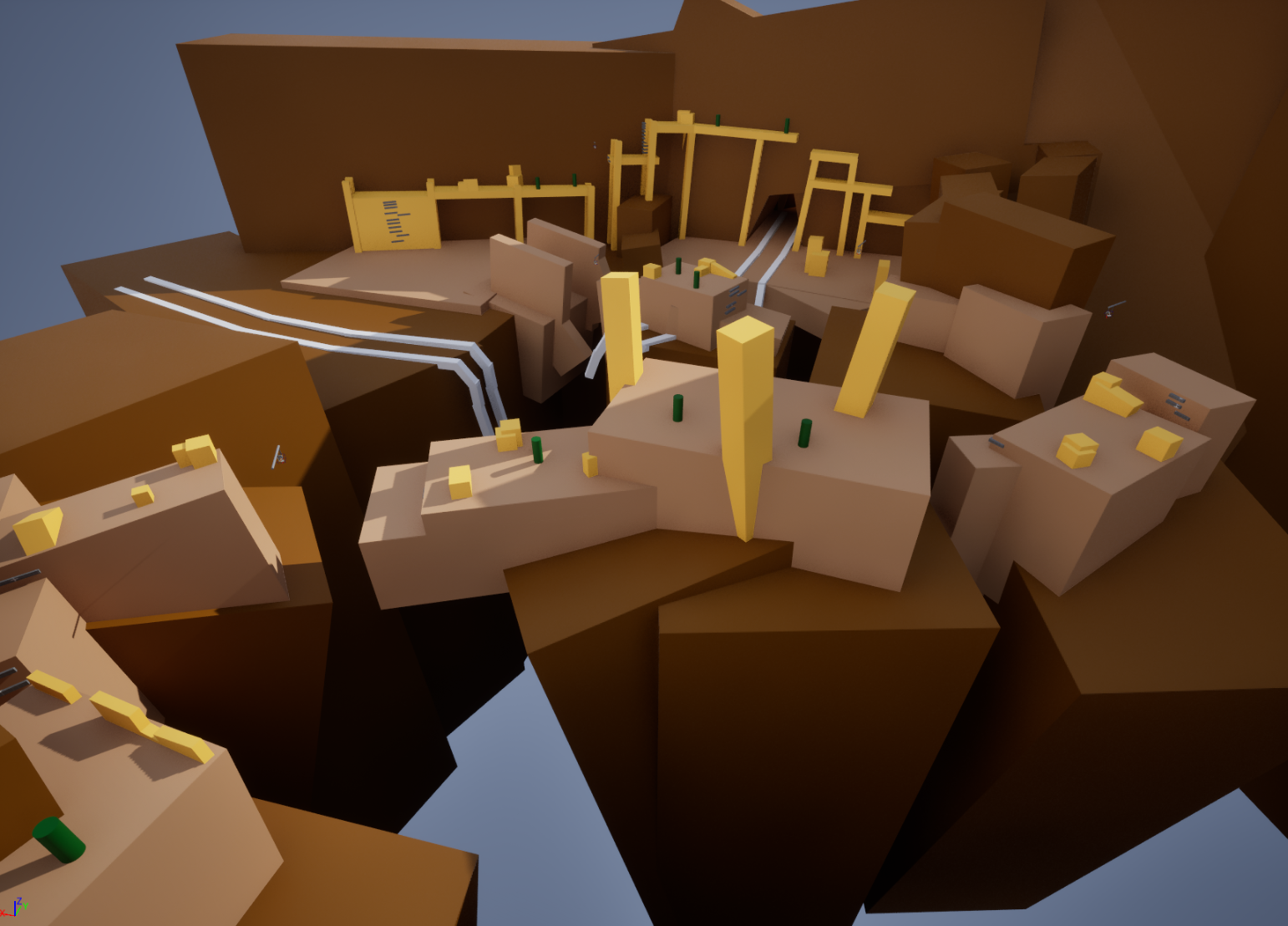
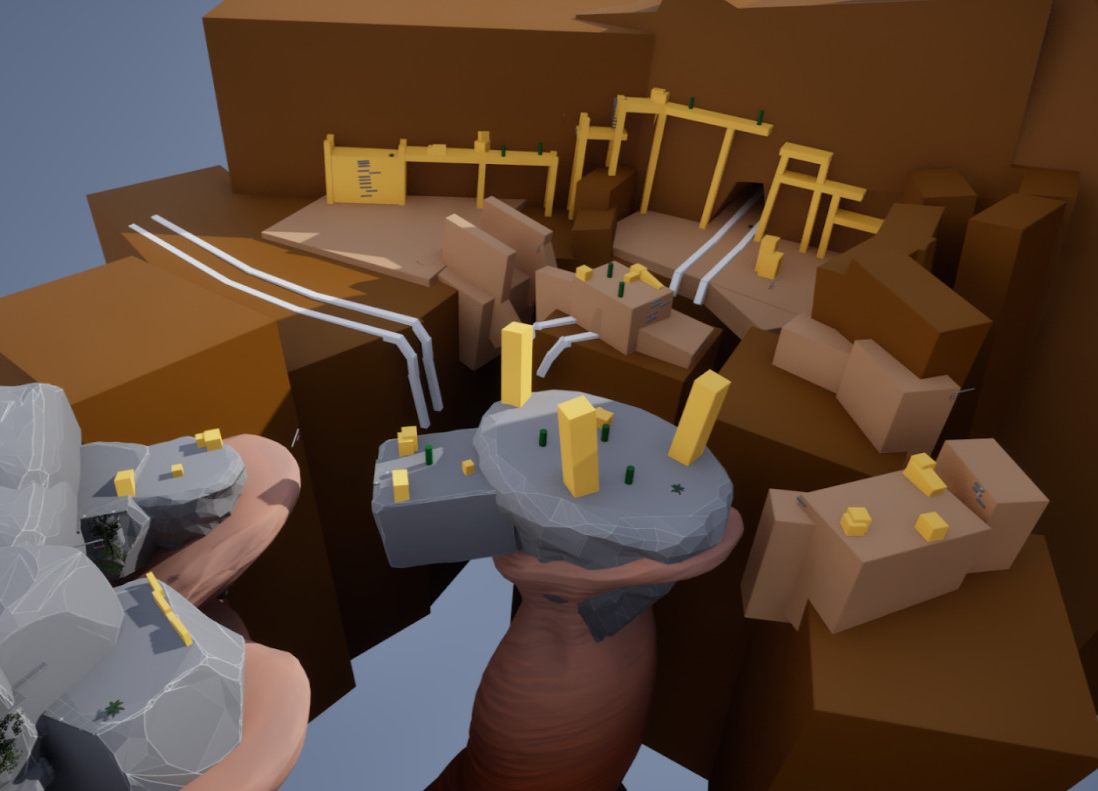
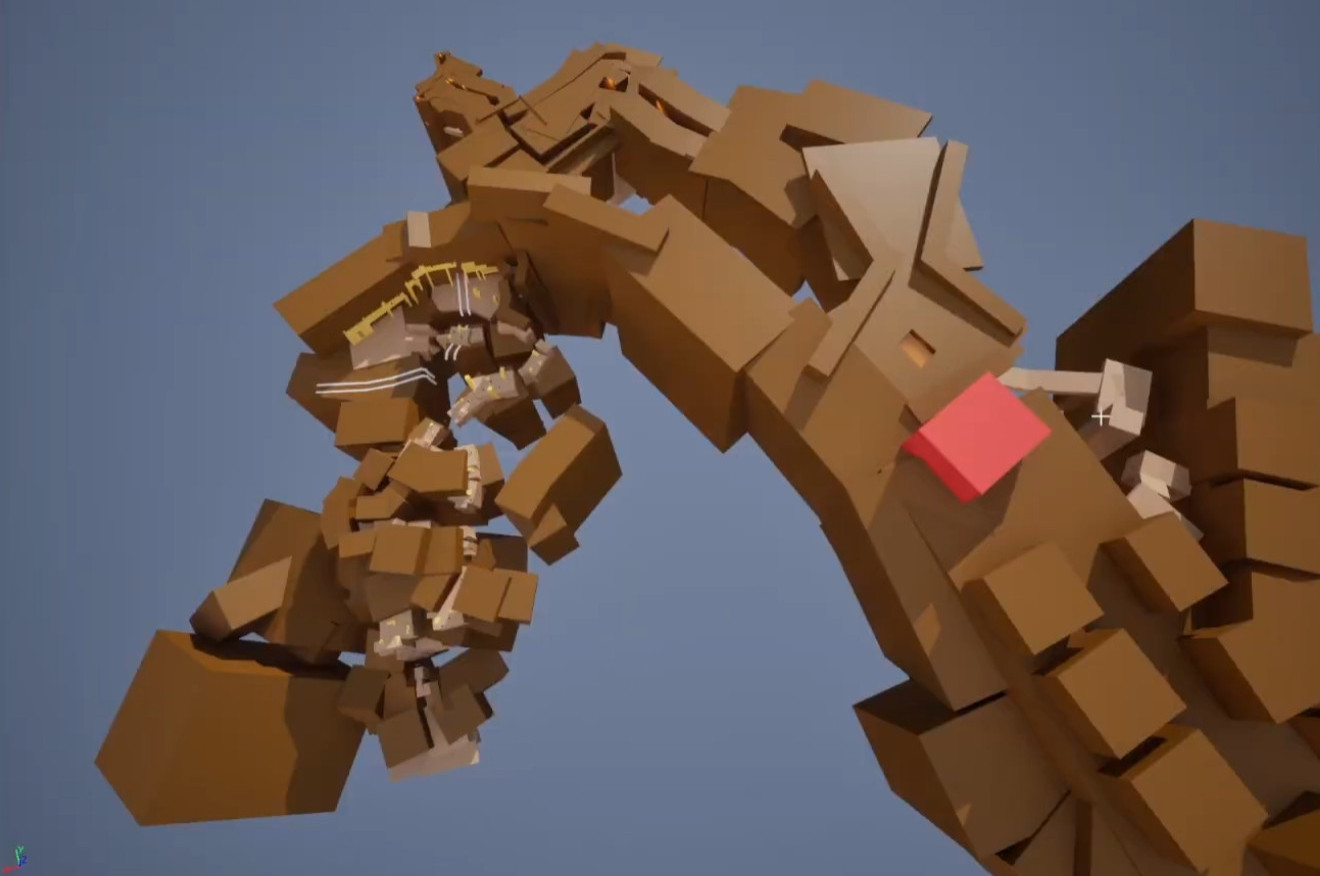
As the biggest defining section of the first act of the level, I wanted to challenge the player with the previously established traversal and combat mechanics by creating a section that allows the player to see the mine entrance from afar but where the player must traverse through different platforms and fight enemies as they get closer to the entrance.
The secondary paths were cut and instead, more detail went into creating the connective tissue between Beat 2 and 3 gave the chance to explore better occlusion and more interconnected sections instead of opting for less impactful secondary paths
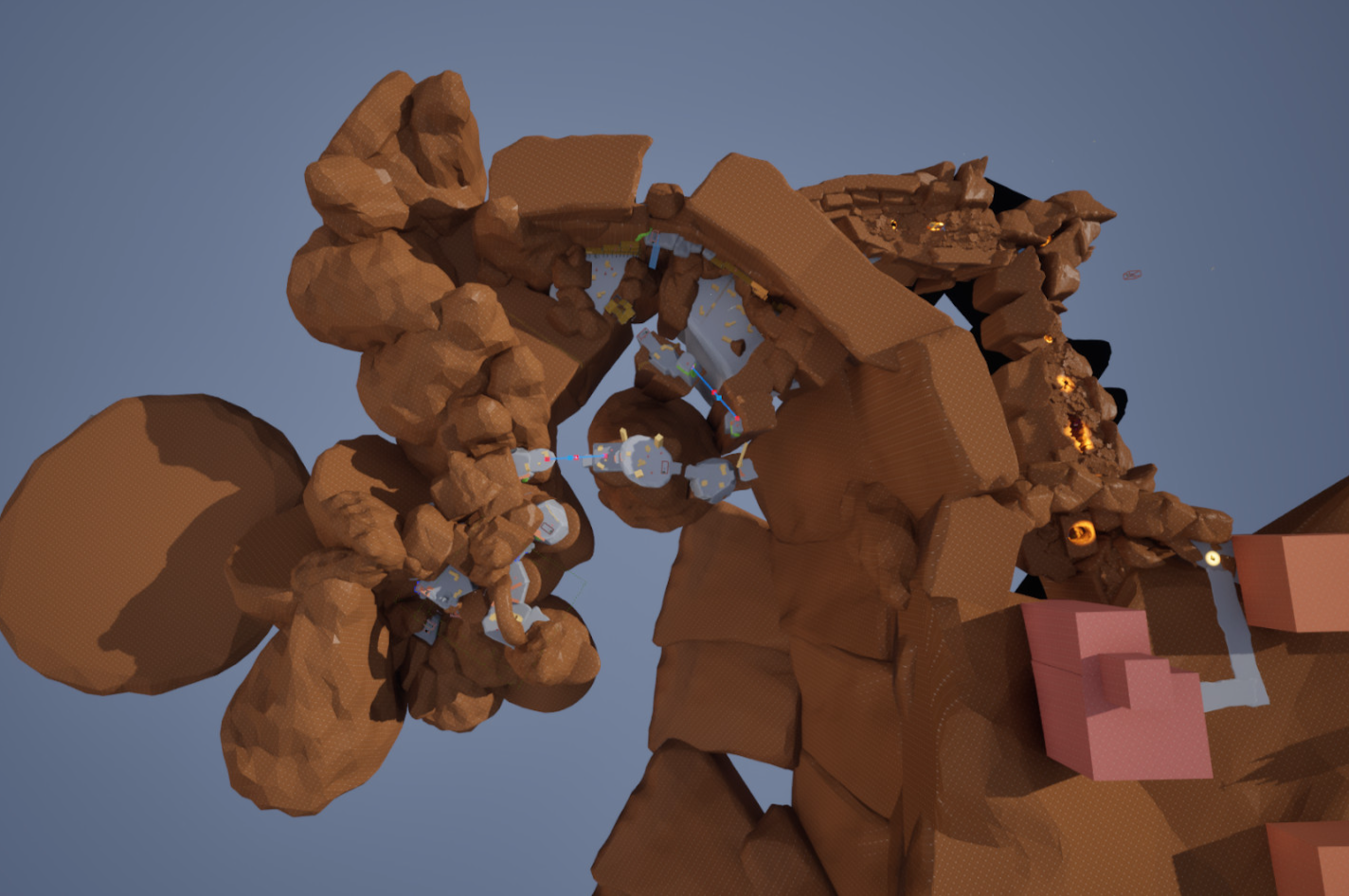
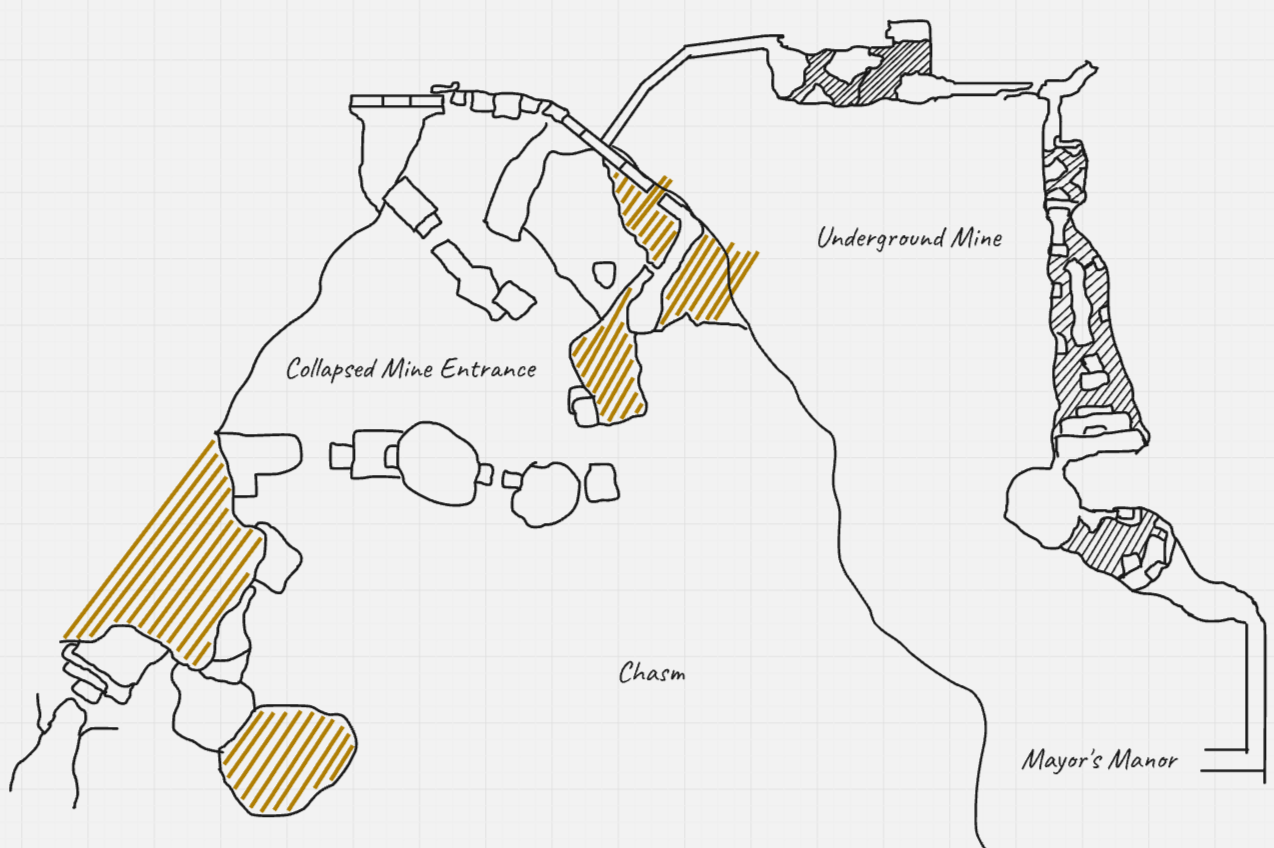
As I continued to iterate based on feedback, I decided to separate my map into three acts to be able to define the transitional areas, traversal zones, and combat areas:
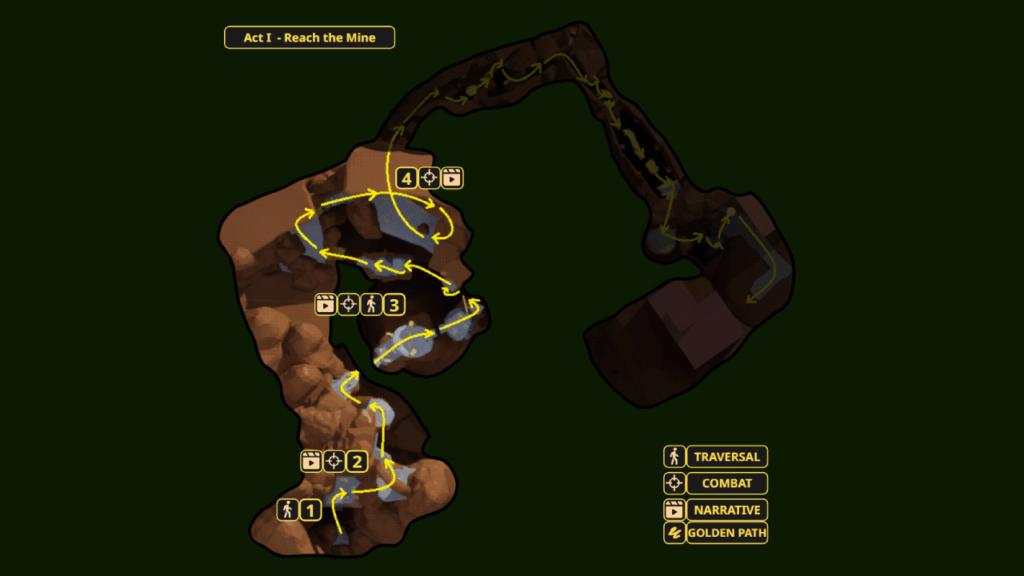
Act 1 – Reach the Mine:
- The beginning of the level focuses on climbing the mesa free of enemy encounters, introducing most traversal mechanics in a safe but challenging environment with multiple checkpoints throughout the climb.
- It continues into the first enemy ambush in the level in a defined combat zone, which is introduced with the first narrative encounter.
- The last section of the first act challenges the player through a blend of traversal zones and combat areas to create an action-packed narrative section.
- By the end of the section, the player must reach the entrance of the mine where the bounty hunter awaits for the player to start combat
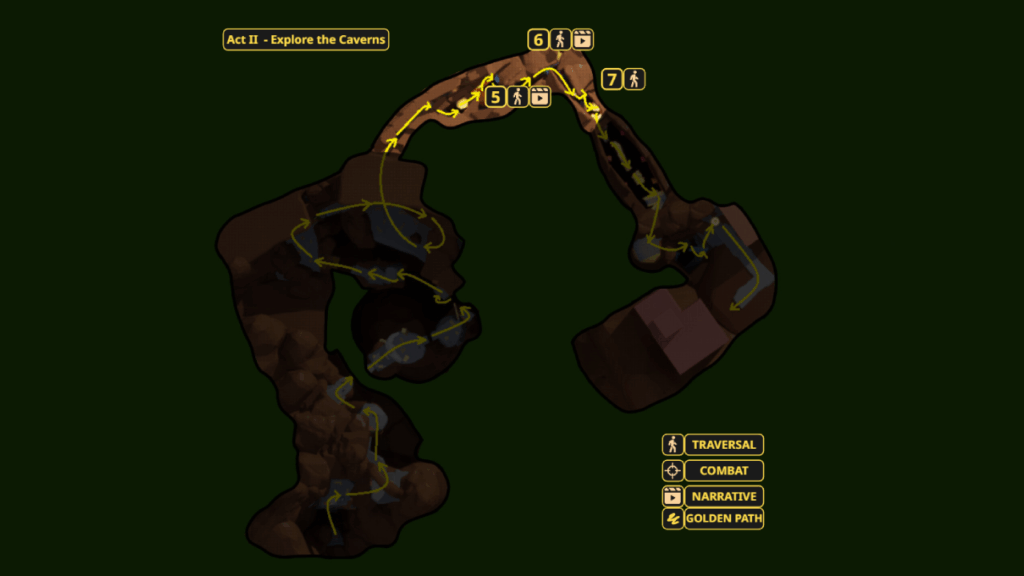
Act 2 – Explore the Caverns:
- This act is primarily narrative and traversal. The flow of the map slows down to give the player some breathing room after encountering the boss.
- The traversal challenges in this zone are more dangerous but more calculated. Several scripted narrative beats push the player along through the caverns. Lighting and Scripted Events guide the player throughout the map.
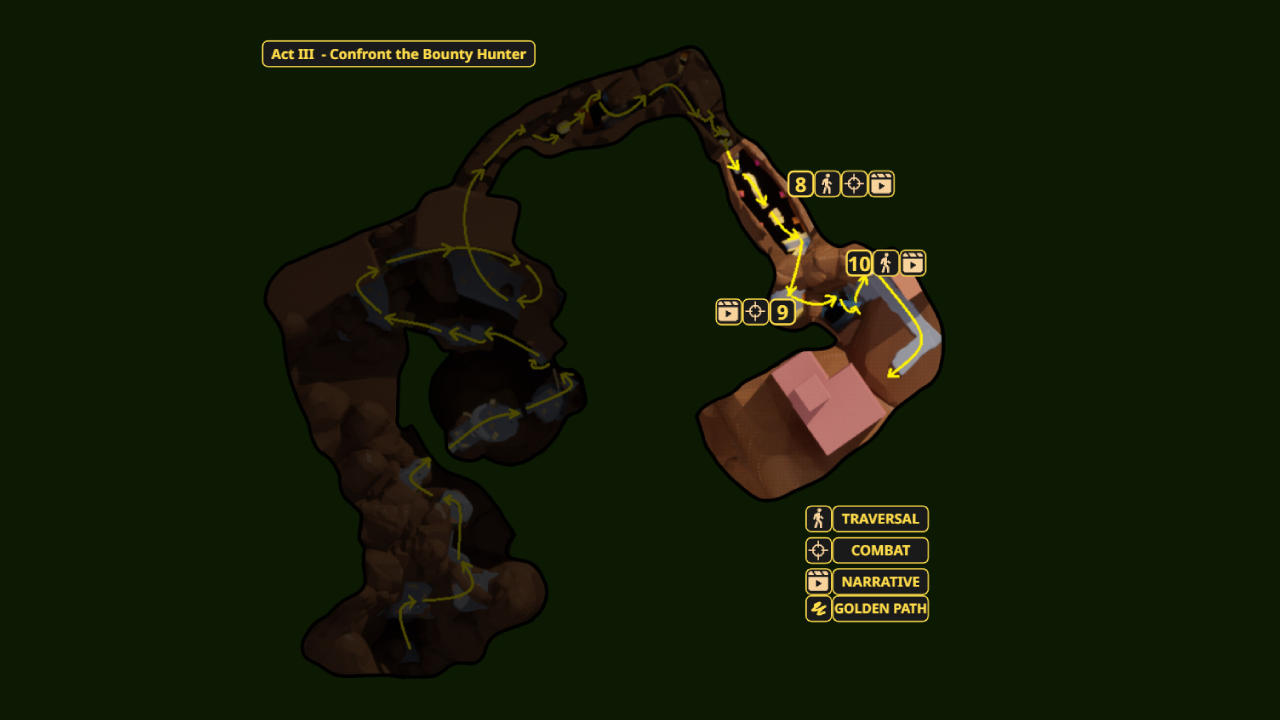
Act 3 – Confront the Bounty Hunter:
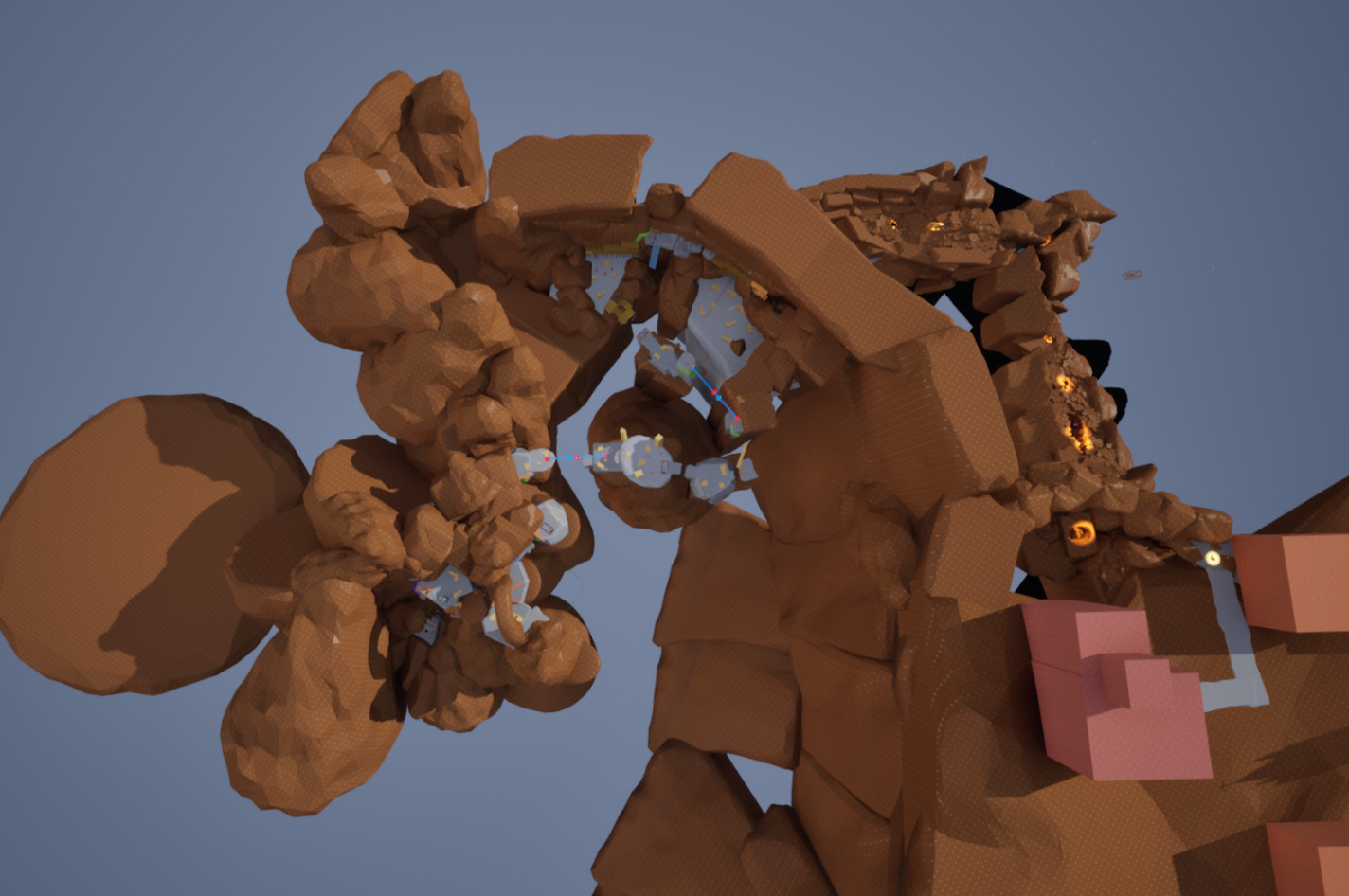
- The beginning of this act was the result of combining and redesigning the underground area to better match the scope and revamping goals.
- This act focuses on continuing the traversal section of the cavern into a more supernatural environment where the player must continue with the traversal challenges as the narrative unfolds and leads the player into a combat encounter.
- Ultimately, the player is ambushed by the Bounty Hunter where the player must confront the hunter until she runs away one more time, leading the player to the top of the town

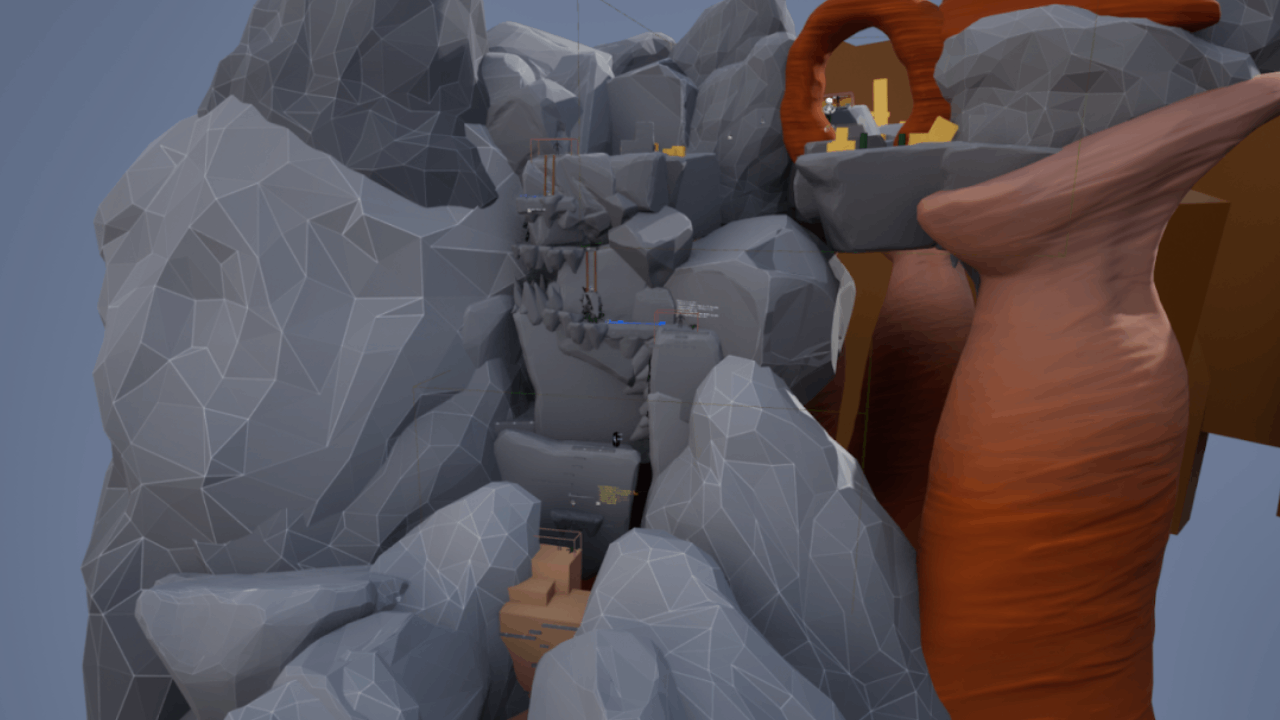
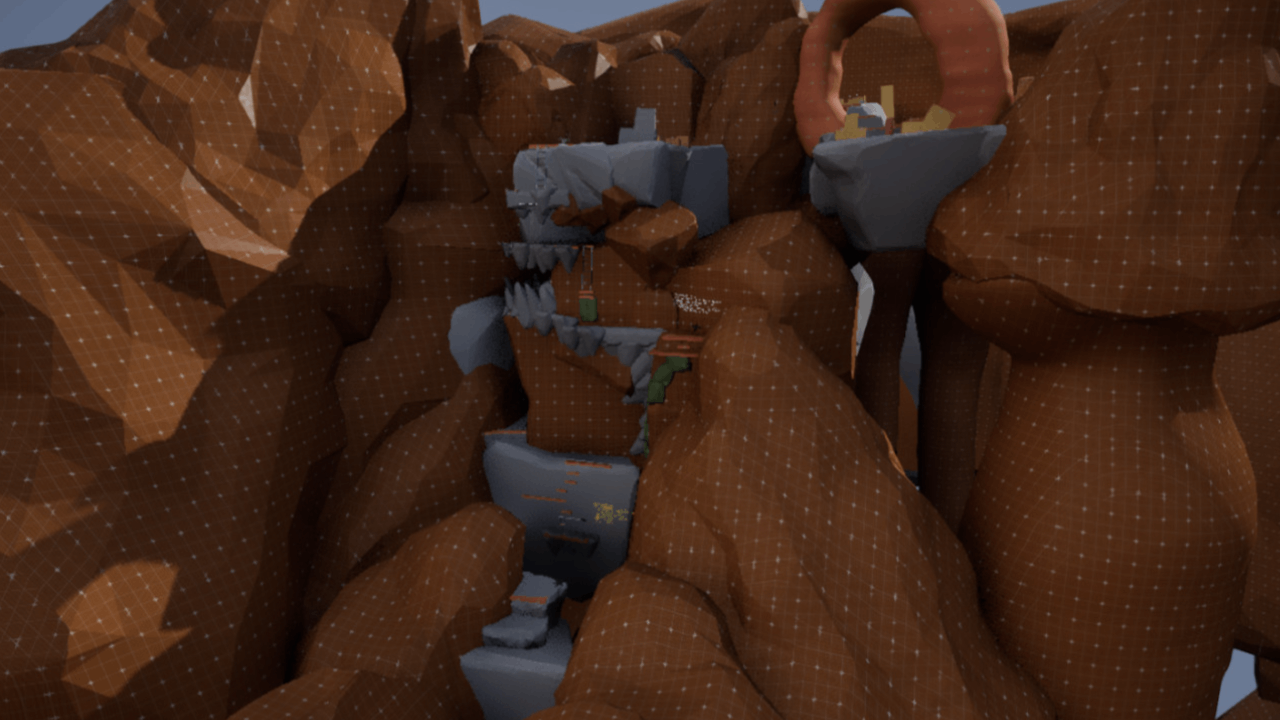
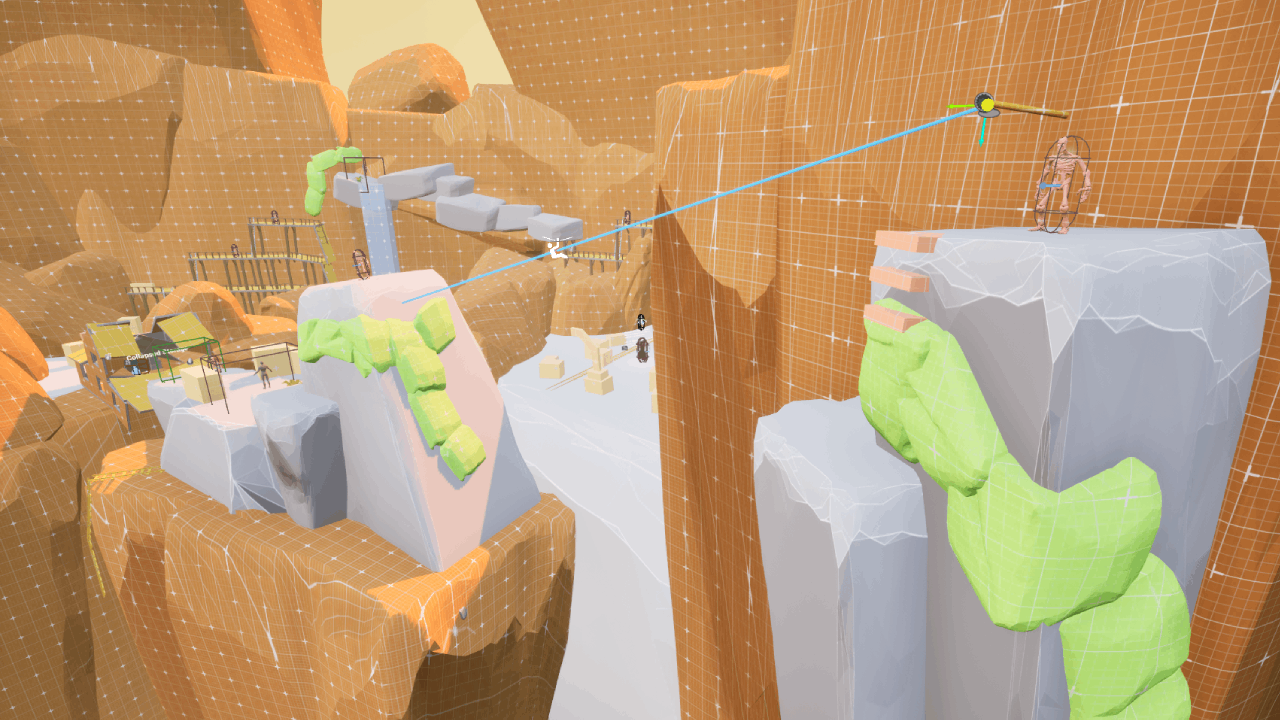
I primarily focused all my traversal mechanics overall on the first beat of the map. I implemented new traversal mechanics such as wall climbing, ladders, and narrow paths. These changes allowed me to make the initial traversal experience more complex by introducing variety.
After doing a geometry update, I also changed the location from where the player reaches the next beat to allow the player to reach a safe area before being ambushed by the next narrative and combat zone
During the layout revamp, I decided to focus on creating a better first enemy encounter area by creating a safe space as the player reaches the top, giving them the chance to breathe before moving towards the first encounter.
Here, I also established how the first narrative encounter would unfold into the first combat encounter. Together with the updated geometry, I was able to frame both the narrative beat in front of the player as well as the overall goal by placing the Mayor’s Manor in the distance.

The Good
- The layout and flow of the level felt natural and fun. It was interesting and inviting, giving great vistas of the next steps and the overarching goal.
The Bad
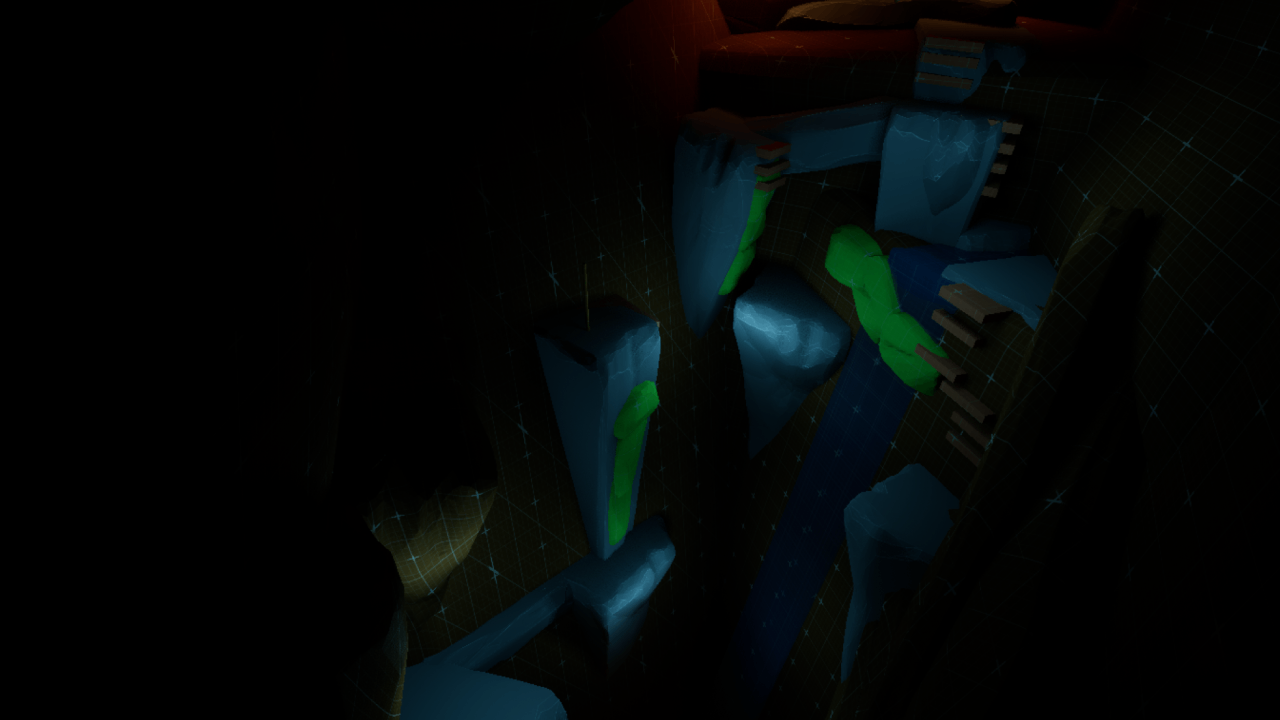
- The rope swinging mechanic was being overused, diversity not only on the mechanics but how to use them would help improve the flow of the level even more. The colors of the traversal mechanics need to pop out more to be easily distinguishable.
The Solution
- The rope swinging sections need to be revisit and explore other mechanics instead. The goal was to continuously challenge the player with different combinations of the traversal mechanics to avoid repetitiveness as well as change the appearance of the mechanics to avoid confusion.
The Problem
- The cover areas need an overhaul, as more than one area felt like the cover could be better positioned to align with the player’s movement throughout the combat zone.
- The first boss fight near the entrance of the abandoned mine didn’t provide a safe path around the boss area, which ultimately confused players.
The Solution
- Standardization of the cover was needed to be able to make sure to always have the right ratio of cover for a combat area would be as expected.
- Applied the same rules of occlusion as in Fortnite and focused on creating a safe path through the cover areas to provide both sides opportunities to attack or remain safe. Also prevented longer unexpected shots by blocking certain angles to provide a way to break LOS (line of sight).
Call to Action
- There are a few sections where the map reuses mechanics and lacks narrative, those areas need to be revisited, replacing repetitive traversal mechanics with narrative beats can help balance the level to provide moments of higher and lower intensity.
- The enemy placeholder needs to be replaced with scripted events that summon the enemies when the narrative event is triggered.

Since the last update, I implemented new geometry, new traversal mechanics, and standardized both the mechanic values and colors. This allowed me to immerse the player in the world and create an expectation on how mechanics look and act.
Afterwards, I worked on creating scripted events that would increase tension and heighten interactivity to subvert the player’s expectations and better weave the narrative and traversal elements together.
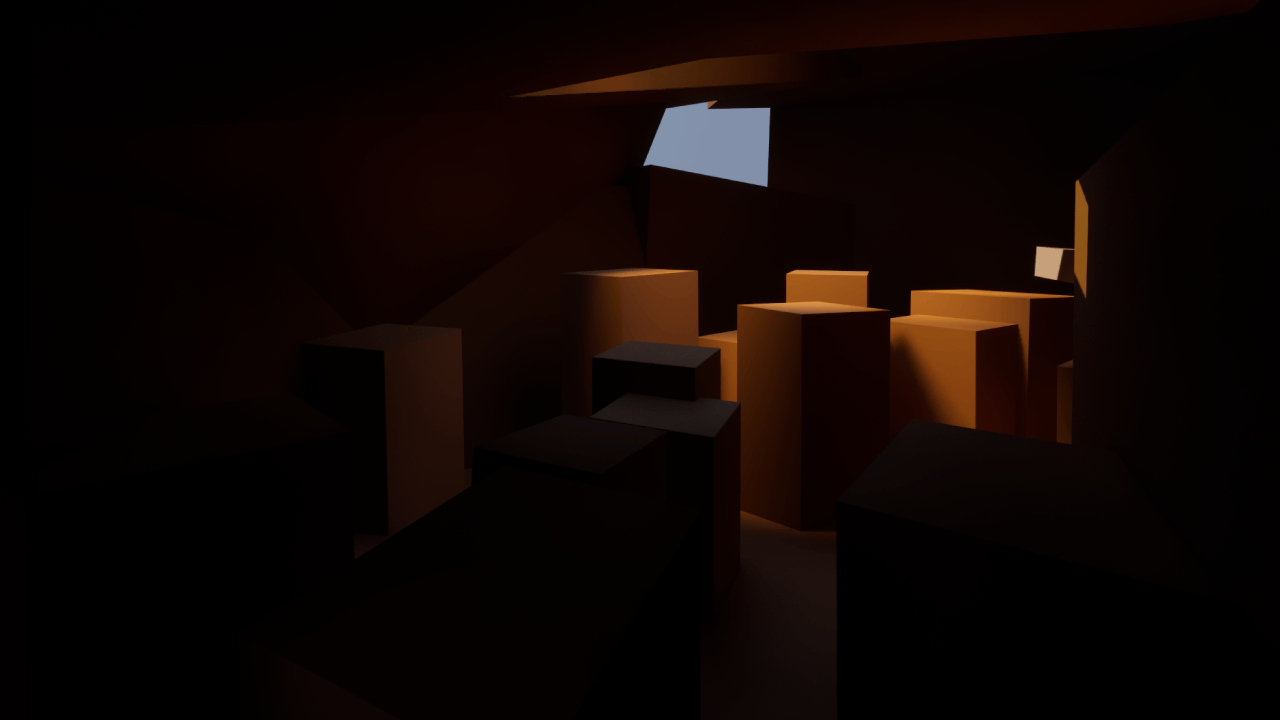
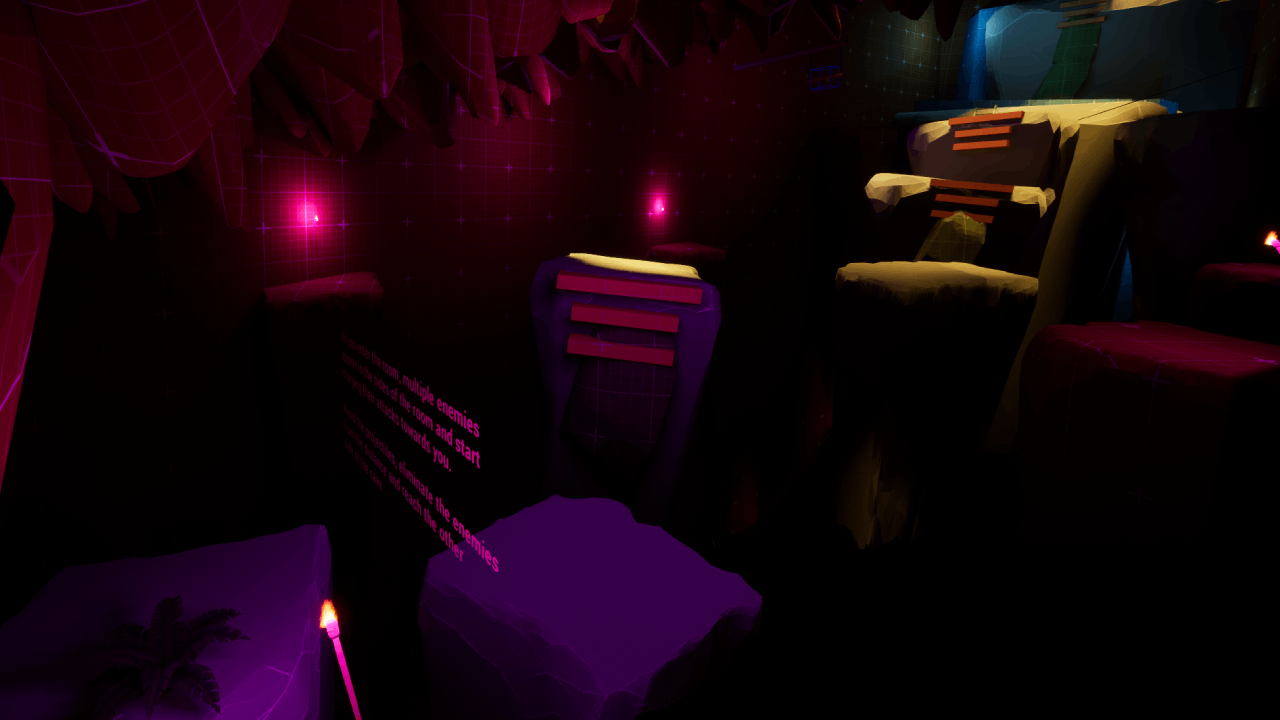
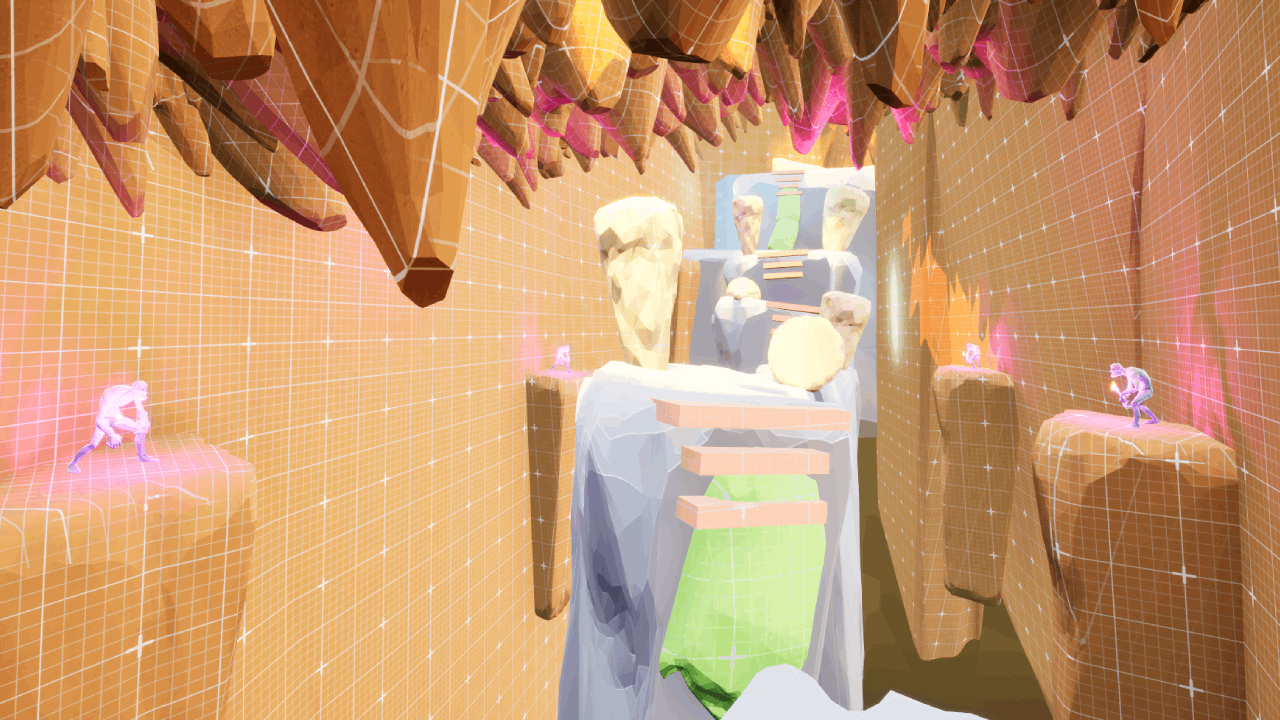
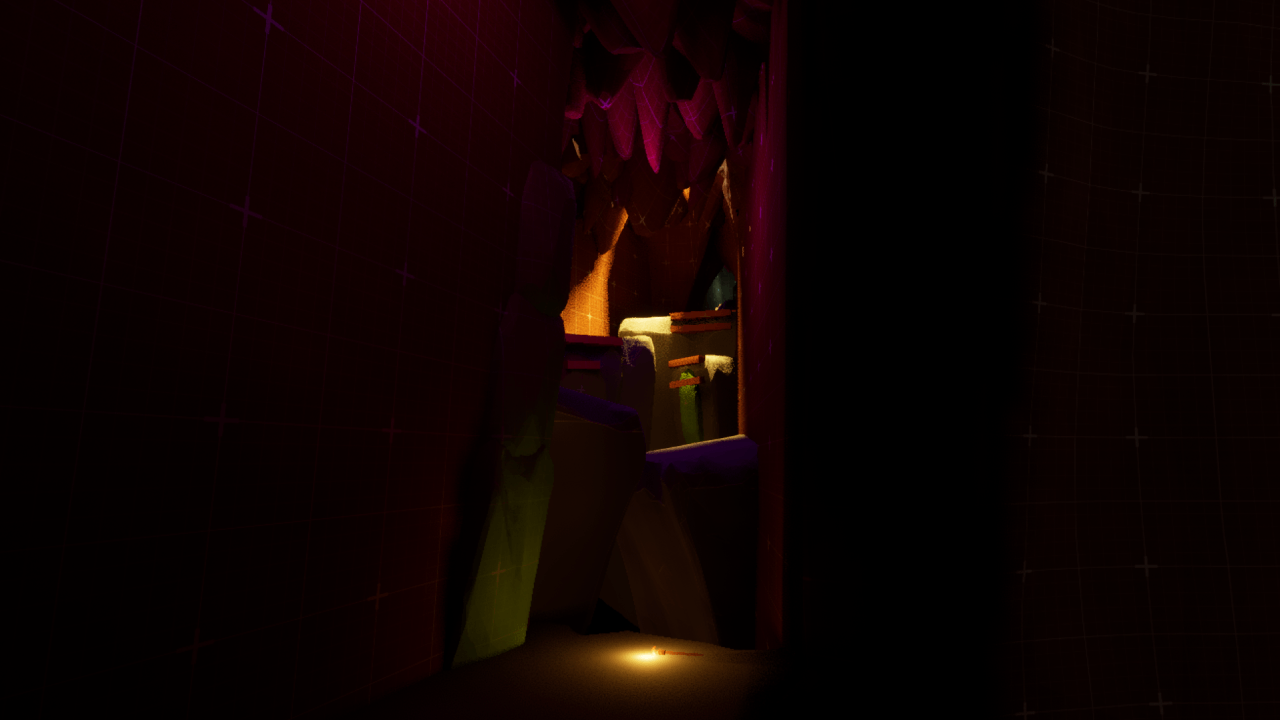
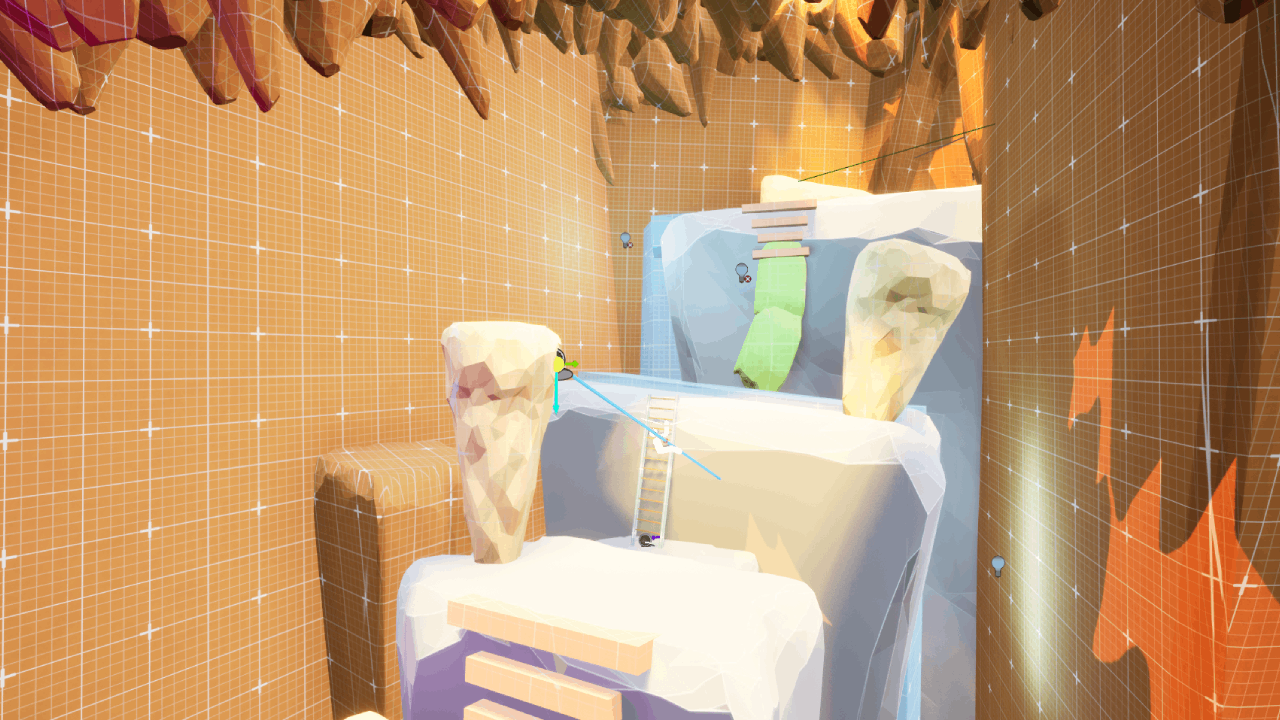
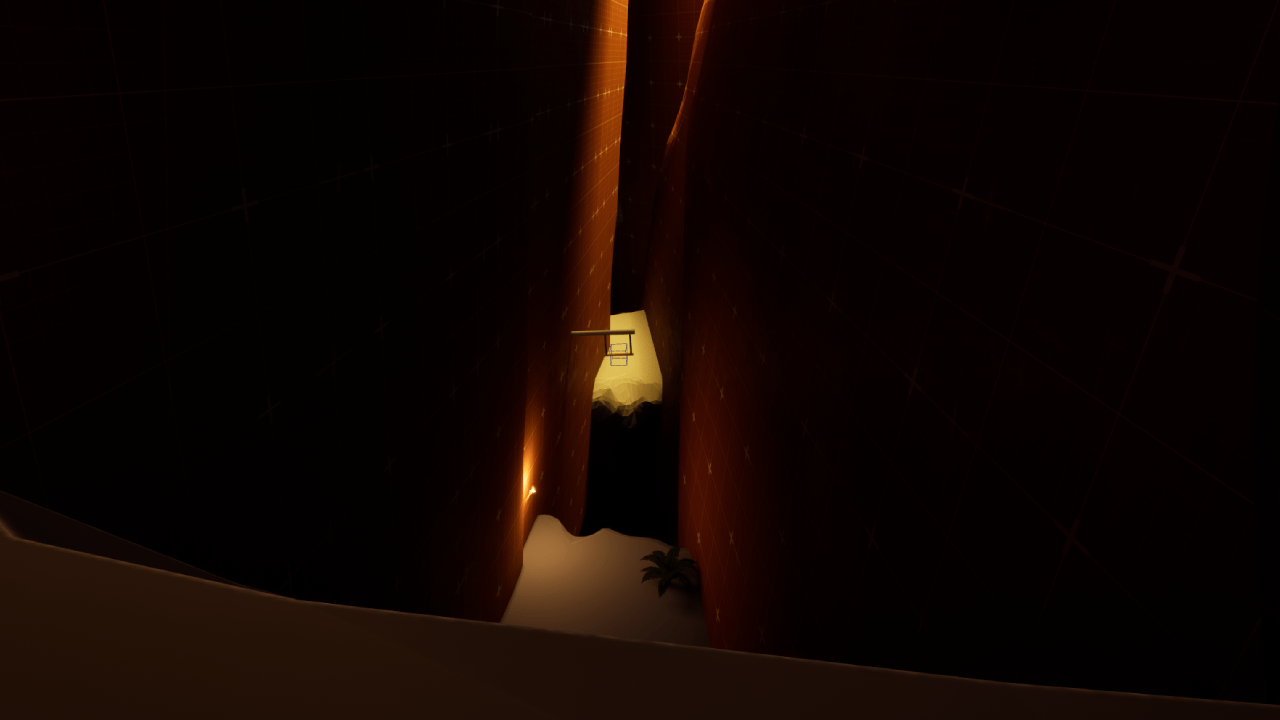
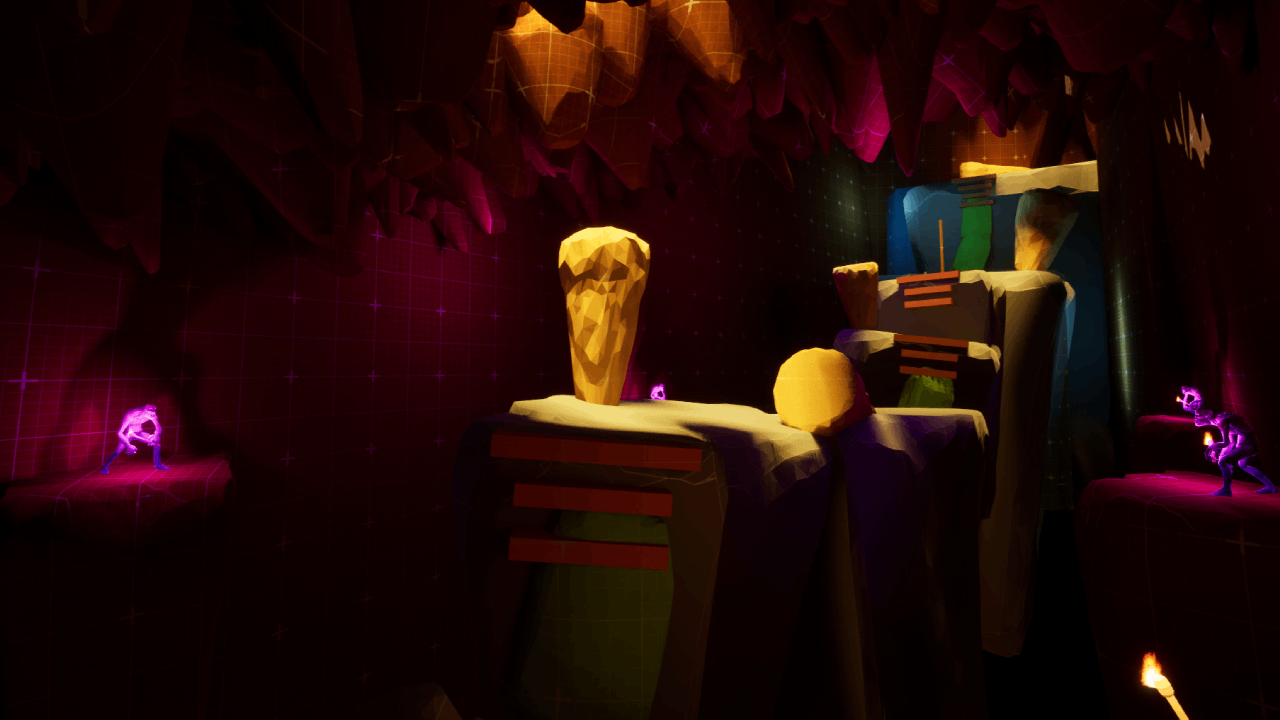
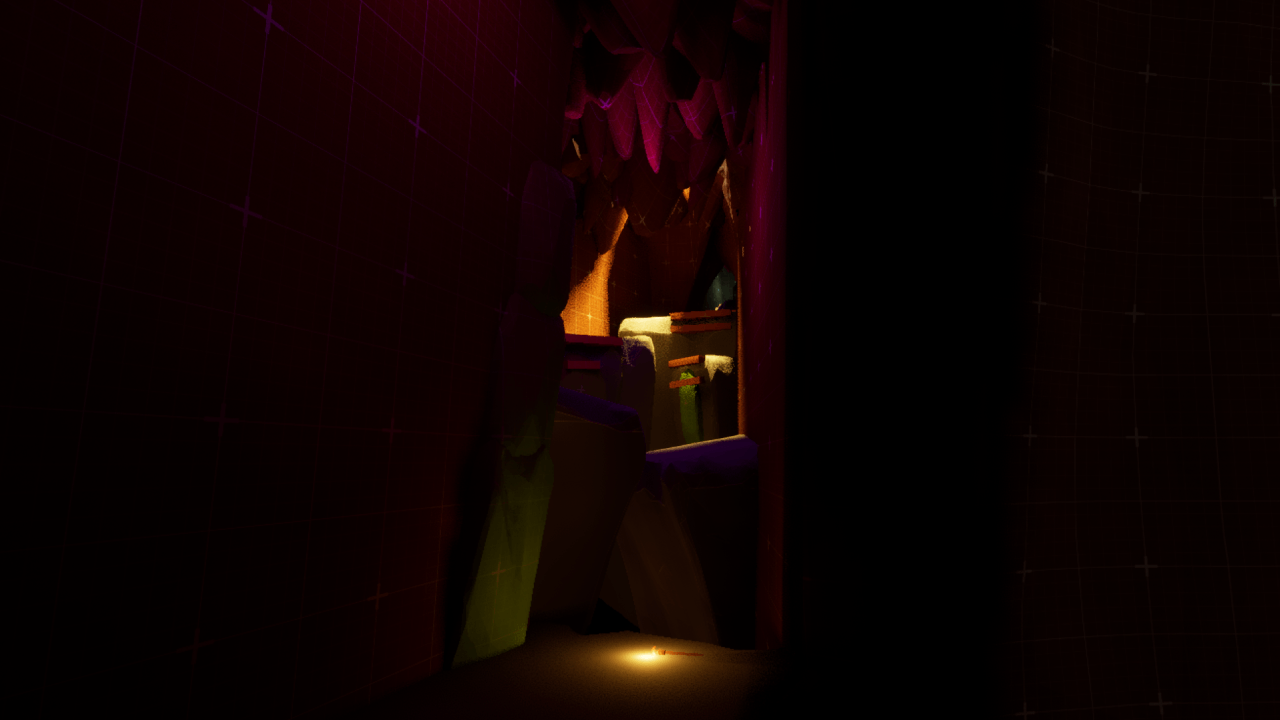
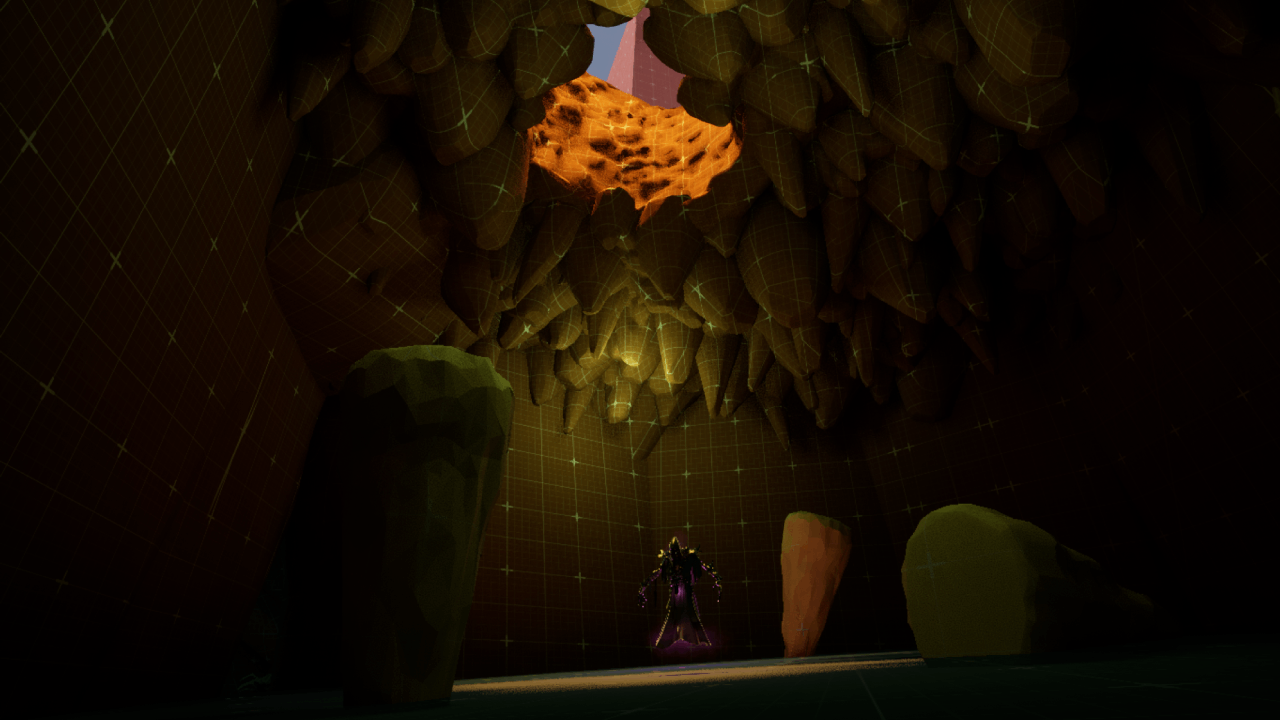
Originally, this area did not guide the player towards the correct section of the map, as the dead end was lit better than the correct path.
Because of this, I added additional lighting towards the entrance of the cave as well as a scripted event that provided the player with a direction instead of leading them to a dead end.


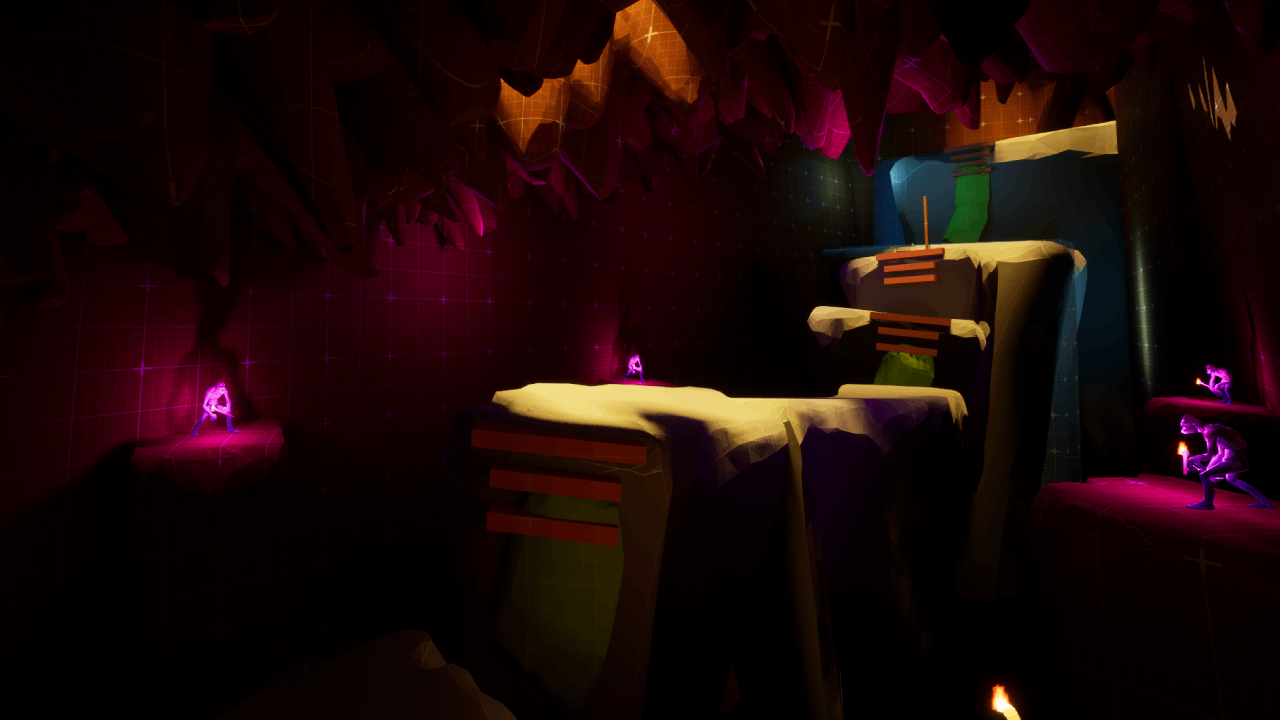
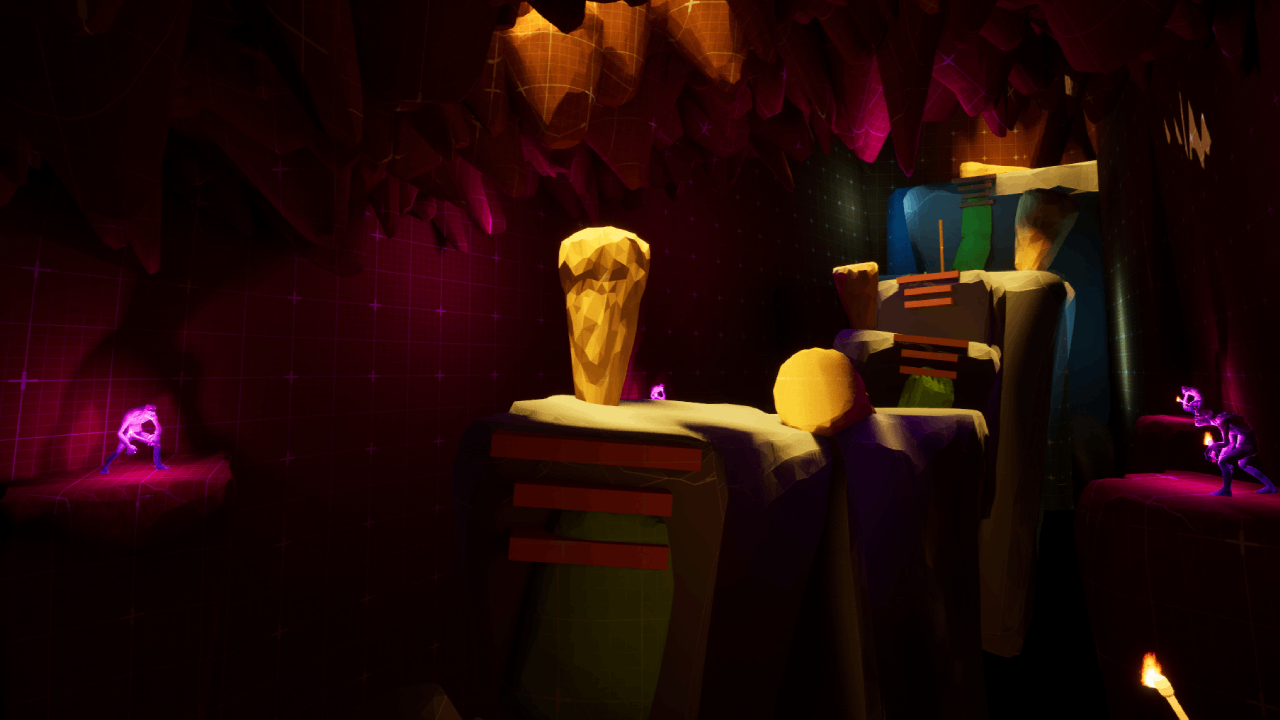
Since the original concept of this area to have multiple platforms where the player has to move through while fighting enemies felt too chaotic when testing, I decided to change this section into a long platform with some cover so the player still has to fight the ambush but the area where they are standing is safer and with a few cover areas to slow gameplay if needed.
Final Thoughts
Heading into this project, I knew my focus for the last few years has been primarily third-person shooter level design philosophies. However, I wanted to expand my horizons and create an action-packed level that felt like a combination of Red Dead Redemption and Uncharted.
Throughout the last few months, I blockout, playtested, gathered feedback, and improved on my original design to grow as a designer and create a level that resembled those that I was inspired myself. After reaching this milestone, I wanted to take some time to reflect on my decisions and what I learned:
 1. Playtesting and iterating on my design helped bring new ideas and iterate on existing ones. A big percentage of the map was changed at least once, and after every iteration, the game looked better and better.
2. I watched people play my game, and that gave me a key insight into how players were reacting to the changes I was making. I also learnt to understand where I was failing at guiding players.
1. A good part of my traversal mechanic iterations were about implementing new mechanics, learning how to make them transition smoothly, and finding the right ratio to not make the traversal zones repetitive.
2. Accordingly, distances, values, and the location of certain mechanics can drastically change the feel of an area.
1. In order to make the world feel complete, environmental storytelling was a necessity.
2. Some beats were simply narrative beats while other sections were pivotal to the story as they pushed the flow of the level. Some examples include: